




Putti Figural Lamps
Putti figural lamps are sculptural lighting pieces depicting winged cherubs in brass, bronze, and gilt metal, sought after for dramatic interior illumination.
Putti Figural Lamps
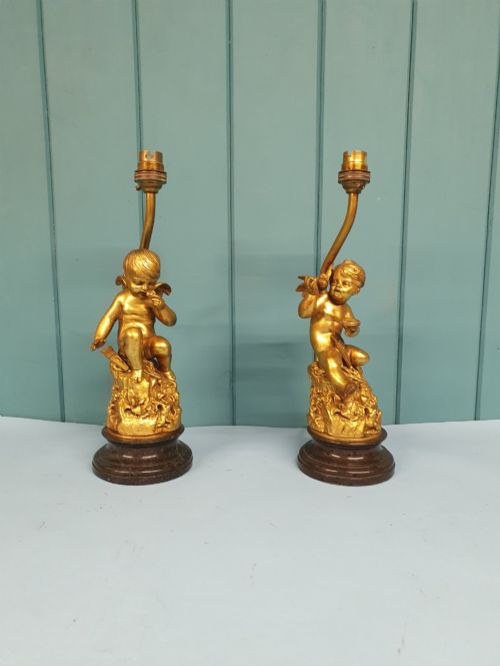
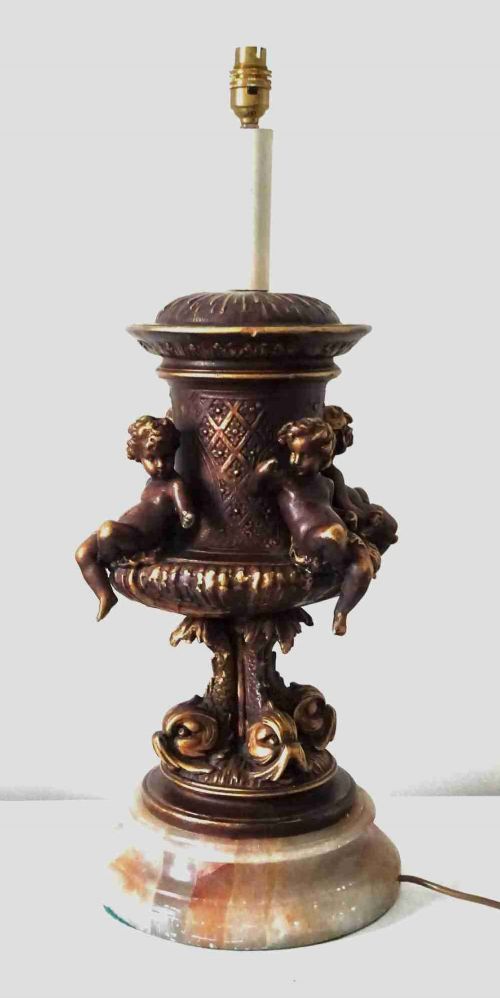
When searching for putti figural lamps, collectors encounter sculptural lighting pieces featuring winged cherubs cast in bronze, brass, spelter, and gilt metal. These figures often support torches, hold dolphins, or recline on marble and brass bases.
The pieces appearing here span from the late nineteenth century into the early twentieth century, incorporating French Rococo Revival, Neoclassical, and Arts and Crafts design sensibilities. Most examples take the form of table lamps, though wall sconces also appear in the selection.
Makers and foundries from the period produced these figures to serve as both functional illumination and decorative centrepieces. The depictions draw heavily on classical motifs, presenting putti in various poses of play or utility.
How they were made
Foundries utilised traditional metal casting techniques to form the figures in bronze, brass, gilt metal, and spelter, often finishing the surfaces with patination or gilding. Marble and gilt toleware frequently provide stable foundations or contrasting structural elements for the figural mounts.
Wiring and shade configurations vary, with some pieces retaining beaded fabric shades or designed to accommodate wall mounting. The integration of sculpted cherubs with metalwork requires precise assembly of the figural body and the lamp stem or torchère.
Putti Figural Lamps Retail Price Guide 2026
Typical asking prices for putti figural lamps among the pieces listed under this phrase on Sellingantiques today, from the lower quarter to the upper quarter. They describe what is for sale here now, not the wider market.
Several cherubs are caught mid-action, wrestling with dolphins or holding torches as if lighting a Victorian stage.
What varies in quality
Materials dictate much of the distinction between examples, with heavy bronze and solid marble bases indicating superior production compared to lighter spelter or gilt metal alternatives. The presence of original patination and integrated elements like gilt toleware or specialised shades elevates the character of the piece.
Aug. Moreau
The Putti Figural Lamps Glossary
- Putto
- A figure of a small winged infant, commonly found in classical art and used extensively as a decorative motif on nineteenth-century lamps.
- Torchère
- A stand or standard lamp designed to hold a light source aloft, frequently depicted being carried or supported by cherubs in these designs.
- Spelter
- An alloy of zinc and lead used as a less costly alternative to bronze for figural metal castings during the nineteenth and early twentieth centuries.
- Gilt Bronze
- Bronze metal coated with a thin layer of gold, providing a bright reflective finish that retains its lustre over time.
- Toleware
- Painted or enamelled sheet metalware, often incorporated into the decorative housing or shade elements of antique lighting.
Putti Figural Lamps: Frequently Asked Questions
What materials are used in these lamps?
These lamps incorporate metals such as bronze, brass, gilt metal, spelter, and patinated iron alongside marble and porcelain elements. Fabric shades with beadwork also appear on certain surviving examples.
Foundries selected these materials to balance the structural weight needed for tall figural bases with the intricate detail required for the cherub sculptures.
Are these pieces strictly table lamps?
While table lamps form the majority of the selection, wall sconces and wall lights also appear within the available formats. Both types utilise the same figural cherub motif to anchor the lighting fixture.
Placement depends on whether the base is weighted for flat surfaces or fitted with brackets for wall mounting.
How do I identify the period of a lamp?
Dating relies on stylistic indicators such as Rococo Revival curves, Neoclassical symmetry, or Arts and Crafts simplicity, alongside the choice of metal casting. Nineteenth-century pieces frequently employ heavy bronze, whereas early twentieth-century examples often use spelter or brass.
Base materials like white marble and details such as gilt toleware further help place the manufacture within specific decades.
How do I live with antique lighting safely?
Antique lamps require careful placement on stable surfaces like heavy sideboards or fitted tables where the weighted marble or metal bases are secure. Many collectors have older wiring inspected or updated by a professional electrician to ensure safe daily operation.
Regular dusting with a dry cloth preserves the original patination and gilt surfaces without damaging the metal.