


Purple Glass Jewellery
Purple glass jewellery offers a rich spectrum of violet tones, bringing together bright paste stones and precious metals across centuries of design.
Purple Glass Jewellery
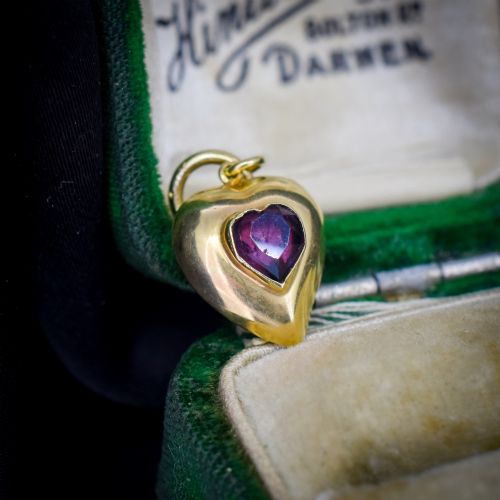
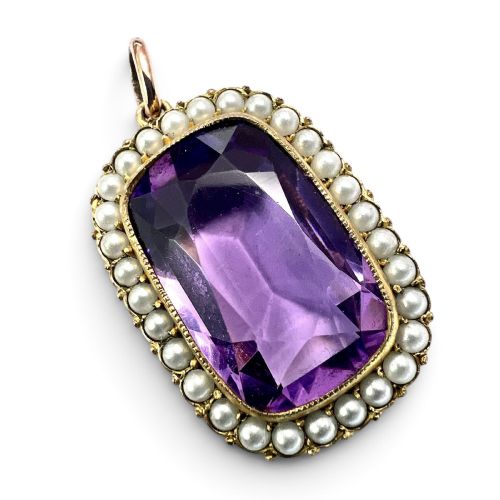
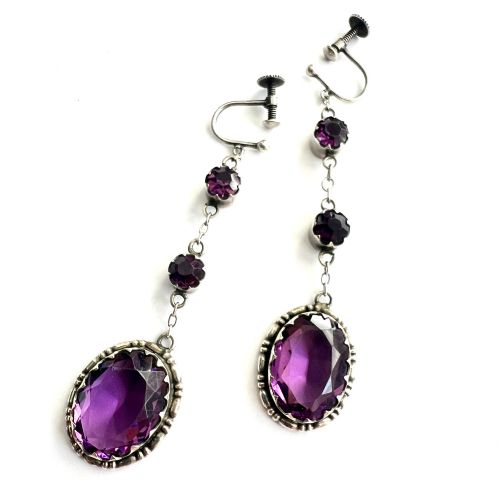
Purple glass jewellery encompasses a variety of decorative wearable items featuring violet-hued stones, ranging from Georgian foiled pieces to mid-century modern designs. These items frequently take the form of pendants, rings, earrings, and fobs set in silver or gold.
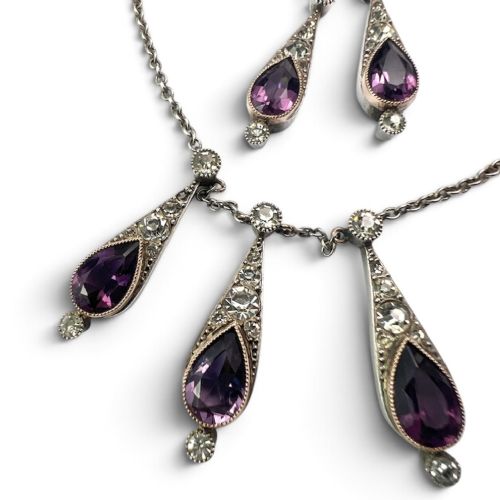
Buyers browsing this selection will most often encounter Art Deco earrings and necklaces alongside Victorian rings and pendants. The assortment draws upon materials like paste glass and amethyst-coloured stones mounted in yellow gold or silver.
The objects span multiple distinct eras, including Georgian, Victorian, Edwardian, and 1940s Retro Modern periods. Each era brings specific metalworking techniques and mounting styles to the purple glass components.
Materials and construction methods
Craftsmen utilised glass and paste glass alongside precious metals such as silver, 14ct gold, 18ct gold, and rolled gold to create these pieces. Stones were often moulded or cut to resemble genuine amethysts and mounted securely in metal settings.
Techniques varied from foil backing under paste stones to enhance colour reflection in Georgian items, to the intricate pate de verre methods seen in early twentieth-century pendants. Metal elements were cast, chased, and combined with components like pearls and intaglios.
Assessing quality in purple glass pieces
Quality rests upon the precision of the stone cutting, the depth and clarity of the glass colour, and the integrity of the metal setting. Finer examples show careful hand-setting of paste stones and well-preserved metalwork without excessive wear.
The distinction between simpler production pieces and superior examples lies in the artistry of the mounting and the quality of the glass composition. Well-executed pieces maintain secure stones and balanced proportions across rings, pendants, and earrings.
Gabriel Argy Rousseau
The Purple Glass Jewellery Glossary
- Paste glass
- Faceted glass created to imitate precious gemstones. It was hand-cut and polished in earlier centuries to achieve high brilliance.
- Pate de verre
- A glass-making technique involving crushed glass packed into a mould and fused in a kiln. This method produces rich colour gradations and textured surfaces.
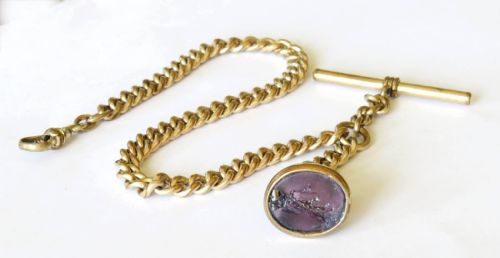
- Fob
- A small ornamental pendant attached to a pocket watch chain. They frequently incorporated intaglios, crystal, or coloured glass stones.
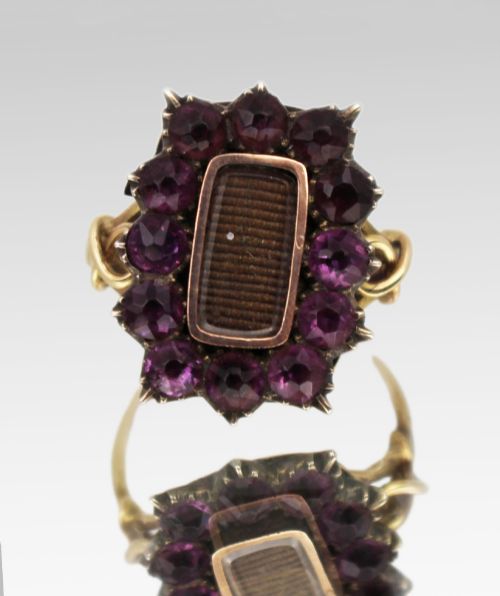
- Mourning ring
- A commemorative ring worn to remember a deceased person. These pieces often featured dark stones, hair work, or purple glass.
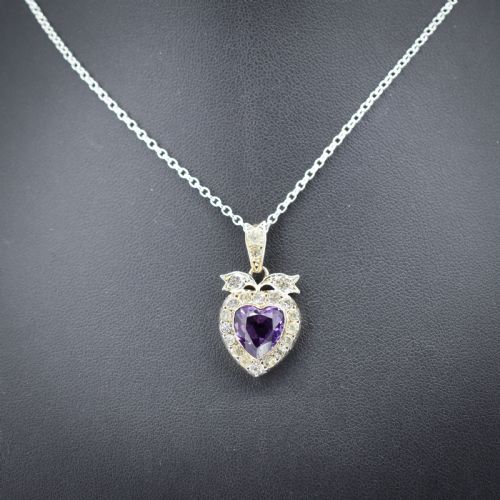
- Halo pendant
- A central stone encircled by a border of smaller stones or pearls. This arrangement maximises visual impact and light reflection.
Purple Glass Jewellery: Frequently Asked Questions
What is purple glass jewellery?
Purple glass jewellery includes rings, pendants, earrings, and brooches featuring violet paste or glass stones set in silver or gold. These items date from the Georgian era through to the mid-twentieth century.
The category highlights how artisans simulated precious amethyst using moulded and cut glass. Pieces range from simple Victorian mourning rings to elaborate Art Deco pendant sets.
How do I date purple glass pieces?
Dating relies on examining the metal types, gemstone cuts, and overall design characteristics of the mounting. Georgian and Victorian pieces often feature closed-back settings and foiled stones, while later twentieth-century items show different casting methods.
Matching the stylistic elements of the metalwork to known periods helps establish an accurate timeframe. Reference points include the distinct geometric lines of Art Deco items and the heavier gold settings of the 1940s.
Are these stones genuine amethyst?
Many items use paste glass designed to imitate amethyst rather than natural quartz. Paste glass is a heavy, lead-rich material that was carefully cut and polished by hand.
Examining the stones under magnification reveals characteristics typical of glass, such as mould seams or tiny air bubbles. This separates man-made paste stones from natural mined gems.
How should I care for antique glass jewellery?
Antique glass items require gentle handling to protect fragile paste stones and delicate metal settings. Cleaning should be done with a soft, dry cloth, avoiding harsh chemical dips that can damage foil backings or pearls.
Storing pieces individually in padded boxes prevents scratching between items. Care must be taken with screwback earrings and delicate chains to avoid bending the older metal.