



Provincial Upholstered Settee
A provincial upholstered settee brings country elegance and comfortable seating into a room, making it a favourite for traditional and eclectic spaces alike.
Provincial Upholstered Settee
When you search for a provincial upholstered settee, you are looking at seating options that range from compact two-seater couches to larger three-seater sofas. The pieces on this page mostly draw on French provincial and Louis styles, bringing regional character and classic shaping together.
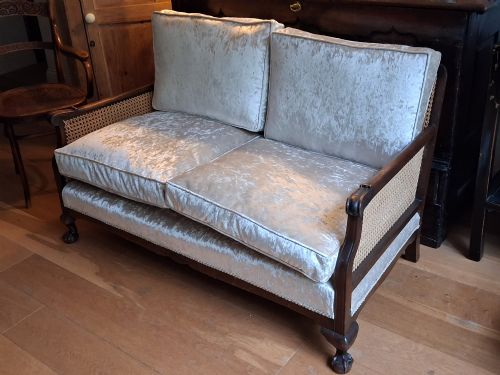
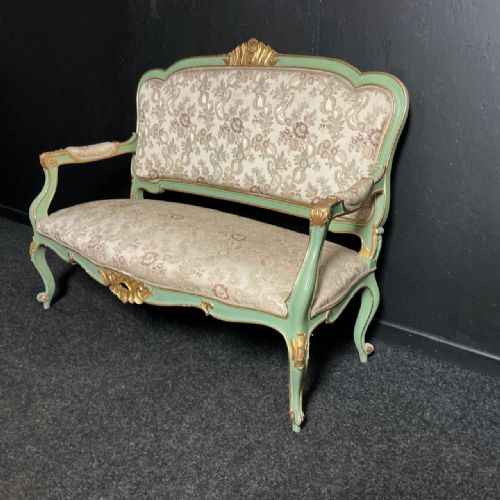
The selection includes items shaped by historical revivals, alongside walnut and mahogany frames that often feature carved details and open arms. You will encounter various forms, from bergères with cane work to canapés and ladderback settees.
These items span periods from the nineteenth century through the early and mid-twentieth century, offering both antique authenticity and later interpretations of classical designs. Painted wood finishes and natural timber frames appear frequently across the inventory.
How they were made
Makers constructed these frames from solid timbers such as walnut, mahogany, and painted wood, shaping the timber through careful carving and joinery. Walnut and mahogany provide sturdy structures that hold intricate scrollwork and open arm designs.
Upholstery relies on traditional textiles including linen, velvet, and damask fabric, secured to the frames to provide padded seating. Some pieces incorporate cane work into the back or sides alongside traditional fabric cushioning.
Provincial Upholstered Settee Retail Price Guide 2026
Typical asking prices for provincial upholstered settee among the pieces listed under this phrase on Sellingantiques today, from the lower quarter to the upper quarter. They describe what is for sale here now, not the wider market.
One compact carved two-seater is explicitly noted as an end-of-bed sofa, proving that ancestors also liked lounging beneath the duvet.
What varies in quality
The sophistication of the wood carving determines much of the distinction between simpler pieces and more elaborate designs. Crisp, deep relief work on walnut or mahogany frames indicates a higher standard of craftsmanship than shallow or softened detailing.
The selection of textiles and the execution of cane work also separate pieces, with dense damask, velvet, or linen and tight, even weaving representing superior finish. Frame stability and the preservation of original painted surfaces further define the better examples.
The Provincial Upholstered Settee Glossary
- Canapé
- An upholstered sofa or settee, typically featuring an exposed wooden frame and an elongated seat. These pieces often reflect French stylistic influences.
- Bergère
- An enclosed armchair or small sofa with upholstered back and sides, sometimes featuring cane work on the exterior panels. The design originated in France during the eighteenth century.
- Damask fabric
- A reversible figured fabric woven on a loom, traditionally featuring floral or geometric patterns. It provides a textured and durable surface for upholstery.
- Ladderback settee
- A wooden seat featuring horizontal slats across the backrest, offering a simpler structural aesthetic. This form appears in nineteenth-century examples.
- Louis XV style
- A design aesthetic characterised by asymmetric curves, C-scrolls, and naturalistic floral motifs. It informs many of the carved walnut and painted sofas in this collection.
Provincial Upholstered Settee: Frequently Asked Questions
What is a provincial upholstered settee?
It is a traditional seating item, usually designed for two or three people, combining a wooden frame with padded upholstery. These pieces often draw inspiration from French regional styles.
They serve as decorative and functional seating for drawing rooms, bedrooms, or hallways, bringing historic character to an interior.
How do I identify the period of a settee?
You examine the timber species, the style of the carved details, and the overall construction methods used on the frame. Nineteenth-century pieces often display heavier mahogany or walnut structures.
Later interpretations from the twentieth century may reflect specific revival movements or feature painted finishes characteristic of Edwardian or later decades.
Are these settees comfortable for daily use?
Most of these pieces are built with upholstered seats and backs designed to offer supportive seating. The inclusion of arms and varied seat depths accommodates relaxed sitting.
Depending on the age of the piece, the internal padding and upholstery may reflect traditional cushioning methods.
Where should I place a provincial settee?
These settees fit well in living rooms, large hallways, or at the foot of a bed as accent seating. Their decorative frames and carved woodwork make them suitable as focal points.
Compact two-seater versions work effectively in smaller spaces, while three-seater models suit larger reception rooms.