

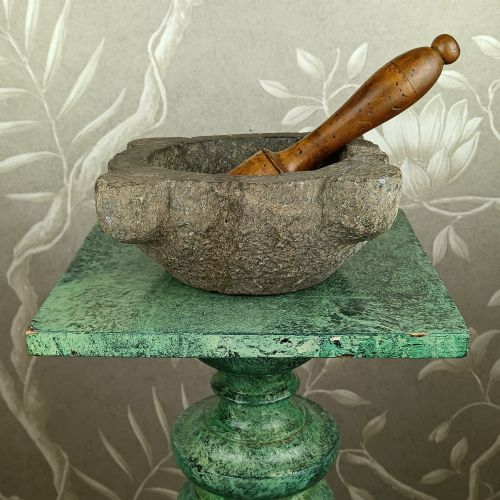
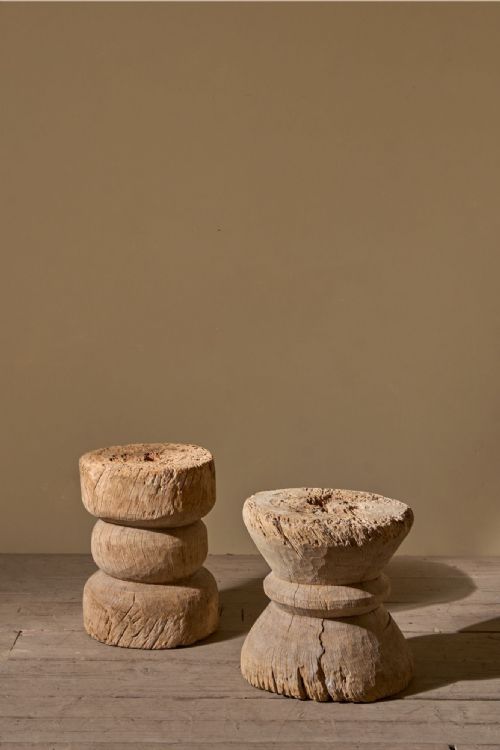

Primitive Table
A primitive table brings honest utility and unpretentious form into a room, fashioned by hands that worked for daily purpose rather than polite display.
Primitive Table
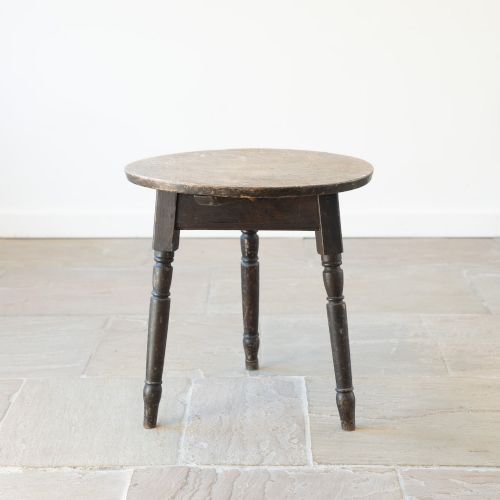
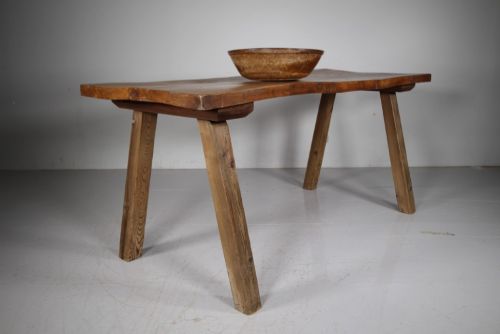
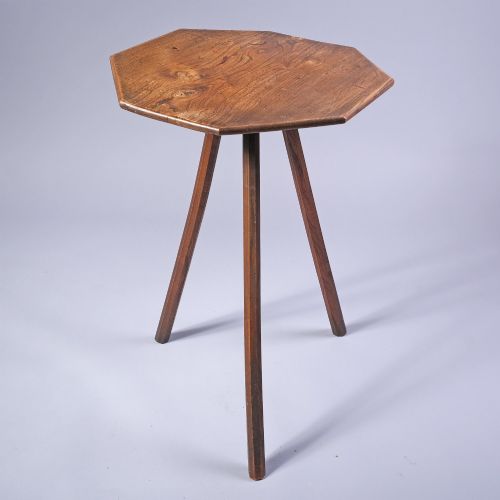
A primitive table embodies the straightforward construction of earlier centuries, built by local makers using whatever timber came to hand. You will encounter forms ranging from sturdy oak dining boards to ash three-legged tables and small occasional pieces.
The materials reflect a rural economy, relying heavily on elm, oak, pine, ash and sycamore. These pieces often blur the line between domestic furniture and functional work surfaces such as chopping blocks and benches.
Many examples stem from nineteenth-century rural traditions across Britain and France, though earlier centuries appear in robust oak and chestnut forms. The aesthetic is entirely defined by practicality, age, and the honest wear of past use.
Materials and construction
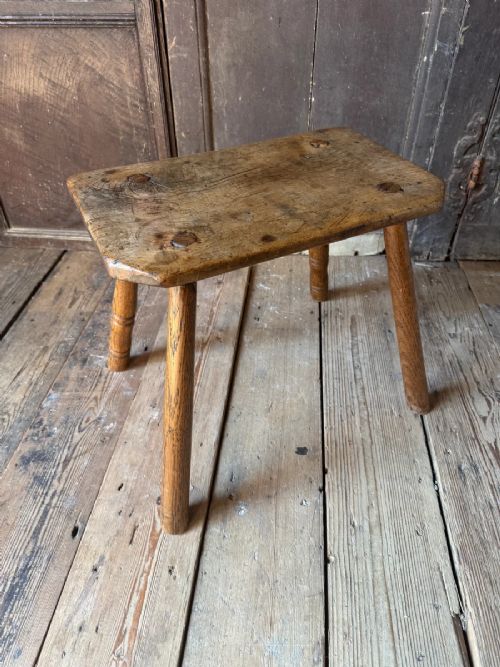
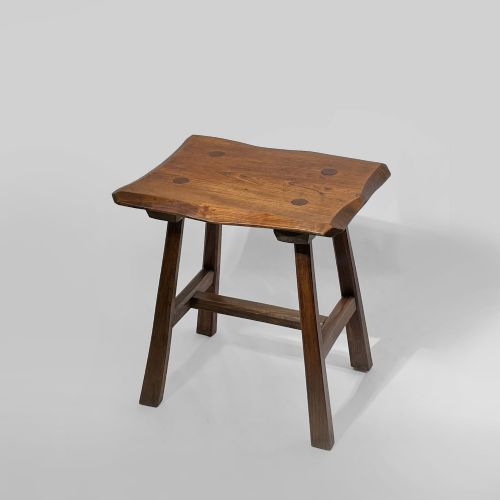
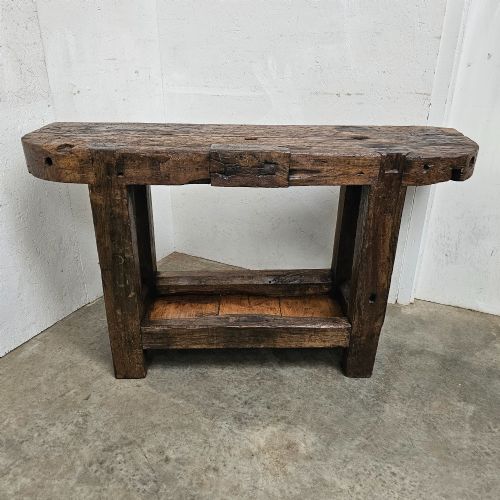
Makers utilised solid domestic timbers like elm for table tops and ash or oak for legs and stretchers. Surfaces often show heavy adze marks, saw scars, and pegged joints that hold the heavy tops securely to the base.
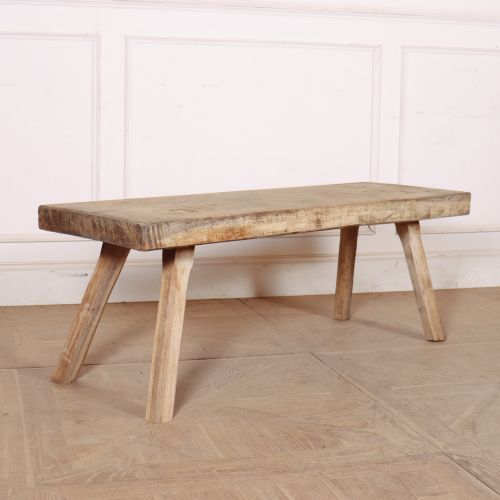
Turned legs, joined trestles and three-legged configurations provide stability on uneven flagstone floors without intricate joinery. Timber was chosen for density and resilience rather than decorative grain, ensuring the piece could withstand heavy daily labour.
Primitive Table Retail Price Guide 2026
Typical asking prices for primitive table among the pieces listed under this phrase on Sellingantiques today, from the lower quarter to the upper quarter. They describe what is for sale here now, not the wider market.
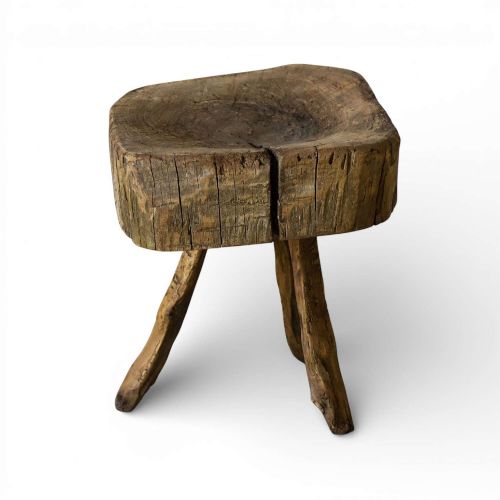
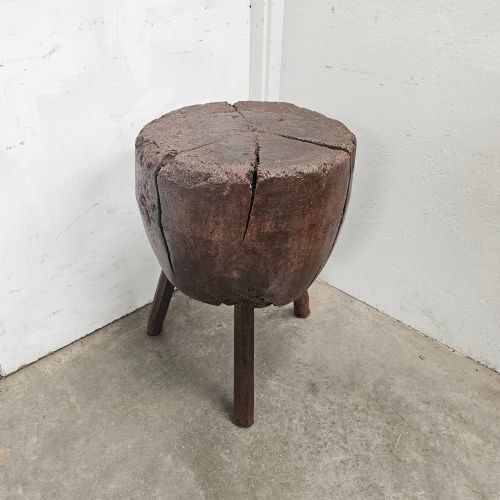
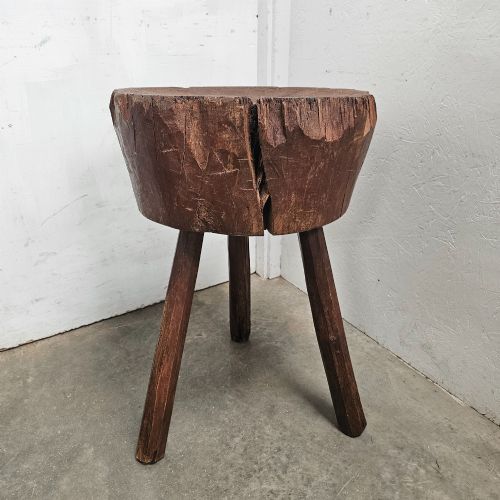
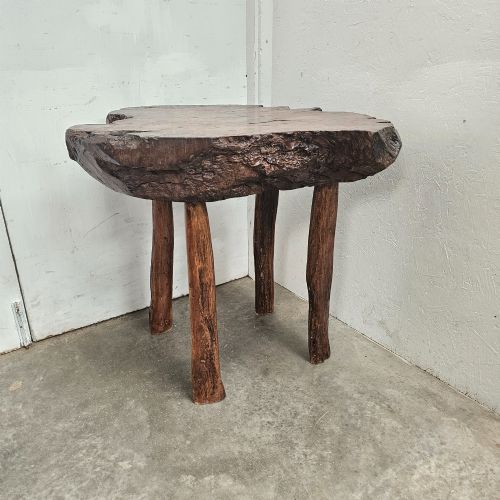
Gnarled legs on old chopping blocks remind us that trees kept their crooked shapes long after entering the kitchen.
Distinguishing quality
Quality rests in the integrity of the original structure and the depth of surface patina achieved through generations of scrubbing and handling. A well-balanced proportion and an undisturbed relationship between top and legs elevate certain examples above purely utilitarian work surfaces.
Unfussy construction remains consistent, but the character of the wood grain and the honesty of past repairs dictate the desirability of each piece. Excessive intervention or modern cleaning diminishes the tactile history that defines the category.
The Primitive Table Glossary
- Vernacular
- Furniture made by local craftsmen using regional traditions and native timbers, free from high-style academic design. It represents the everyday material culture of a specific region.
- Trestle
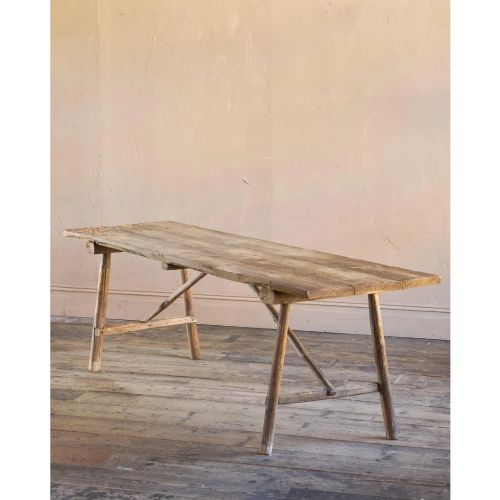
- A support structure consisting of horizontal beams and vertical legs holding a heavy top without corner posts. This form allows maximum legroom and easy dismantling.
- Pig bench
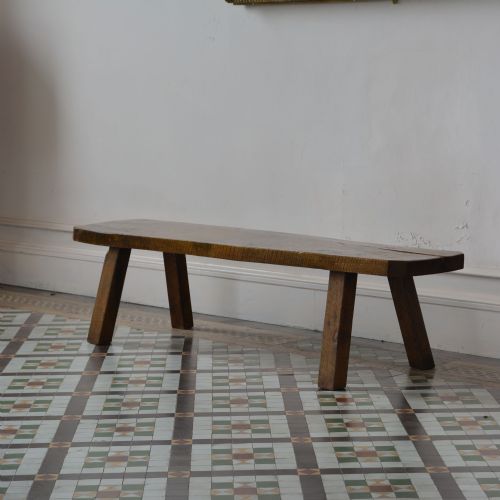
- A low, narrow wooden bench traditionally utilised for farm work and butchery tasks. Today these sturdy items frequently serve as low coffee tables.
- Game block
- A thick section of timber, often beech or elm, mounted on legs and used for preparing game or meat. Their dense end-grain tops show heavy use from cleavers and blades.
- Cricket table
- A small, lightweight circular table supported by three splayed legs designed to stand firmly on uneven cottage floors. The three-legged design prevents rocking.
Primitive Table: Frequently Asked Questions
What defines a primitive table?
A primitive table is characterised by unpretentious, utilitarian construction created for rural domestic or working life. These pieces avoid classical ornamentation in favour of honest structural integrity.
They rely on regional timbers and straightforward joinery executed by local craftsmen. The resulting forms prioritise function above polite aesthetics.
How do I care for a scrubbed top?
Scrubbed wooden tops benefit from dry dusting and occasional gentle cleaning with mild soap and water rather than heavy chemical polishes. Keeping the timber nourished preserves the pale, matte finish.
Avoid excessive moisture and use natural waxes sparingly if the wood appears dry. Allowing the surface to breathe maintains its historical character.
Where were these tables used?
These tables originated in farmhouse kitchens, dairies, workshops and cottages across Britain and Europe. They served as central surfaces for food preparation, dining and daily labour.
Their robust construction allowed them to withstand demanding tasks in domestic and agricultural settings alike.
How can I date an old timber table?
Dating relies on observing tool marks, timber species, structural fastenings and overall wear patterns. Hand-sawn boards and pegged tenons indicate older methods of manufacture.
Changes in fashion, regional design traits and the natural accumulation of patina also offer strong clues to the period of origin.