




Primitive Stick Chair
A primitive stick chair offers robust vernacular seating shaped by regional makers using local timber across the eighteenth and nineteenth centuries.
Primitive Stick Chair
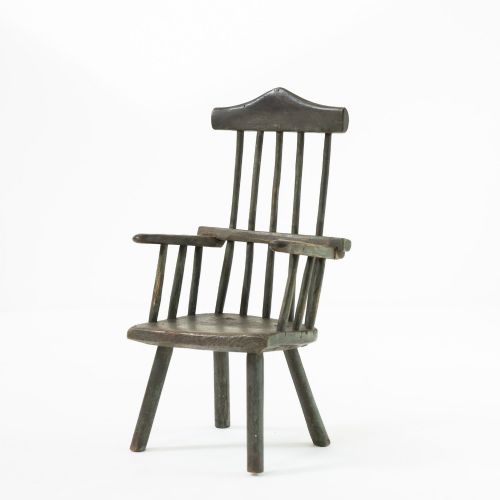
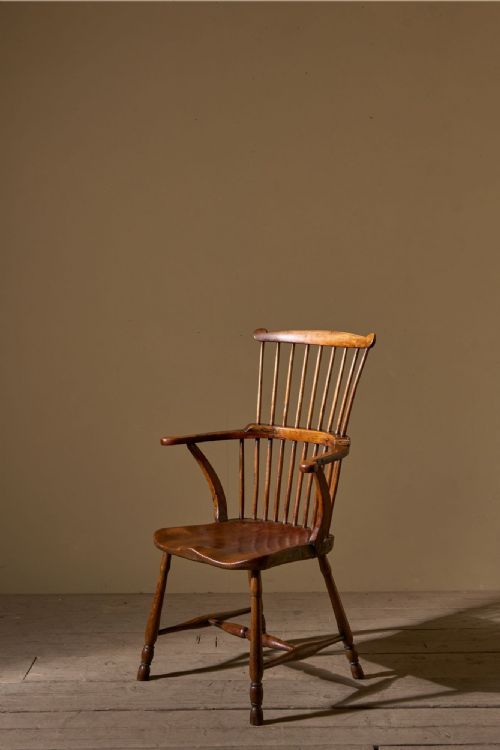
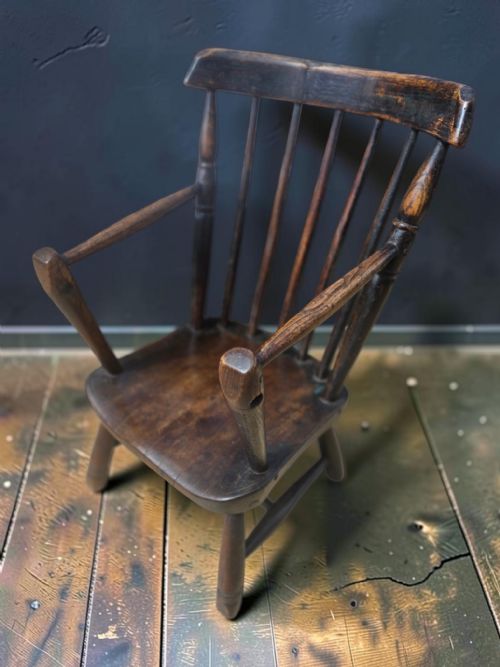
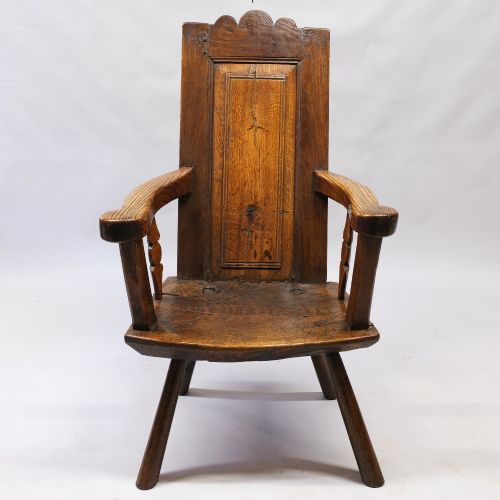
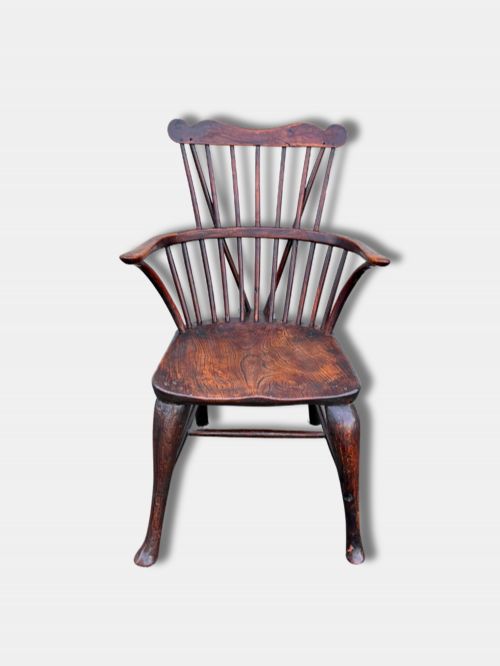
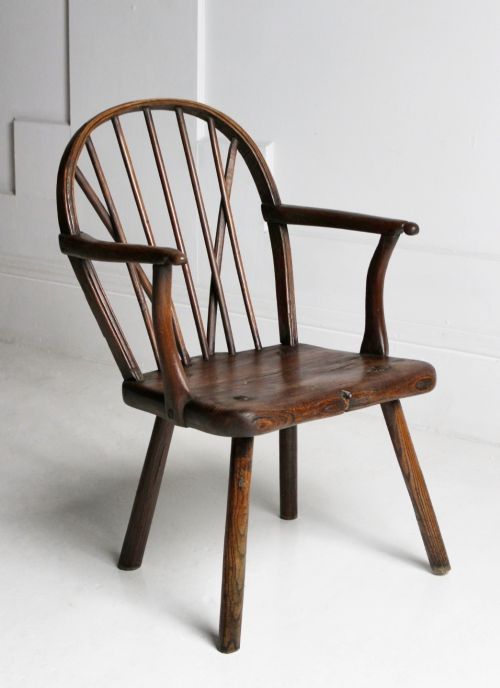
A primitive stick chair is a vernacular seating form constructed largely by regional rural makers during the eighteenth and nineteenth centuries. The pieces on this page span Welsh, West Country, and Thames Valley origins, taking the form of armchairs, children's chairs, and settles.
Most examples rely on a solid wood seat board bored to receive turned legs and upward-projecting stick backs. Comb backs, panel backs, and low stick backs dominate the configurations found here.
Regional variations include Welsh comb backs from locations such as Snowdonia and the Swansea Valley, alongside English vernacular armchairs that reflect local rural traditions.
Materials and Construction
These chairs utilise contrasting native timbers chosen for specific structural demands, pairing elm for resilient, non-splitting seats with ash or oak for steam-bent comb backs and spindle sticks. Finer pieces incorporate yew, laburnum, fruitwood, and beech.
Makers bored tapered holes through thick plank seats and wedged the leg tenons from above to secure the undercarriage. Spindles and arm supports were shaped by hand using drawknives and spoke shaves before being driven into position.
A lobster pot comb back describes a chair whose curved rear sticks cradle the sitter like a wicker fish trap.
Distinctions in Quality
Quality rests on the selection of timber and the harmony of the proportions. Seats figured with burr elm or rich grain sit atop well-turned legs, whereas utility pieces rely on plain ash and simpler member shaping.
The Primitive Stick Chair Glossary
- Comb back
- A chair back where the vertical spindles rise through a horizontal crest rail, resembling the teeth of a comb. This construction provides upper back support while keeping the frame visually light.
- Windsor chair
- A seat built with a solid wooden saddle-shaped seat into which the legs and back sticks are independently inserted. The design relies on the strength of the thick seat plank to hold the undercarriage rigid.
- Vernacular
- Objects designed and built by local rural craftspeople following traditional regional patterns rather than urban academic styles. These pieces reflect the materials and working methods available in a specific district.
- Laburnum
- A dense, hard native timber with rich dark heartwood and bright yellow sapwood, utilised occasionally for decorative spindles or turnery. Its distinct contrast adds visual complexity to country seating.
- Settle
- A wooden bench featuring a high solid back and enclosed arms to block draughts in domestic interiors. Smaller child versions appear in country workshops alongside standard armchairs.
Primitive Stick Chair: Frequently Asked Questions
What is a primitive stick chair?
A primitive stick chair is a vernacular seat made from local timber by regional carpenters and country joiners. These pieces rely on a solid plank seat that receives turned legs below and steam-bent or straight sticks above.
Most examples date from the eighteenth and nineteenth centuries, carrying distinct regional characteristics from places like the Welsh valleys and the English West Country.
How do I date an 18th century stick chair?
Dating relies on examining the timber selection, tool marks, and construction techniques visible underneath the seat board. Eighteenth-century pieces frequently employ adzed elm seats paired with cleft ash spindles and early turnery.
Later nineteenth-century examples often display more uniform machine-sawn components and standardised spindle diameters. Regional design traits also help narrow the period of manufacture.
Where were primitive stick chairs made?
These chairs originated in rural districts across Britain, with particularly strong regional traditions documented in Wales and the English West Country. Local makers utilised whatever native hardwoods grew nearby, including ash, elm, oak, and fruitwood.
Specific valleys and counties developed recognizable local styles, such as the comb back armchairs associated with Snowdonia and Carmarthenshire.
How should I care for a historic stick chair?
Keep wooden seating away from direct heat sources and sudden humidity shifts to prevent timber shrinkage and joint loosening. Natural beeswax polish applied sparingly helps maintain the dried surface patination.
Avoid over-cleaning painted surfaces or aggressive chemical treatments that might strip away centuries of accumulated wear and character.