


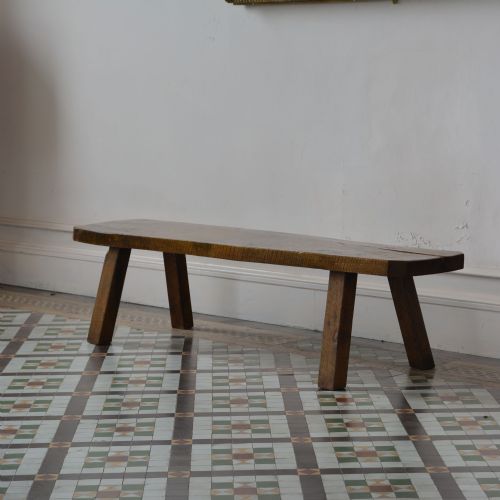
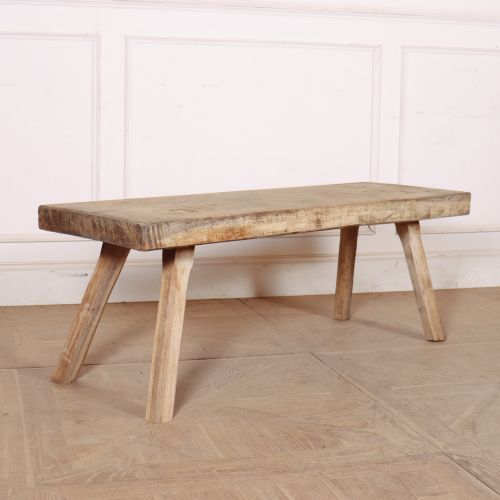
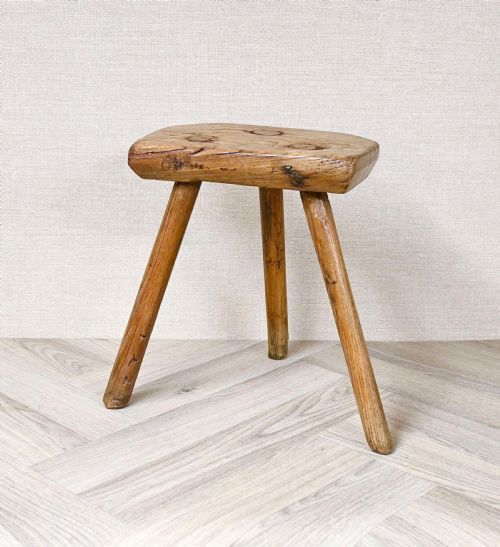


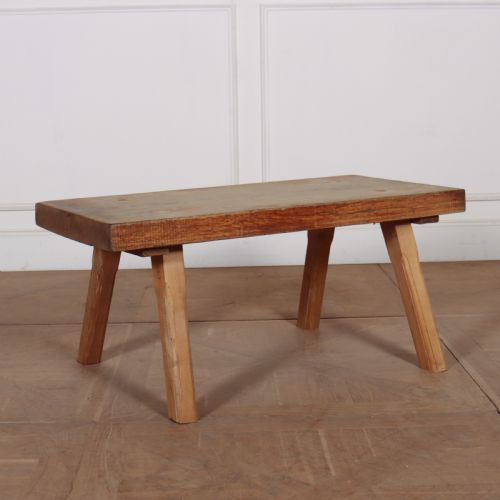
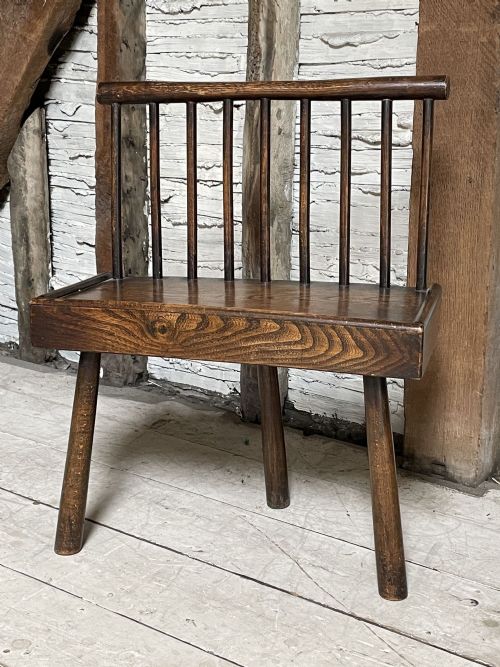
Primitive Rustic Oak Bench
A primitive rustic oak bench brings honest utility and heavy vernacular character into a modern interior.
Primitive Rustic Oak Bench
A primitive rustic oak bench encompasses low stools, long garden seating, narrow pig benches, and substantial trestle forms shaped by country makers for everyday labour and domestic use. These pieces emerge from the eighteenth century, nineteenth century, Victorian, Edwardian, and nineteen-twenty periods, rooted in rustic country, vernacular, and primitive folk art traditions.
The version most frequently met on this page is the narrow oak pig bench or long farmhouse form, often repurposed as a low coffee table or hallway seat. Alongside these sit diminutive stools, children's seating, and work tables constructed from timber, elm, softwood, and pine.
Makers in these rural traditions built for function rather than display, utilising local hardwoods and softwoods to create unpretentious seating and tables. The resulting forms range from simple natural edge child stools to nine-foot Welsh benches and cutler's stools.
Materials and construction
Construction relies heavily on solid oak, supported by secondary timbers such as elm, sycamore, pine, and softwood. These woods were chosen for availability and strength rather than refined finish, often showing the natural grain and knots of the tree.
Joinery is straightforward and robust, employing pegged mortise and tenon joints, through-tenons, and straightforward pegging to withstand heavy domestic or workshop use. Many examples incorporate wrought iron fixings or braces for added structural stability.
Surfaces bear the marks of hand tools, adzes, and saws, leaving textured finishes that weather and patina over decades of handling. Natural forms and live edges appear frequently, reflecting the direct translation of raw timber into functional furniture.
Primitive Rustic Oak Bench Retail Price Guide 2026
Typical asking prices for primitive rustic oak bench among the pieces listed under this phrase on Sellingantiques today, from the lower quarter to the upper quarter. They describe what is for sale here now, not the wider market.
Listings feature oak, elm, pine, and sycamore timbers shaped into coffee tables, garden benches, and milking stools across the eighteenth and nineteenth centuries.
Assessing quality in vernacular furniture
Quality rests in the proportion, timber selection, and the integrity of the original construction rather than decorative carving or polished veneer. A well-proportioned bench balances length with sturdy leg placement, avoiding awkward proportions that compromise its visual weight.
The depth and honesty of the surface patina dictate much of the character, showing decades of honest wear without artificial distressing or over-cleaning. Original fixings and untouched timber surfaces hold higher regard among collectors than heavily restored examples.
Structural honesty remains paramount, where joints remain tight and the timber has aged naturally without excessive rot or inappropriate modern replacements. The distinction between a utilitarian workshop piece and a domestic seat lies in the refinement of the sculpted seat and leg placement.
The Primitive Rustic Oak Bench Glossary
- Pig bench
- A low, narrow wooden bench traditionally used in agricultural settings for butchery or farm tasks, now frequently utilised as a coffee table. Its slender proportions make it particularly adaptable for modern interiors.
- Vernacular
- Furniture built by local tradesmen or carpenters using regional styles and readily available materials, prioritising utility over academic design. This approach defines the honest character of country furniture.
- Trestle
- A structural support system consisting of horizontal beams connected to upright legs, commonly used to hold long tabletops or benches securely. This method allows for maximum legroom beneath the surface.
- Stickback
- A chair or settle constructed by inserting individual turned wooden spindles or sticks directly into a solid wooden seat. It represents a traditional Windsor-adjacent technique common in country seating.
- Natural form
- Furniture shaped directly from the organic contours of the timber, retaining natural curves, knots, and edge irregularities. This approach celebrates the raw shape of the tree within the finished object.
Primitive Rustic Oak Bench: Frequently Asked Questions
How do I style a rustic bench?
A rustic oak bench works effectively as a low coffee table, a hallway seat, or a display surface for books and ceramics. Pair the weathered timber with softer textiles like wool or linen to balance the hard surface.
In a hallway, place a narrow bench against a plain wall to provide a practical spot for putting on shoes.
Are these benches suitable for daily use?
Solid oak and hardwood construction ensures these benches withstand regular sitting and placement of heavy objects. Their robust vernacular framing was originally designed for demanding farm or workshop conditions.
Routine use simply adds further character to the already weathered timber surfaces over time.
How do I identify the period?
Dating relies on tool marks, timber selection, joinery methods, and the degree of natural wear across the surface. Eighteenth-century examples often display wider board widths and hand-adzed textures, while later nineteenth-century pieces show slightly more standardised sawing.
Comparing the construction details against dated examples helps narrow down the likely decade of manufacture.