

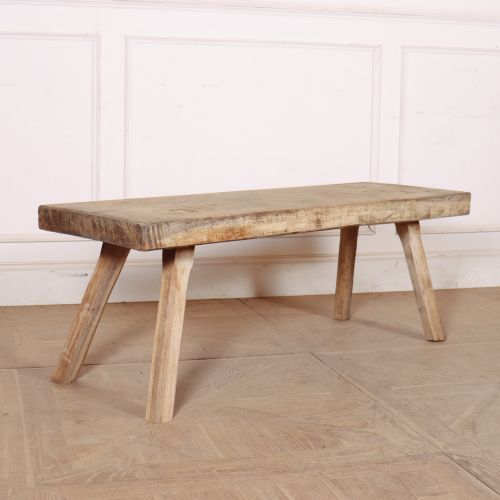
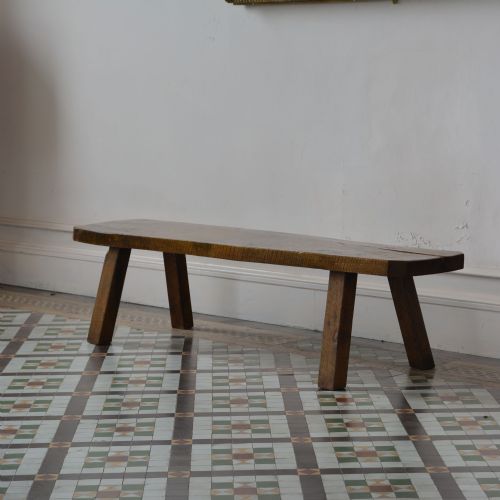


Primitive Low Coffee Table
A primitive low coffee table brings tactile warmth and honest utility to a sitting room, fashioned from reclaimed work benches and utilitarian boards.
Primitive Low Coffee Table
A primitive low coffee table encompasses rustic country and farmhouse forms derived from former work benches, pig benches, cobblers benches and occasional tables. These pieces originate across the eighteenth century, nineteenth century and Victorian periods, carrying the marks of daily labour into domestic interiors.
The version most commonly met on this page is a long, low surface fashioned from oak, pine or softwood, often showing the heavy patination of scrubbed timber and trestle supports. Makers originally built these objects for utilitarian tasks rather than formal entertaining, which accounts for their robust proportions and straightforward construction.
Formats span narrow proportions suited for placement before a sofa to broader timber boards that anchor a larger room. Side tables and low benches also appear under this heading, reflecting how domestic spaces adapt historic work furniture for modern coffee table use.
Materials and construction
Construction relies heavily on sturdy native timbers such as oak, pine, sycamore, elm and softwood, chosen for durability rather than decorative display. Workshops joined these heavy boards using traditional pegging and trestle methods that kept large working surfaces stable under pressure.
Wrought iron appears in structural braces and fixings, adding industrial strength to tables that originally withstood heavy workshop tasks. Surfaces often show the scars of hand-planing and centuries of scrubbing, leaving bare wood with a distinct tactile grain.
Primitive Low Coffee Table Retail Price Guide 2026
Typical asking prices for primitive low coffee table among the pieces listed under this phrase on Sellingantiques today, from the lower quarter to the upper quarter. They describe what is for sale here now, not the wider market.
Current listings feature eighteenth-century and nineteenth-century pieces alongside Victorian examples, constructed from oak, pine, sycamore and wrought iron.
Judging quality and character
Quality in a primitive low coffee table rests upon the integrity of the timber and the honesty of its wear, rather than uniform factory finish. Pieces that retain their original tool marks and deep, untouched surface patination stand apart from those stripped down to raw modern wood.
Proportion and structural balance dictate the appeal of these tables, as converted work benches can sometimes feel awkward in a domestic setting. The best examples maintain their original height and footings without excessive modern alteration, preserving the character of their working origins.
The Primitive Low Coffee Table Glossary
- Pig bench
- A low wooden bench traditionally used in agricultural settings for butchery tasks, now repurposed as a long coffee table due to its narrow proportions.
- Cobblers bench
- A specialist work seat featuring built-in compartments and low surfaces where a shoemaker kept tools, translated today into characterful low tables.
- Trestle table
- A table structure composed of two or more support frames connected by a horizontal beam, allowing for sturdy support without bulky corner legs.
- Patina
- The surface sheen and colour depth developed by wood over decades of handling, cleaning and exposure to light and air.
Primitive Low Coffee Table: Frequently Asked Questions
What is a primitive low coffee table?
A primitive low coffee table is an antique utilitarian object, such as a work bench or pig bench, adapted for use in a modern living space.
These pieces originate from rural workshops and domestic settings across the eighteenth and nineteenth centuries, offering unpretentious timber construction.
How were primitive tables originally used?
Original uses varied from agricultural work and butchery to shoemaking and general household labour.
Craftsmen built them for heavy daily tasks, which explains the robust timbers, sturdy trestle bases and practical low heights.
How do I style a primitive low coffee table?
Pair these textured wooden surfaces with neutral upholstery and contemporary ceramics to highlight the contrast between old timber and modern living.
Keep styling simple to let the historic grain and natural patination remain the visual focus of the room.
How do I date a primitive table?
Dating relies on examining the tool marks, timber species, joint construction and overall wear patterns visible across the structure.
Eighteenth-century examples often display hand-sawn boards and pegged joints, whereas Victorian pieces may incorporate heavier industrial bracing or softer pine.