






Prie Dieu Prayer Chair
A prie dieu prayer chair is a low-backed devotional seat designed for private kneeling and prayer.
Prie Dieu Prayer Chair
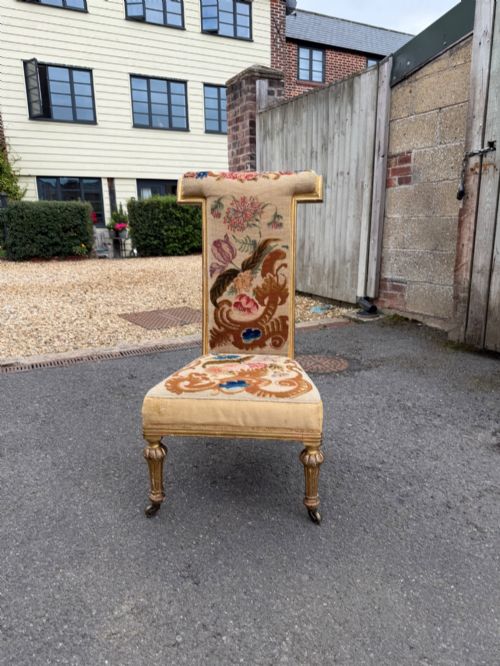
When you examine a prie dieu prayer chair, you look at a specialised form of nineteenth-century seating designed specifically for private devotion, often featuring a low, padded upper rail for resting arms during prayer and a lower shelf or platform for kneeling. The pieces gathered here span the Victorian and Regency periods, alongside earlier nineteenth-century examples, capturing the formal and domestic expressions of personal piety.
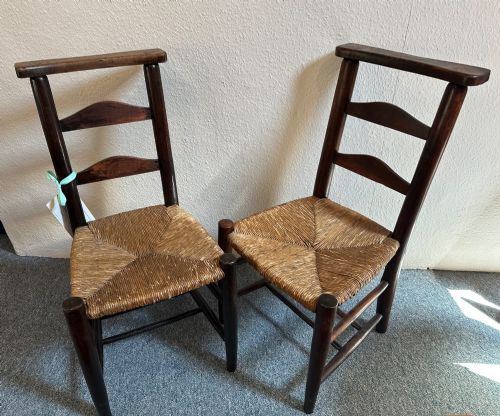
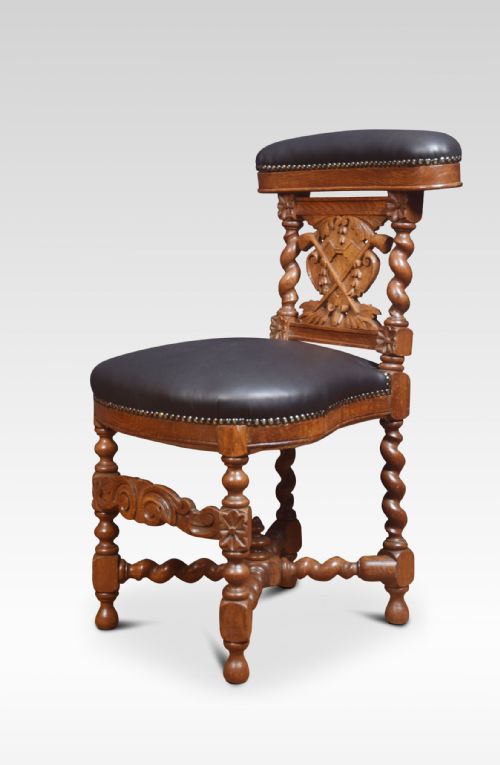
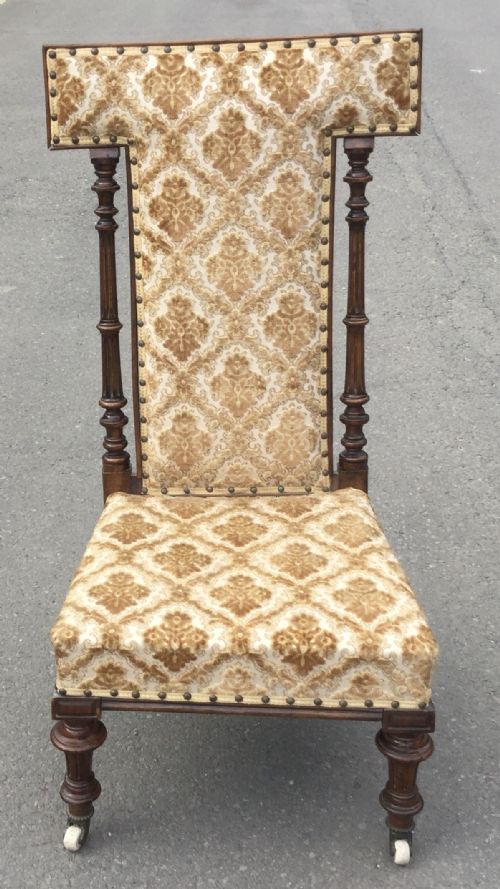
You are most likely to meet Victorian interpretations in walnut, mahogany, or oak, frequently upholstered in period textiles, velvet, or needlepoint. These chairs range from simple ecclesiastical models associated with cathedral furnishings to elaborate vernacular variations incorporating barley twist supports, carved woodwork, and Gothic Revival details.
The form crosses over into everyday domestic use as occasional and bedroom seating, retaining its characteristic low posture while adapting to changing interior tastes. Whether encountered as an ebonised model with green velvet or a French walnut pair, the underlying architecture remains faithful to its devotional origins.
How they were made
Cabinetmakers constructed these frames using dense hardwoods such as mahogany, walnut, rosewood, and oak, often enriching the structural timber with deep relief carving, turned elements, and ebonised finishes. Joinery relied on traditional pinned mortise and tenon techniques to withstand the physical stresses of kneeling and leaning.
Upholstery formed an integral part of the construction, employing traditional stuffing methods beneath surface textiles like wool velvet, needlepoint, and patterned fabrics. Brass fitments and brass-headed tacks frequently secured the coverings to the timber frame, while specialist makers added carved crestings and fretted tops.
Prie Dieu Prayer Chair Retail Price Guide 2026
Typical asking prices for prie dieu prayer chair among the pieces listed under this phrase on Sellingantiques today, from the lower quarter to the upper quarter. They describe what is for sale here now, not the wider market.
One remarkably pious chair once served St Paul's Cathedral in London, bearing the official stamp of the institution upon its wooden frame.
What varies in quality
The distinction between ordinary and exceptional examples lies in the integrity of the timber framing and the sophistication of the carved ornamentation, such as barley twists or crisp Gothic tracery. Finer pieces demonstrate superior joinery and retain maker attribution stamps or notable provenance linked to ecclesiastical institutions.
The choice of primary timber and the retention of period upholstery materials also dictate standing. Dense rosewood and figured walnut command greater interest than plain secondary woods, while untouched original needlepoint and velvet elevate the overall character of the piece.
R Whytock of Edinburgh·Angerstein
The Prie Dieu Prayer Chair Glossary
- Prie-Dieu
- A devotional prayer chair featuring a low seat and an elevated upper rest designed for kneeling and leaning. The name translates directly from French as pray God.
- Gothic Revival
- An architectural and decorative style popular during the nineteenth century that revived medieval pointed arches, trefoils, and heavy carved woodwork. This aesthetic frequently influenced church and domestic seating.
- Barley Twist
- A type of wood-turning resembling a spiral rope or twisted column, commonly found on the vertical supports and legs of nineteenth-century chairs. It added visual texture to otherwise plain timber framing.
- Needlepoint
- Hand-stitched canvas embroidery using wool threads, frequently utilised for the upholstery panels on nineteenth-century devotional seating. It provided a durable and decorative surface for daily use.
Prie Dieu Prayer Chair: Frequently Asked Questions
What is a prie dieu chair used for?
A prie dieu chair is designed for private prayer and devotional reading, allowing the user to kneel on the lower section while resting arms upon the padded upper rail.
Over time, many of these chairs transitioned into general domestic settings, serving as occasional, bedroom, or salon seating while retaining their distinctive low proportions.
How do I identify a Victorian prayer chair?
Victorian examples typically feature dense timbers such as mahogany, walnut, or oak, combined with characteristic nineteenth-century revival styles like Gothic tracery or French Rococo elements.
Look for low seats, shaped upper arm rests, and turned supports, which together separate these devotional forms from standard dining or side chairs.
Were these chairs made for churches?
Certain examples were indeed commissioned specifically for ecclesiastical settings, including cathedral furnishings and rectories, sometimes bearing direct institutional markings.
Many other pieces were produced for domestic use, allowing individuals to maintain a dedicated space for private worship within a nineteenth-century bedroom or parlour.
What woods were used for prayer chairs?
Cabinetmakers utilised a variety of hardwoods depending on the desired finish and period, most commonly employing mahogany, walnut, rosewood, and oak.
In some instances, makers substituted native timbers with ebonised finishes to achieve a dark, solemn appearance suited to the devotional nature of the furniture.