


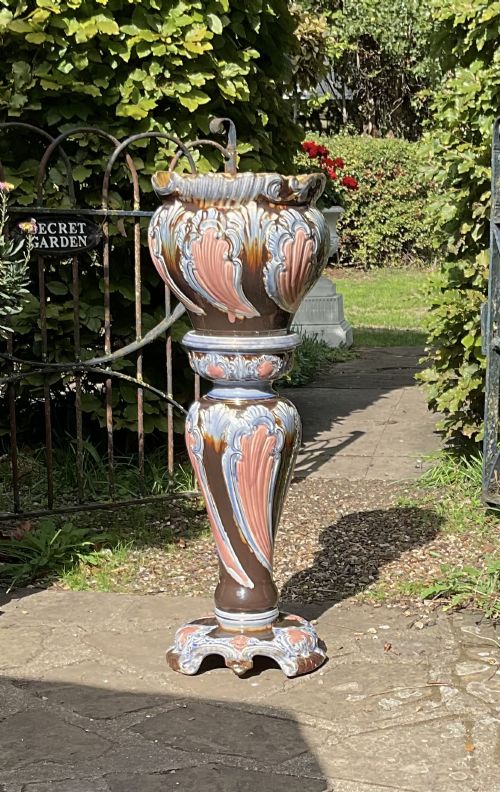


Pottery Plant Stand
These pottery plant stand pieces bring architectural presence and colour to a room, uniting functional garden support with decorative ceramic craft.
Pottery Plant Stand
A pottery plant stand combines a raised pedestal with a matching bowl, container or jardiniere to elevate greenery above floor level. The pieces on this page span from the nineteenth century into the twentieth century, embracing periods like the Victorian era, Edwardian years, Art Nouveau and Art Deco.
Most examples appear as matched sets of jardinieres and pedestals, alongside cache pots, planters and occasional side tables adapted from ceramic forms. Makers created these works in distinct styles, ranging from Victorian rustic and naturalistic motifs to clean geometric lines of later decades.
Origins stretch across English potteries and continental workshops, demonstrating how homes of the past integrated botanical displays into interior schemes. Buyers encounter everything from tall columnar pedestals to low cache pots designed for specific interior settings.
How they were made
Potters shaped these stands using earthenware, stoneware and faience bodies, applying heavy glazes to achieve durable, glossy surfaces. Techniques included moulding intricate naturalistic details and throwing tall columns designed to bear the weight of large plants.
Makers utilised specialised metallic lustre glazes, rich majolica colour palettes and complex firing methods to create the vibrant tones seen across the pieces. These ceramic finishes required precise temperature control in the kiln to fix the deep greens, blues and metallic sheens.
Pottery Plant Stand Retail Price Guide 2026
Typical asking prices for pottery plant stand among the pieces listed under this phrase on Sellingantiques today, from the lower quarter to the upper quarter. They describe what is for sale here now, not the wider market.
Some nineteenth-century makers added ceramic griffins to guard the base of the jardiniere, keeping imaginary watch over the parlour fern.
What varies in quality
Quality rests in the crispness of the modelled detail, the depth and evenness of the glaze, and the structural integrity of tall pedestal columns. Superior examples display careful hand-finishing on naturalistic reliefs and harmonious colour blending across both the jardiniere and its stand.
The relationship between the upper vessel and the base determines visual balance, with finer items showing precise proportion and matching glaze chemistry. Pieces bearing identified factory marks or distinct artistic attribution generally reflect greater ambition in design and execution.
Royal Doulton·Burmantofts·Enoch Wood & Sons·Clement Massier·Julius Dressler·Woodlesford Art Pottery
The Pottery Plant Stand Glossary
- Jardiniere
- A large ornamental pot or bowl for holding plants or flowers. It often sits atop a matching pedestal stand.
- Majolica
- A type of earthenware decorated with opaque coloured glazes over a white tin enamel. This technique yields vibrant, glossy surfaces popular in nineteenth-century ceramics.
- Cache pot
- A decorative flowerpot used to conceal a plain inner plant pot rather than holding soil directly. These often pair with matching stands in interior displays.
- Faience
- Tin-glazed earthenware produced in various European traditions. The surface provides a smooth canvas for painted decoration beneath the glaze.
- Lustre glaze
- A ceramic finish containing metallic elements that create an iridescent, reflective sheen when fired. It produces shifting colour effects under changing light.
Pottery Plant Stand: Frequently Asked Questions
What is a pottery plant stand?
A pottery plant stand is a combined ceramic vessel and pedestal designed to elevate and display indoor greenery.
These pieces function both as architectural elements in a room and as practical containers for botanical arrangements.
How were these stands used?
Victorian and Edwardian households used these stands to bring large palms and ferns into interior living spaces.
They stood in halls, drawing rooms and conservatories to display prized indoor plants at comfortable viewing heights.
How do I care for a ceramic stand?
Protect glazed earthenware and stoneware by placing protective pads beneath heavy pots and avoiding sudden temperature shifts.
Clean the ceramic surfaces gently with a soft cloth to preserve the historical glaze and metallic lustre finishes.
How do I identify different periods?
Stylistic details such as flowing organic lines indicate Art Nouveau influences from around nineteen hundred, while geometric forms point to later Art Deco designs.
Victorian pieces often feature heavy naturalistic foliage and majolica glazes that distinguish them from earlier nineteenth-century works.