



Pottery Pedestal Stand
These pottery pedestal stand pieces bring height and glazed colour to a room, holding plants and vessels with nineteenth- and twentieth-century presence.
Pottery Pedestal Stand
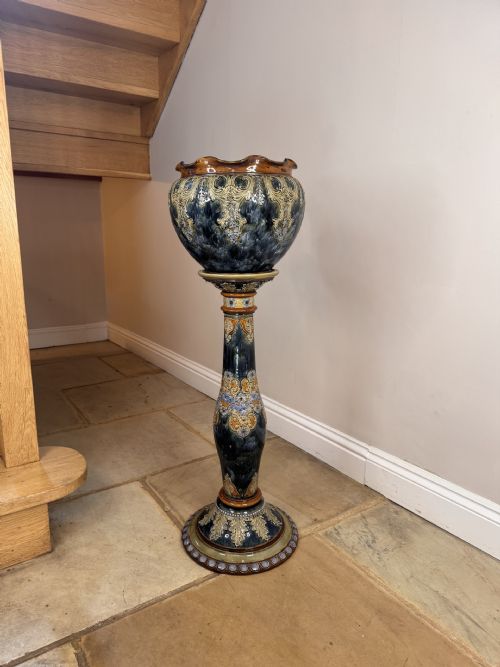
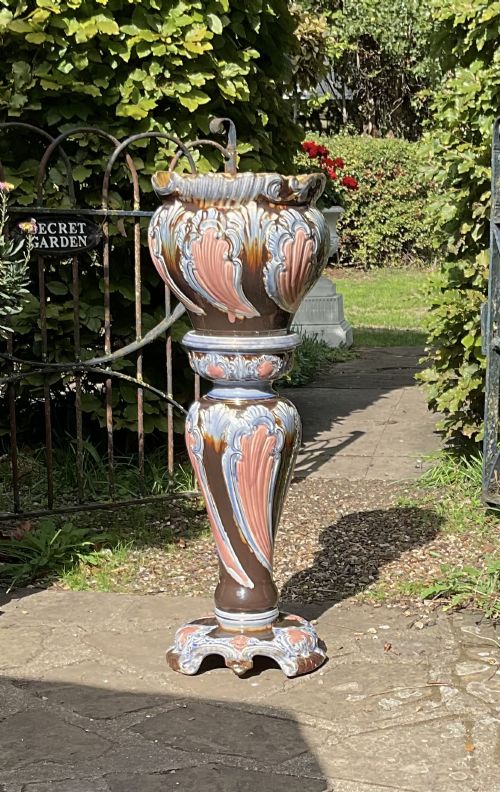
A pottery pedestal stand combines a tall support column with a matching bowl, planter, or jardiniere designed to elevate greenery and decorative vessels. You will frequently encounter matching pairs and combined sets dating from the Victorian and Edwardian eras, often styled with majolica or art pottery glazes.
Makers produced these forms in sections, stacking a column beneath a basin to create display pieces for nineteenth- and early twentieth-century interiors. The selection ranges from tall single columns to integrated planters and comports resting on footed bases.
The styles span naturalistic designs, classical revivals, and fluid Art Nouveau contours, reflecting the shifting tastes of the nineteenth century and the early decades of the twentieth century. These objects served as focal points for conservatories and reception halls.
How they were made
Potters shaped these large earthenware, terracotta, and stoneware bodies using moulds or throwing techniques suited to heavy vertical columns. The pieces required careful drying and firing to support the weight of the upper bowl or jardiniere.
Glaze application defines the surface, utilising majolica, lustre, and faience finishes that pool in the recesses of moulded relief decoration. These coloured coatings were fired to vitrify the ceramic body and create durable waterproof surfaces for indoor plants.
Pottery Pedestal Stand Retail Price Guide 2026
Typical asking prices for pottery pedestal stand among the pieces listed under this phrase on Sellingantiques today, from the lower quarter to the upper quarter. They describe what is for sale here now, not the wider market.
Listings feature earthenware, stoneware, and terracotta bodies finished with majolica, lustre, and faience glazes across the Victorian and Edwardian periods.
What varies in quality
The clarity and depth of the moulded detail separate ordinary utility items from ambitious sculptural pieces. Superior examples display crisp relief work in naturalistic or revivalist motifs without blur or slump.
Glaze consistency dictates visual success, distinguishing rich lustre and majolica finishes from flat or uneven surfaces. The relationship between the proportions of the column and the supported vessel governs the overall visual balance.
Royal Doulton·Burmantofts·Clement Massier·Julius Dressler·Woodlesford Art Pottery·Spode·Moorcroft
The Pottery Pedestal Stand Glossary
- Jardiniere
- An ornamental ceramic pot or basin designed to hold a plant or floral arrangement. These vessels often match a supporting column to form a complete display unit.
- Majolica
- A type of pottery covered in an opaque tin glaze and painted with brightly coloured metal oxides. This technique produces vibrant greens, blues, and browns on moulded earthenware bodies.
- Faience
- Tin-glazed earthenware produced in European workshops, often associated with decorative tiles and vessels. The finish provides a smooth ground for painted and moulded surface decoration.
- Lustre glaze
- A metallic ceramic finish that reflects an iridescent sheen in shifting light. Potters achieved this effect by introducing metallic salts during the firing process.
- Comport
- A decorative dish or bowl raised on a high foot or pedestal base. These pieces function as table centerpieces or elevated serving vessels.
Pottery Pedestal Stand: Frequently Asked Questions
What is a pottery pedestal stand used for?
These pieces function primarily as elevated plant holders, displaying ferns and large indoor flora in domestic interiors. The dual construction places greenery at eye level while utilising vertical space.
They also serve as sculptural display units for large vases, comports, and decorative vessels. The combination of column and basin creates a distinct architectural silhouette within a room.
How do I date a pedestal stand?
Dating relies on stylistic markers, such as organic Art Nouveau curves or ornate Victorian revival motifs, alongside underlying manufacturing techniques. Earthenware bodies and glaze types offer further clues to the period of production.
Maker marks stamped into the ceramic base provide the most reliable guide to age. Examining the bottom of the column or bowl often reveals factory ciphers and registration numbers.
Are jardiniere stands stable with heavy plants?
These ceramic columns possess substantial weight and a wide base designed to support heavy soil and potted plants. However, their height requires careful placement on level flooring to prevent tipping.
Most surviving examples are built in two or more interlocking sections for transport and stability. Ensuring the upper bowl seats evenly into the column collar maintains proper balance.
How do I care for antique glazed pottery?
Dust surfaces gently with a dry or slightly damp cloth to preserve the historical glaze and prevent moisture damage. Avoid harsh chemical cleaners that can degrade fragile majolica or lustre finishes.
When using the jardiniere for live plants, place a modern liner inside the ceramic basin to catch water drainage. This protects the porous earthenware body and historic glazes from moisture absorption and staining.