

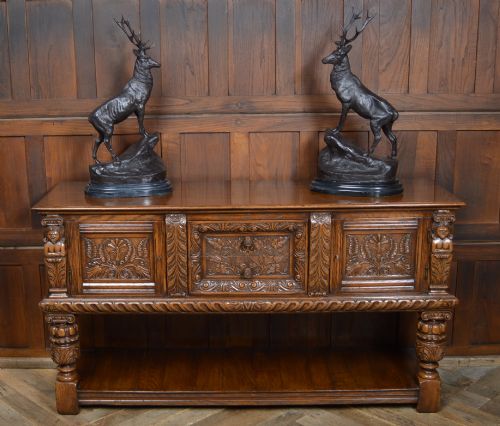


Pot Board Console Table
These pot board console table pieces bring sturdy storage and centuries of character into a room.
Pot Board Console Table
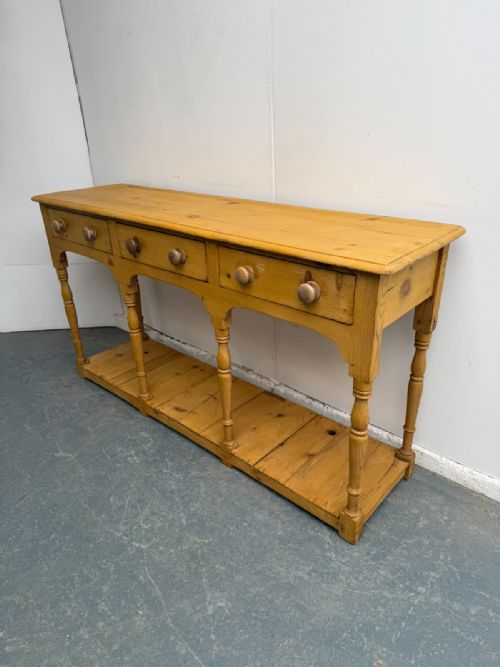
When you search for a pot board console table, you are looking at solid utility furniture defined by a low open shelf beneath the main surface. The pieces listed here span centuries, drawing on Georgian, Victorian, and Edwardian domestic traditions.
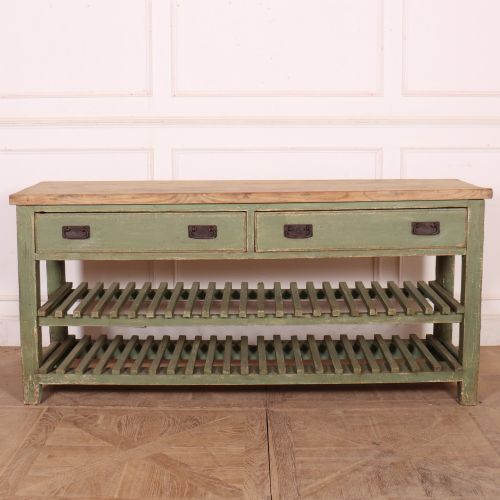
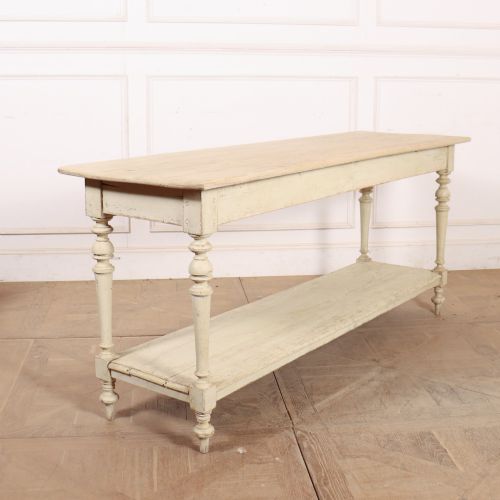
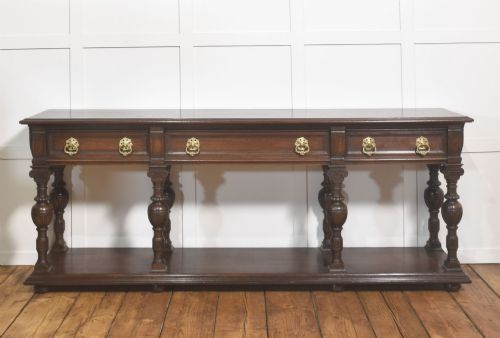
You are most likely to meet oak and pine examples on this page, taking forms such as dresser bases, serving tables, and drapers tables. These versatile items bridge the gap between heavy storage and narrow hallway display surfaces.
Stylistic influences range from rustic farmhouse and French provincial to Jacobean revival and formal George II designs. Each version uses the low pot shelf to stabilise the legs while offering a handy lower tier for baskets or crockery.
How they were made
Joiners relied heavily on solid oak and pine, shaping timbers with hand tools to build sturdy frames that could withstand daily kitchen or hallway use. Iron and brass hardware appeared on drawers and doors, securing structural joints and adding subtle contrast to the warm wood.
Many items show painted softwood finishes alongside bare waxed timber, reflecting regional French and British decorating habits. Boards were pegged and pegged mortise and tenon joints held the heavy pot shelves firmly between the upright legs.
Pot Board Console Table Retail Price Guide 2026
Typical asking prices for pot board console table among the pieces listed under this phrase on Sellingantiques today, from the lower quarter to the upper quarter. They describe what is for sale here now, not the wider market.
Early pot boards often bear faint ring marks left by centuries of damp earthenware pots resting on the bare timber.
What varies in quality
The distinction between a standard utility piece and a finer example lies in the choice of timber and the restraint of the revival carving. Oak versions from earlier periods display denser grain and tighter joinery than later softwood counterparts.
Proportion and surface patina dictate the visual weight of the console, with older wax accumulation outlasting modern refinishing efforts. Well-balanced proportions ensure the low pot board anchors the piece rather than feeling heavy.
The Pot Board Console Table Glossary
- Pot board
- A low open shelf fitted near the floor between the legs of a table or dresser. It was originally used to hold heavy pots and pans.
- Dresser base
- The lower half of a traditional kitchen dresser featuring drawers and cupboards beneath a flat top. It often includes an integrated pot shelf.
- Drapers table
- A long, narrow table traditionally used in fabric shops for measuring cloth. These often feature generous lower shelves for bolt storage.
- Jacobean style
- A heavy, dark wood aesthetic characterised by geometric mouldings and turned legs. Revival pieces often borrow these seventeenth-century motifs.
Pot Board Console Table: Frequently Asked Questions
What is a pot board console table used for?
These pieces serve as hallway consoles, serving tables, or narrow sideboards in living areas and kitchens. The top surface holds lamps and daily items, while the lower shelf stores baskets or books.
Historically, the bottom shelf kept heavy pots off damp flagstone floors. Today, that shelf offers open storage that keeps rooms looking uncluttered.
How do I tell an older piece from a revival?
Examine the timber grain, tool marks, and construction methods used on the underside and drawer linings. Hand-cut joints and uneven board widths usually point to earlier production.
Revival pieces often feature more uniform machine-sawn timber and standardised fixings. Comparing the wear patterns around the pot shelf helps date the piece accurately.
Are painted finishes original?
Painted softwood and drapers tables frequently carry old layered paint that has worn down through decades of contact. Some surfaces show later decorative painting applied during provincial country revivals.
Inspecting the edges of the paint layers reveals whether the colour is historic or recent. Both original and later painted finishes contribute to the rustic character.
Will oak or pine suit my room better?
Oak brings a darker, heavier presence associated with Jacobean and Georgian periods. It suits traditional spaces needing strong architectural weight.
Pine and painted softwood offer a lighter, more relaxed French country feel. These softer woods brighten hallways and smaller dining spaces effectively.