







Pot Board Base
A pot board base is a sturdy kitchen or dining timber unit built with a lower storage shelf, prized for its honest utility and rich patina.
Pot Board Base
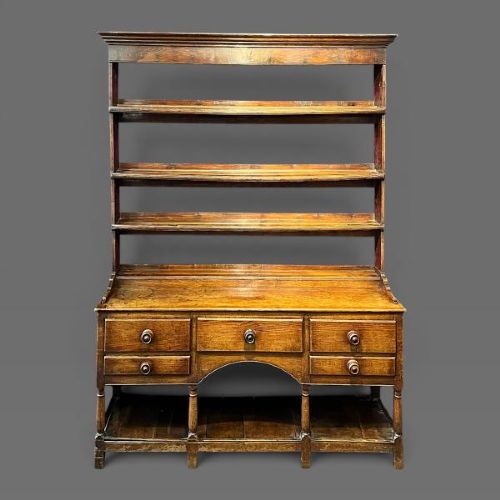
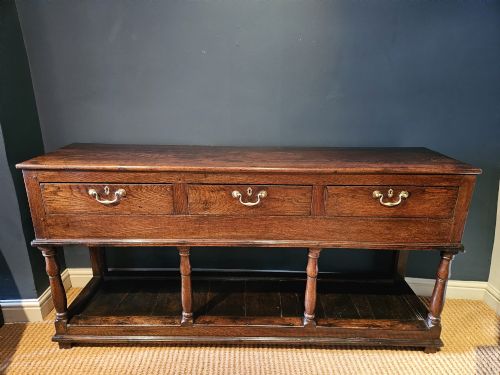
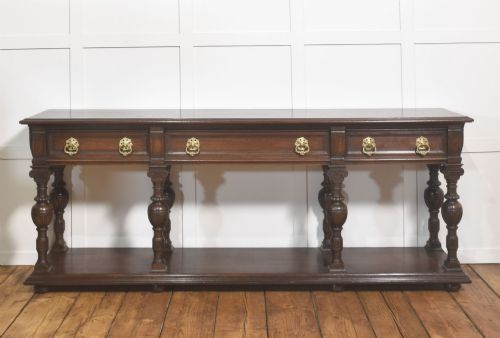
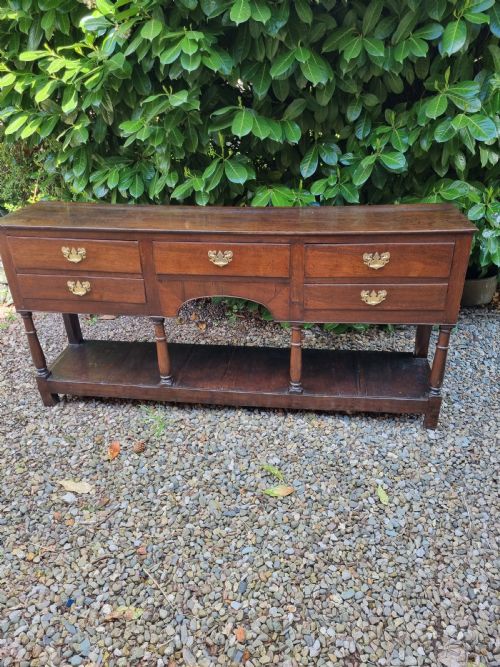
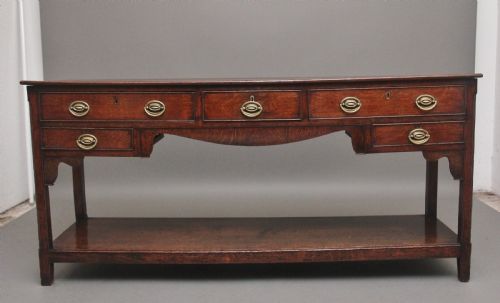
A pot board base provides a low, open lower shelf known as a pot board, positioned beneath the main drawer line to hold heavy kitchen vessels and serving dishes. These foundational items of vernacular furniture serve as sturdy sideboards and dresser bases within domestic dining spaces and kitchens.
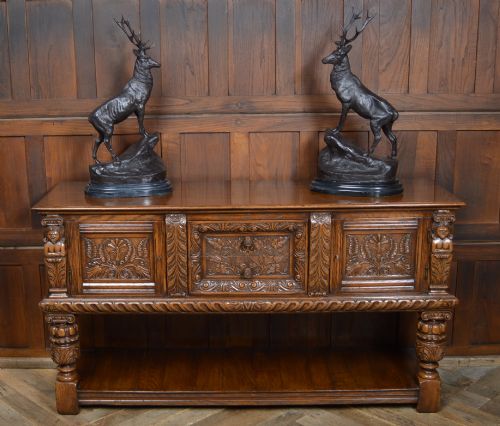
The versions encountered on this page span the eighteenth, nineteenth, and early twentieth centuries, drawing on Georgian, Jacobean revival, and rustic farmhouse traditions. Examples range from vernacular Welsh origins to Scottish workshops and English country houses.
Most pieces appear in solid timber configurations, combining utilitarian drawer arrangements with the characteristic low tier for storage. Collectors acquire them for their architectural weight and the practical surface area they bring to modern interiors.
Materials and construction
Makers built these pieces primarily using native timber, predominantly selecting oak for its strength alongside pine for secondary elements and functional carcasses. Brass handles and iron fixings appear on drawers and doors, reflecting the hardware available during each period.
Carpenters joined the structural timbers using traditional methods suited to heavy daily use, incorporating pegged mortise and tenon joints for the frame and sturdy boards for the pot shelf. Surfaces received hand-carved details in revival pieces or remained plain and functional in vernacular Welsh and country examples.
Pot Board Base Retail Price Guide 2026
Typical asking prices for pot board base among the pieces listed under this phrase on Sellingantiques today, from the lower quarter to the upper quarter. They describe what is for sale here now, not the wider market.
Early pot boards kept heavy stewpots safely off cold flagstone floors.
Factors of quality
The standard of a pot board base rests on the choice of timber figure, the integrity of the original construction, and the depth of the surface colour built up through generations of use. Richly grained oak boards and crisp, unblemished mouldings distinguish finer examples from plain utility pieces.
Proportion and untouched patination dictate the desirability of a piece, with well-balanced drawer layouts and honest signs of age holding greater appeal than heavily restored or altered surfaces.
The Pot Board Base Glossary
- Pot board
- The low open shelf fitted near the floor of a dresser base, traditionally used for storing pots and pans. This defining feature sits just above the floor level.
- Dresser base
- The lower section of a kitchen dresser, featuring a flat top surface and drawers, built to stand alone without its upper plate rack. These items function independently as sideboards.
- Vernacular furniture
- Domestic pieces made by local tradesmen using regional traditions rather than following high-style metropolitan designs. These objects prioritise utility and local materials.
- Patina
- The surface sheen and colour acquired by timber through decades of handling, polishing, and exposure to light. This quality cannot be replicated artificially with modern finishes.
Pot Board Base: Frequently Asked Questions
What is a pot board base used for?
These pieces serve as practical sideboards in dining rooms and kitchens, offering a flat top surface for serving food or displaying objects. The lower shelf provides open storage for large items like ceramics and baskets.
Historically, kitchens relied on this lower tier to keep heavy cookware off damp stone floors and within easy reach of the hearth. Today, they bring rustic utility and surface space to contemporary homes.
How do I date a pot board base?
Dating relies on examining the construction methods, timber choice, and overall style of the piece. Eighteenth-century examples often display hand-sawn boards and pegged joinery characteristic of country workshops.
Revival pieces from the late nineteenth and early twentieth centuries frequently incorporate machine-cut elements or explicit Jacobean decorative carving. Hardware styles also offer clues to the period of manufacture or subsequent updates.
Where were these pieces made?
Many examples originate from regional workshops across Wales, Scotland, and English country houses. Welsh and provincial makers produced sturdy utility furniture tailored to rural domestic requirements.
Regional differences appear in the timber selection, drawer configuration, and specific moulding details. Local vernacular traditions heavily influenced the final appearance of each piece.
How do I care for antique oak furniture?
Protect antique timber by keeping it away from direct heat sources and sudden temperature fluctuations. Regular dusting with a dry cloth prevents the buildup of grime without harming the finish.
Application of traditional beeswax helps nourish the wood and maintain its surface sheen over time. Avoid modern liquid polishes that can leave a silicone film on the antique surface.