

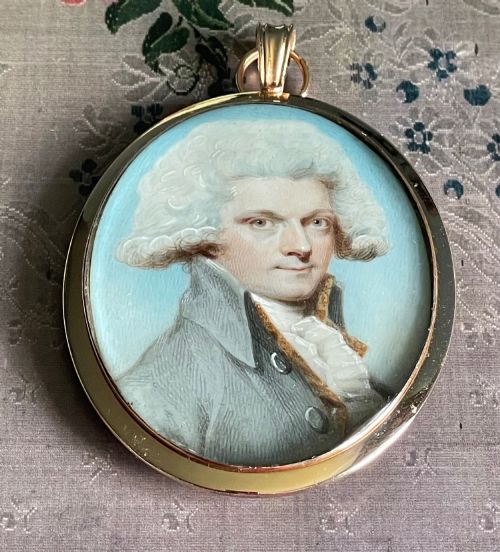
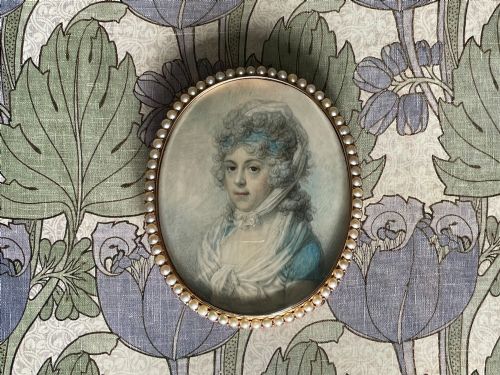

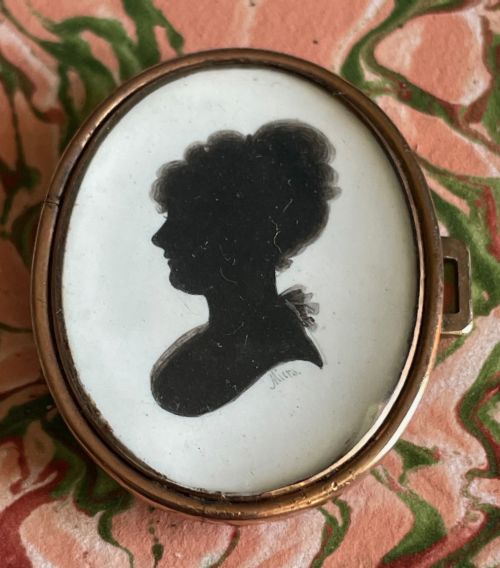
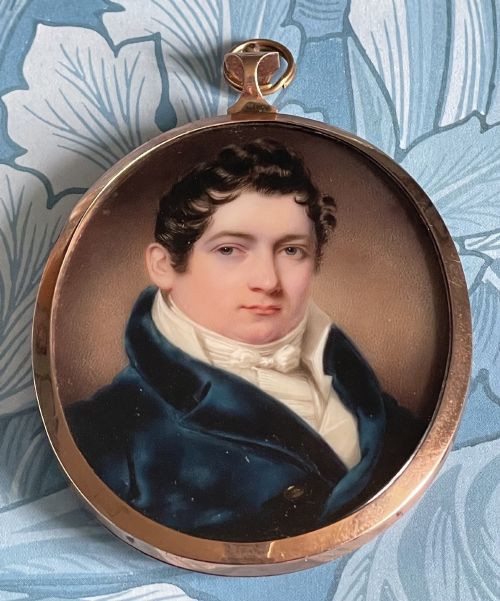



Portrait Miniature Locket
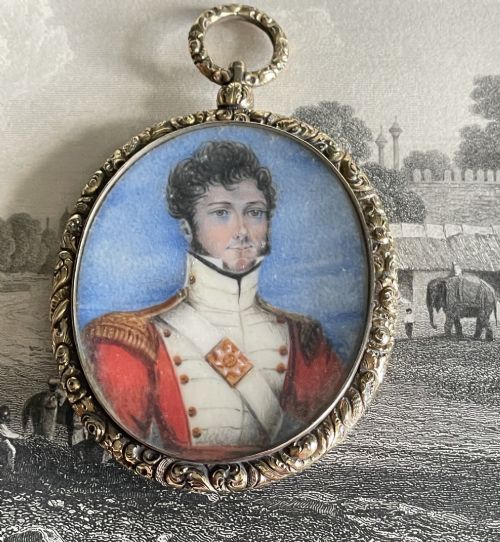
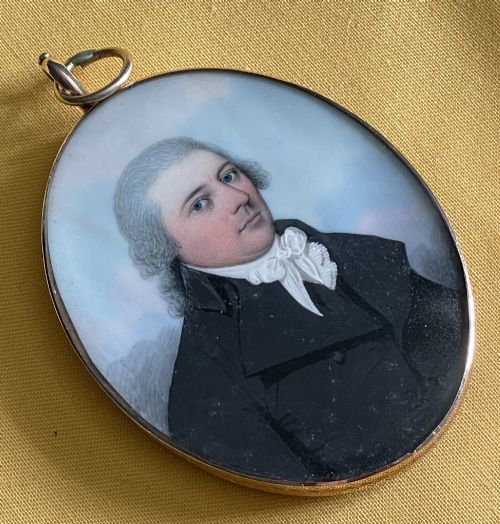
These portrait miniature locket pieces combine intimate painted likenesses with precious metal casework designed to be worn close to the heart.
Portrait Miniature Locket
A portrait miniature locket brings together diminutive painted likenesses and hinged or glazed compartments intended for keepsakes, spanning the eighteenth and nineteenth centuries.
The versions most commonly met in these pages feature Georgian and Regency gold or gilt metal frames housing delicate likenesses painted on ivory, vellum or glass.
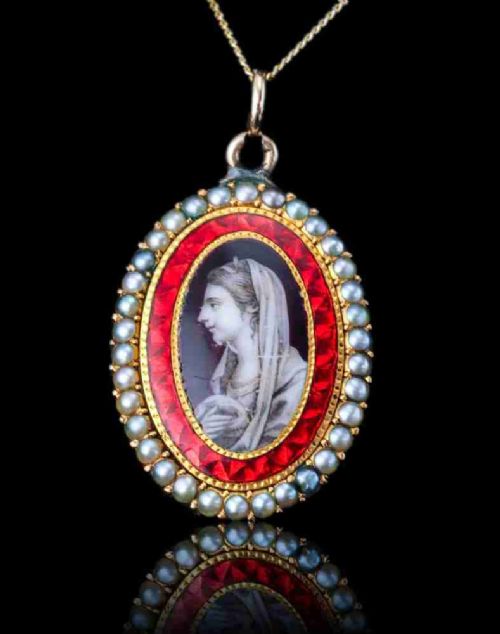
Makers ranged from skilled professional miniaturists working in watercolour and enamel to silhouette artists producing crisp profiles.
Materials and construction methods
Painters utilised watercolour, gouache and enamel on supports including ivory, porcelain, vellum and agate panel surfaces.
Frames were fabricated from gold, silver gilt and base metals, frequently incorporating glass faceplates to protect the delicate pigment underneath.
Listings span the eighteenth, nineteenth and early twentieth centuries, featuring gold, silver, enamel and ivory.
Determinants of distinction
Quality rests principally upon the fidelity and psychological depth of the miniature painting itself, where master hands capture expression with remarkable economy.
Casework construction also dictates worth, separating standard production mounts from substantial gold frames set with pearls or fine enamel work.
Henry Bone ARA·Charles Shirreff·Richard Cosway·John Miers·John C D Engleheart·Charles Hayter·Christian Friedrich Zincke·Nicolas Freese·Elizabeth Hudson·George Engleheart·James Ferguson·Emma Kendrick·William Grimaldi·Henry Jacob Burch·John Inigo Wright·Edward Pugh·Meyle And Mayer·Samuel Cotes·Isaac Wane Slater·AE Chalon·John Barry
The Portrait Miniature Locket Glossary
- Miniature painting
- A small-scale portrait executed with fine brushes, requiring immense precision and control.
- Vellum
- Prepared calfskin utilised as a smooth drawing surface for early miniature works.
- Silhouette
- A solid dark profile portrait, frequently cut from paper or painted directly onto glass.
- Gilt metal
- Base metal treated with a thin layer of gold to simulate solid precious metal housing.
Portrait Miniature Locket: Frequently Asked Questions
How were portrait miniature lockets worn?
These pieces were typically suspended from ribbons or chains around the neck as personal pendants during the Georgian and Regency periods.
Owners kept loved ones physically close, often concealing locks of hair or secondary miniature portraits inside the locket compartment.
What materials protect the painted portraits?
Glass faceplates were fitted directly over the miniature painting to shield fragile watercolours and pigments from dust, moisture and touch.
Frames made of gold or silver gilt provided sturdy structural borders to secure the protective glass in place.
How do I identify a Georgian miniature?
Georgian examples frequently display characteristic costume details such as powdered hair, high collars or distinctive bonnets associated with the eighteenth century.
Stylistic hallmarks also include warm sepia palettes, delicate silhouettes and yellow gold mounting frames without nineteenth-century hallmarks.
Can I open the locket compartments?
Many of these pieces feature hinged or snap-fit compartments designed specifically to house dried botanical elements, textile scraps or woven hair mementos.
Care must be taken when handling older hinges to avoid straining the original metal pins and delicate gold bezels.