

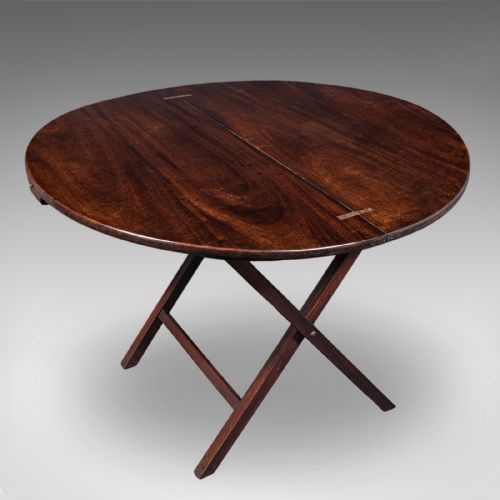


Portable Wood Table
A portable wood table moves easily from room to room, offering practical surface space with folding frames or removable trays.
Portable Wood Table
A portable wood table encompasses versatile items designed for movement, folding, or dismantling, originating primarily from the eighteenth, nineteenth, and early twentieth centuries. These pieces serve practical functions as occasional surfaces, folding desks, and specialised stands.
Origins span Georgian, Victorian, and Edwardian periods, reflecting the shifting demands for adaptable furniture over three centuries. Makers utilised sturdy hardwoods to ensure these transportable items endured the rigours of travel and frequent repositioning.
Materials and construction methods
Makers relied heavily on dense timbers such as mahogany, rosewood, and beech to build frames that could withstand repeated folding and transit. Brass fittings, hinges, and corner brackets reinforce the joints, providing both structural stability and functional movement.
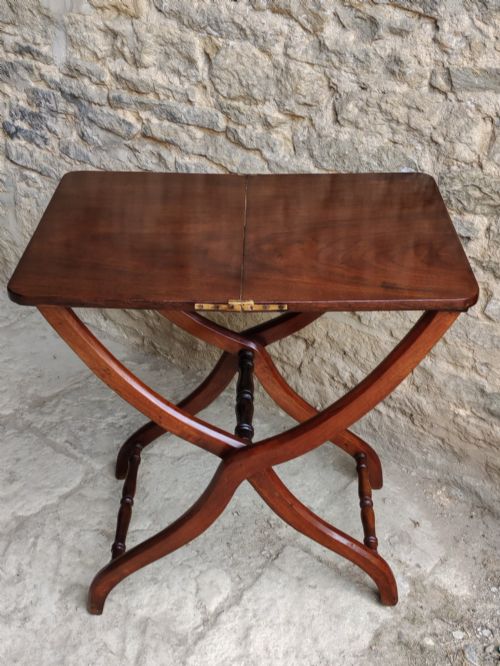
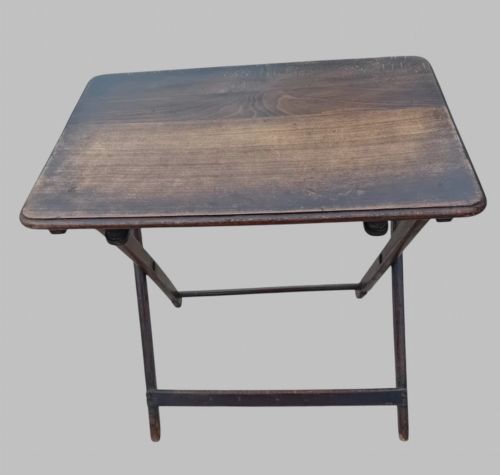
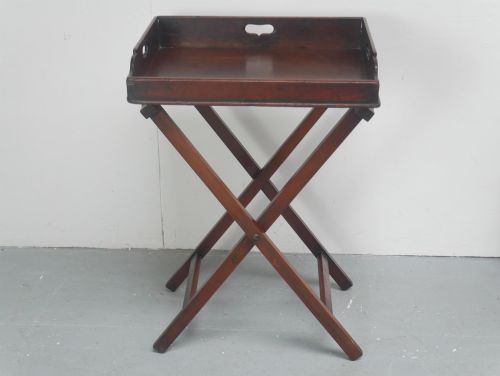
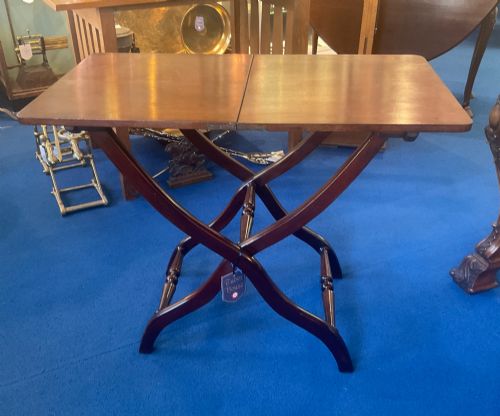
Surface finishes include polished mahogany and lacquered wood, while finer examples incorporate satinwood inlay or gilt details. Folding mechanisms rely on precise pivoting X-frames and removable tray tops that slot securely onto collapsible wooden bases.
Portable Wood Table Retail Price Guide 2026
Typical asking prices for portable wood table among the pieces listed under this phrase on Sellingantiques today, from the lower quarter to the upper quarter. They describe what is for sale here now, not the wider market.
Materials featured across the current inventory include brass, mahogany, rosewood, satinwood, beech, and gilt.
Assessing quality in folding and travel furniture
Quality rests upon the precision of the folding mechanism and the tightness of the joints when assembled. Superior examples maintain rigidity and balance without wobble, regardless of whether the piece is a coaching table or a travelling bureau.
Selection of timber grain and the neat integration of brass hardware distinguish finer pieces from utilitarian counterparts. The condition of original hinges, trays, and secondary woods indicates the level of craftsmanship invested in the object's construction.
The Portable Wood Table Glossary
- Campaign style
- Furniture designed to dismantle or fold for military travel and field use. Such pieces typically feature recessed brass handles and corner brackets to prevent snagging.
- Coaching table
- A folding occasional table with an X-frame base and a removable tray top. These were originally packed into carriages for journeys.
- Writing slope
- A portable box with a slanted writing surface that folds flat when not in use. Interiors often contain compartments for inkwells, pens, and stationery.
- Occasional table
- A small, light table intended for flexible placement around a room. They appear in various forms across Victorian and Edwardian interiors.
- X-frame
- A structural base formed by intersecting timber members that pivot or cross to allow the piece to collapse. This design underpins most folding tables.
Portable Wood Table: Frequently Asked Questions
How do I fold a coaching table?
Lift the removable tray top from the supporting base to separate the components. Pivot the folding wooden X-frame inward until the legs rest flat against one another.
Store the flat frame and the tray side by side in a narrow space. Ensure any retaining clips or straps are engaged if the model includes them.
Were these tables actually used for travel?
Many examples originated for officers, travellers, or households requiring furniture that packed down easily. Campaign and coaching pieces were built specifically for movement between temporary residences.
Later Victorian and Edwardian iterations often adapted these utilitarian forms for domestic garden rooms and occasional indoor use.
How do I care for antique mahogany wood?
Keep wooden surfaces away from direct sunlight and steady sources of artificial heat to prevent the timber from drying and splitting. Dust regularly with a soft, dry cloth.
Apply a traditional beeswax polish sparingly when the wood appears dry to maintain the natural lustre. Avoid using modern silicone sprays.