






Portable Travel Desk
A portable travel desk provides a compact writing surface and storage for correspondence on the move.
Portable Travel Desk
When you search for a portable travel desk, you encounter a variety of compact writing equipment designed for movement across the Georgian, Victorian, and Edwardian periods.
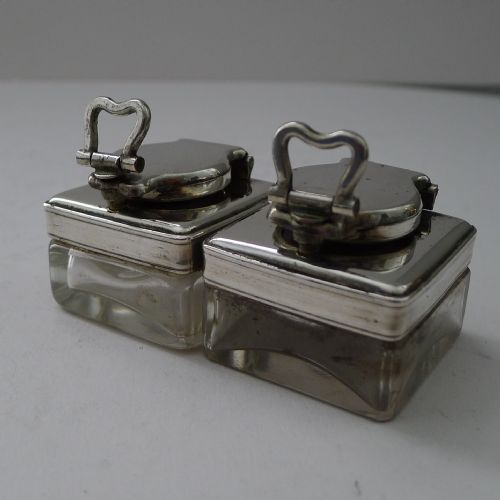
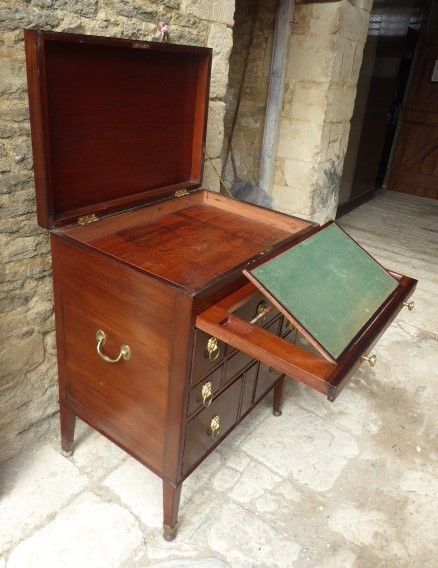
The objects on this page span several forms including traditional writing slopes, campaign chests, travelling bureaux, and small writing boxes intended for mobility.
Mahogany, walnut, camphor wood, and teak appear frequently as the primary woods, often fitted with brass hardware to withstand the rigours of transit.
Materials and construction
Cabinet makers utilised dense timbers such as mahogany, walnut, and camphor wood to construct these pieces, ensuring structural stability during travel.
Brass corners, handles, and banding were fitted to protect vulnerable edges from impact, while leather writing surfaces provided a durable platform for ink and quill.
Compartments and secret drawers were integrated tightly within the compact frames to secure writing implements, inkwells, and papers.
Portable Travel Desk Retail Price Guide 2026
Typical asking prices for portable travel desk among the pieces listed under this phrase on Sellingantiques today, from the lower quarter to the upper quarter. They describe what is for sale here now, not the wider market.
Evaluating craftsmanship
The calibre of a portable travel desk rests on the precision of its joinery and the snugness of its internal compartments when folded closed.
Superior examples feature finely engraved brass fittings, carefully selected wood veneers like burr walnut or rosewood, and robust locking mechanisms that remain fully operational.
Henri Jacot·Mappin and Webb·Pickford of London·Veritas Lamp Works·P and F Shafer
The Portable Travel Desk Glossary
- Writing slope
- A box with a sloping lid that opens to reveal a writing surface and storage compartments for paper and pens. This form was essential for travellers needing a stable desk.
- Campaign chest
- A modular chest of drawers built in sections with brass corners and recessed carrying handles designed for military officers on active service. These pieces dismantle easily for transport.
- Gilt brass
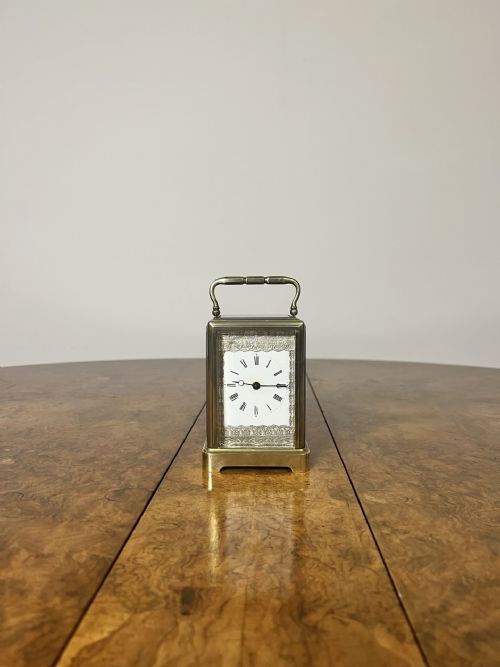
- Metal treated with a thin layer of gold or gold-coloured wash to provide a bright decorative finish. This material appears commonly on the frames of carriage clocks and desk hardware.
- Tunbridgeware
- Woodworking characterised by mosaic patterns assembled from tiny pieces of naturally coloured wood. This technique decorates small boxes and travelling inkwells from the Victorian era.
Portable Travel Desk: Frequently Asked Questions
What is a portable travel desk?
A portable travel desk is a compact container designed to hold writing materials and provide a stable writing surface away from a permanent study.
These pieces were utilised by travellers, officers, and clergy during the eighteenth, nineteenth, and early twentieth centuries.
How were campaign desks used?
Campaign desks were utilised by military personnel and colonial administrators who required functional furniture that survived frequent relocation.
Their modular construction and protective brass mounts allowed them to pack down securely into crates or wagons.
How do I identify a Victorian writing box?
Victorian writing boxes typically display darker dense timbers such as walnut or mahogany, often ornamented with inlaid brass stringing or escutcheons.
Opening the sloping lid reveals a fitted interior complete with velvet or leather skivers and glass inkwells.
Where should I place a travel desk at home?
A travel desk sits well on top of a larger table, sideboard, or chest where its closed form adds texture and historical character to a room.
Opening the lid provides an immediate station for sorting letters or displaying small collections.