

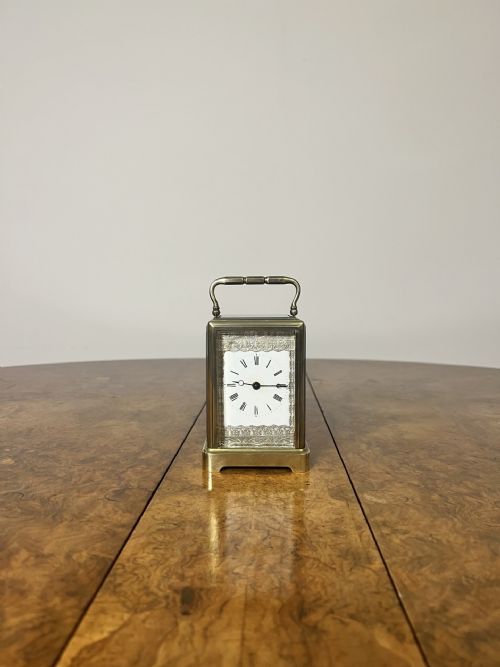


Portable Brass Mantel Clock
A portable brass mantel clock is a travel timepiece designed for movement, combining heavy brass cases and bevelled glass panels to endure journeys with elegance.
Portable Brass Mantel Clock
A portable brass mantel clock, also known as a carriage clock, is a compact timekeeper built for travel and domestic placement across the nineteenth and twentieth centuries. These pieces originate predominantly from French workshops and British retailers, spanning Victorian, Edwardian, and mid-century periods.
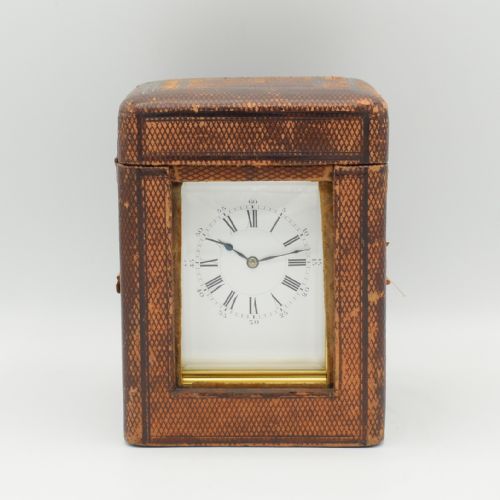
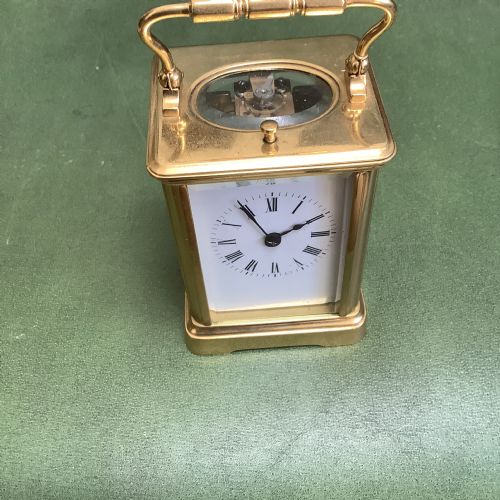
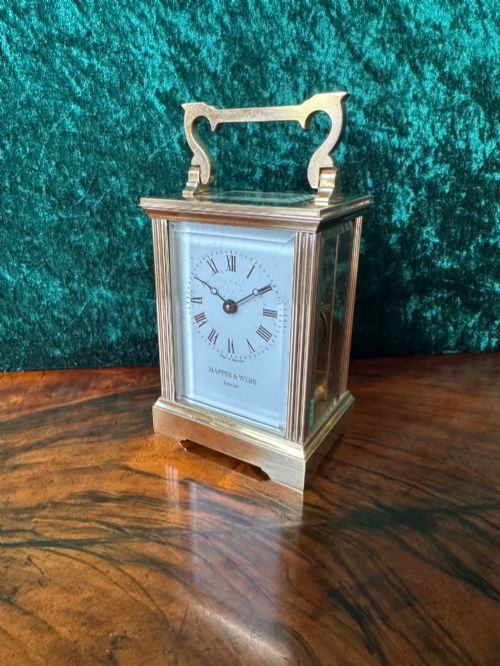
Buyers will most frequently encounter rectangular brass-cased variants fitted with white enamel dials and glass panels that reveal the interior escapement. Common iterations include plain brass cases, gilt brass frames, and examples accompanied by leather travel cases.
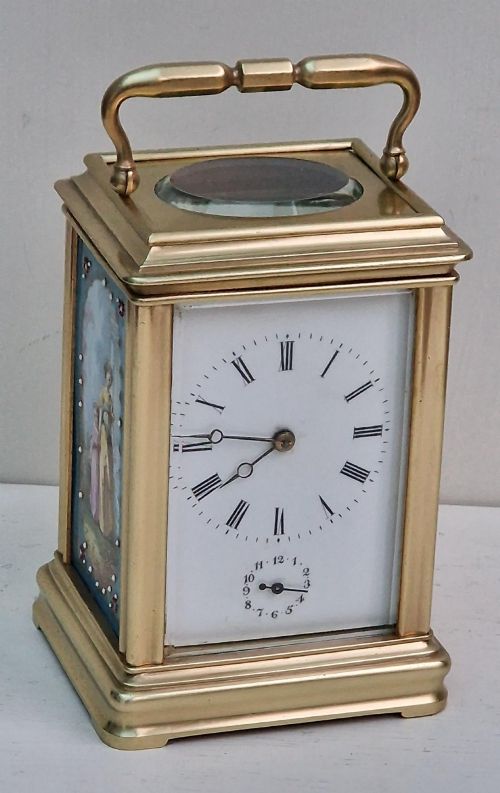
Specialised forms within the selection include miniature models, repeating mechanisms that chime the hours on demand, and pieces featuring porcelain panels or filigree masks. Origin variations range from London makers to Paris workshops and export pieces destined for the Chinese market.
How They Were Made
These clocks are constructed using heavy cast or sheet brass frames that house precision mechanical movements, often utilising gilt finishes to enhance the yellow metal surface. Bevelled glass windows are fitted securely into the top and sides to protect the delicate gear train while offering a clear view of the escapement.
Dials are typically formed from white enamel with painted Roman or Arabic numerals, sometimes complemented by silvered metal chapters or hand-painted porcelain panels. Certain models incorporate supplementary materials such as leather for protective travelling outer cases and fruitwood internal elements.
Portable Brass Mantel Clock Retail Price Guide 2026
Typical asking prices for portable brass mantel clock among the pieces listed under this phrase on Sellingantiques today, from the lower quarter to the upper quarter. They describe what is for sale here now, not the wider market.
Several portable brass mantel clocks were specifically exported for the Chinese market, featuring sweep seconds hands designed to appeal to overseas buyers.
What Varies in Quality
Quality in a portable brass mantel clock rests on the precision and complexity of the internal movement, such as the inclusion of an eight-day duration or strike-repeat functions. Maker attribution heavily influences standing, with signed works from established horologists commanding greater recognition than anonymous workshop production.
The weight and finish of the brass housing, the clarity and bevelling of the glass panels, and the crispness of painted enamel dials define the upper tiers of production. Original matching leather travel cases and decorative enhancements like filigree masks or porcelain side panels further separate standard examples from finer specimens.
Henri Jacot·Mappin and Web·Pickford of London·Paul Garnier·Latshea and Sons
The Portable Brass Mantel Clock Glossary
- Carriage clock
- A portable spring-driven timekeeper originally designed for travellers in the nineteenth century. These clocks feature glass panels in brass frames and a folding handle on top.
- Escapement
- The mechanical linkage that regulates the speed of the clock by controlling the release of power from the gear train. In these clocks, a platform escapement is often visible through the upper glass panel.
- Repeater
- A mechanism that sounds the last hour and quarters when a button or pendant is pressed. This complication was especially useful for checking the time in the dark during journeys.
- Gilt brass
- Brass that has been treated with a thin layer of gold or gold-coloured wash to improve appearance and resist tarnishing. It provides a brighter, richer finish than plain polished brass.
- Enamel dial
- A clock face made by fusing powdered glass to a metal substrate at high heat. This creates a durable, glossy white surface that resists fading and holds painted numerals securely.
Portable Brass Mantel Clock: Frequently Asked Questions
How do I wind a portable brass mantel clock?
Insert the matching key into the winding square located on the backplate or dial face, turning it gently clockwise until resistance is felt. Avoid over-winding to protect the internal mainspring.
Ensure the clock is placed on a level surface before setting the time by moving only the minute hand forward. For striking models, allow the mechanism to complete its chime sequence without interruption.
Were these clocks actually used for travel?
Originating as luxury items for nineteenth-century travellers, these clocks were constructed with robust brass frames and thick glass to withstand movement in carriages and trains. Many survived journeys inside fitted leather outer cases designed for protection.
While modern owners generally keep them stationary on mantelpieces or desks, their durable mechanical construction remains fully capable of short journeys when properly secured.
How do I tell an 1880 clock from a 1900 one?
Earlier pieces from around 1880 often feature heavier brass castings, distinct platform escapements, and classic white enamel dials with traditional Roman numerals. Maker signatures are frequently engraved directly onto the backplate.
By 1900 and the Edwardian era, designs occasionally incorporated decorative filigree masks, silvered metal elements, or alternative dial layouts influenced by changing aesthetic tastes.
Why do some models have leather cases?
Travelling cases were manufactured to shield the delicate brass housing, glass panels, and winding mechanisms from knocks and dust during transit. These outer cases usually feature fitted interiors and carrying handles.
Finding a portable brass mantel clock with its original leather travel case adds a complete historical context to the piece.