



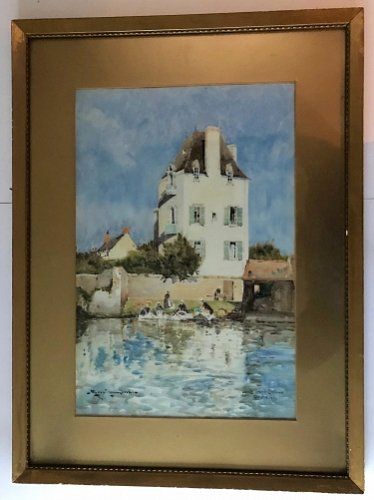


Port Painting
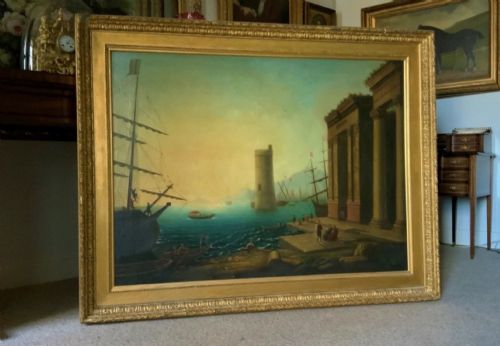
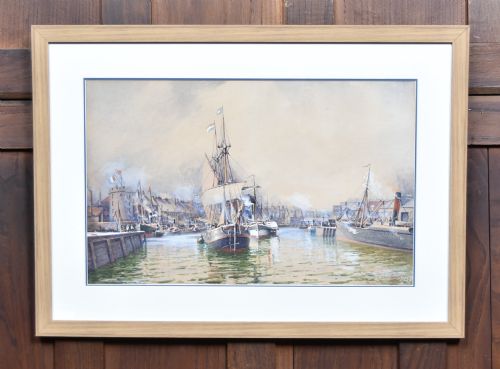
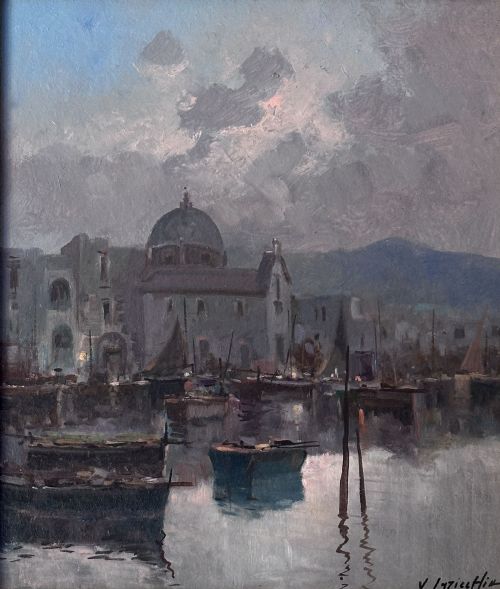
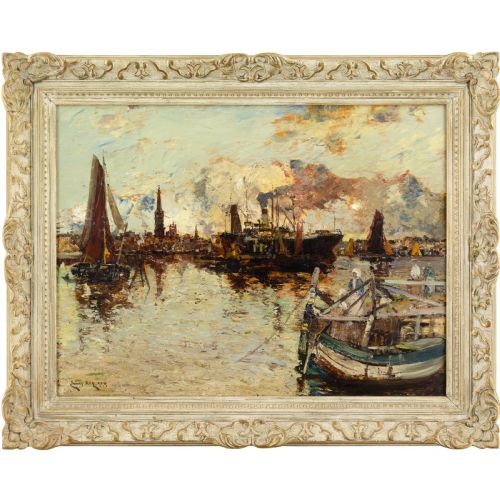
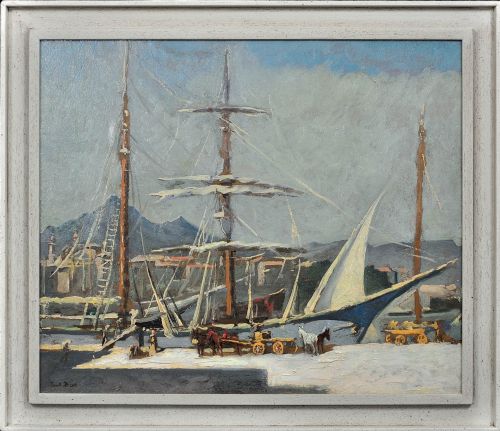
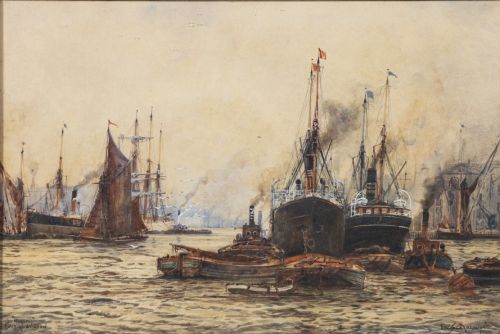
A port painting records the bustling trade, anchored vessels and maritime architecture of harbours from the nineteenth and twentieth centuries.
Port Painting
A port painting captures maritime scenes, coastal towns and bustling harbours, ranging from quiet fishing villages to major industrial docks. Buyers searching this phrase encounter works depicting specific locations across Britain and continental Europe, such as the Port of London, Mediterranean bays and French Riviera harbours.
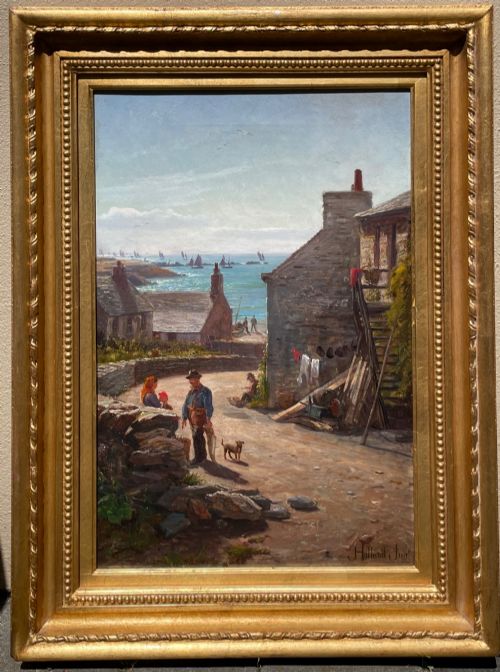
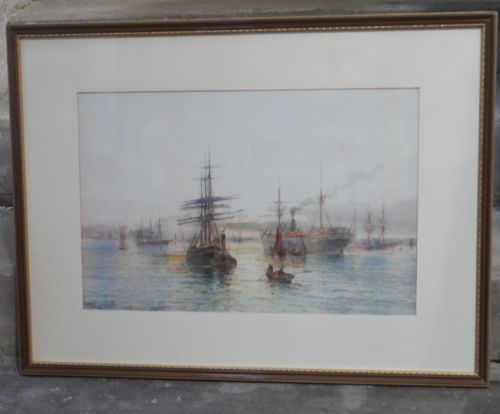
The selection on this page relies heavily on nineteenth-century and early twentieth-century examples, spanning the Victorian and Edwardian eras through to the 1960s. Common forms include framed oil paintings on canvas or panel alongside delicate watercolours on paper, capturing both grand mercantile shipping and quiet coastal life.
Artists often focus on specific atmospheric conditions, recording the play of light over water, damp quaysides and the rigging of sailing vessels or steamships. Whether depicting an Italian port, a Cornish inlet or a busy northern dockyard, these works serve as historical records of working waterfronts.
Materials and technique
Painters used oil paint on canvas, wood panels or board to build rich textures and layered depths for water and sky. Watercolours on paper offered a lighter, more transparent medium favoured by artists recording rapid atmospheric shifts at the water's edge.
Supports were frequently housed in period giltwood frames that enhanced the illumination of the scene within. Artists applied pigment with varying brushwork, from the precise linear detail of Victorian maritime illustration to the looser, expressive strokes of Impressionist and Post-Impressionist approaches.
Port Painting Retail Price Guide 2026
Typical asking prices for port painting among the pieces listed under this phrase on Sellingantiques today, from the lower quarter to the upper quarter. They describe what is for sale here now, not the wider market.
Amidst the canvases and watercolours, a nineteenth-century painted dial pocket watch emerges, carrying its own miniature ship leaving port.
Quality and execution
Quality rests upon the artist's ability to command perspective, rendering the complex geometry of ship masts, rigging and stone quays with conviction. Stronger works demonstrate a sure control of natural light, capturing the specific quality of sun, mist or dusk over the water.
The handling of atmosphere separates standard topographical records from more accomplished artistic interpretations. Finer paintings integrate human activity, architecture and water into a coherent composition where pigment and support remain well preserved.
William Woolard·James Kay·Frank William Scarbrough·Paul Bret·John Holland·Paul Delvaux·Gyrth Russell·Tom Clough·Claude Lorrain·Henri Ottman·GH Thompson·Ludwig Hermann·Francis Moltino·John William Gilroy·Charles Eyres Simmons·Stephen Brownlow
The Port Painting Glossary
- Oil on canvas
- A painting technique using pigment suspended in drying oils applied to a stretched woven fabric support. This combination allowed artists to rework areas and build thick impasto layers of paint.
- Watercolour
- A paint medium where coloured pigments are suspended in a water-soluble vehicle, typically applied to paper. It allows for translucent washes and rapid sketching of light.
- Giltwood
- Wood carved and coated with a thin layer of gold leaf or metallic powder, commonly used for traditional picture frames. It provides a reflective border that isolates the artwork from its surroundings.
- Post-Impressionism
- An art movement extending beyond Impressionism while retaining its use of vivid colours and thick brush application. Practitioners emphasised geometric forms and expressive qualities over strict naturalism.
- Maritime
- Pertaining to the sea, ships and navigation, often applied to artistic subjects concerning coastal life and shipping. These works document the historical importance of naval and mercantile trade.
Port Painting: Frequently Asked Questions
What subjects appear in a port painting?
These works depict anchored ships, working docks, sailing vessels and surrounding coastal architecture. Scenes range from busy industrial ports to quiet Mediterranean harbours and fishing villages.
Artists frequently recorded specific European and British locations, capturing the daily routines of loading cargo, fishing fleets returning to shore and passenger vessels at the quayside.
How do I date a port painting?
Dating relies on stylistic evidence, artist signatures, framing materials and the types of vessels shown in the composition. Victorian and Edwardian works often display detailed rigging and traditional mercantile shipping.
Twentieth-century examples introduce looser brushwork, post-impressionist palettes and steam-driven vessels or early industrial dock infrastructure that help narrow the period of creation.
Where should I hang a port painting?
These artworks suit rooms with good natural light that complements the maritime subjects and period frames. They sit comfortably in studies, living rooms or hallways alongside traditional or eclectic interiors.
Keep paintings away from direct sunlight, high humidity and sudden temperature shifts to protect the canvas, paper supports and original giltwood frames over time.
What is the difference between oil and watercolour port paintings?
Oil paintings use heavy pigment on canvas or panel, allowing for rich textures, deep shadows and robust surface manipulation. They offer substantial presence and durability.
Watercolours use translucent washes on paper, presenting a lighter, more luminous quality that captures fleeting atmospheric effects, typically preserved beneath protective glass.