





Porcelain Wash Jug
These porcelain wash jug pieces are practical Victorian and Edwardian chamber vessels, prized for their decorative floral glazes and robust ceramic forms.
Porcelain Wash Jug
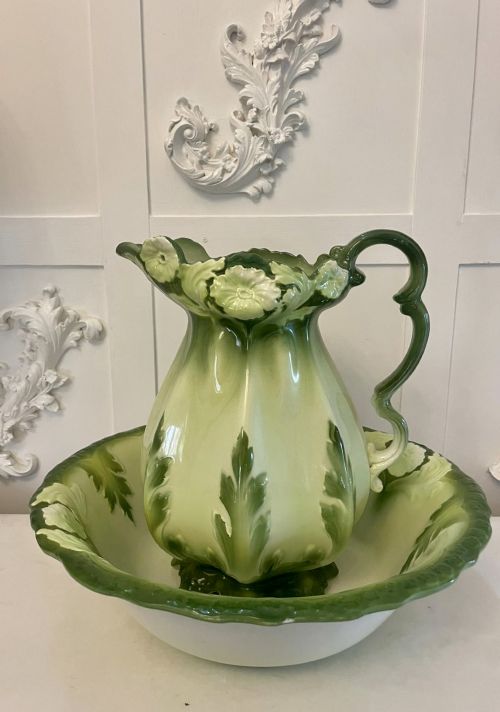
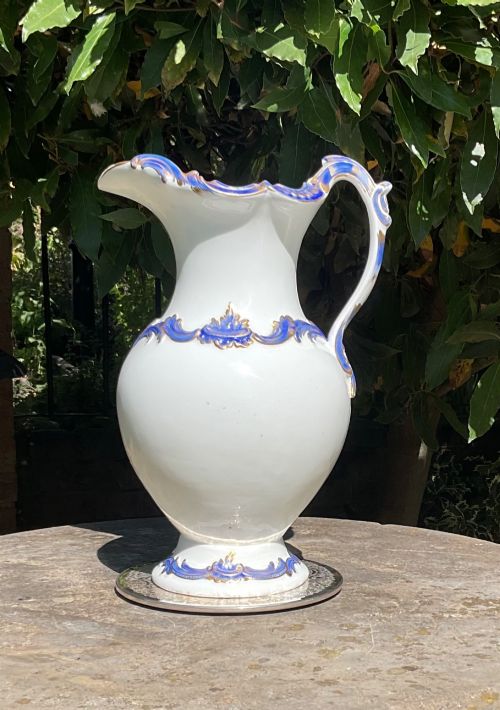
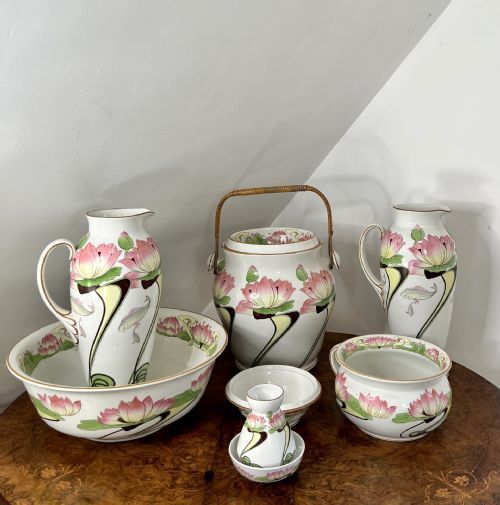
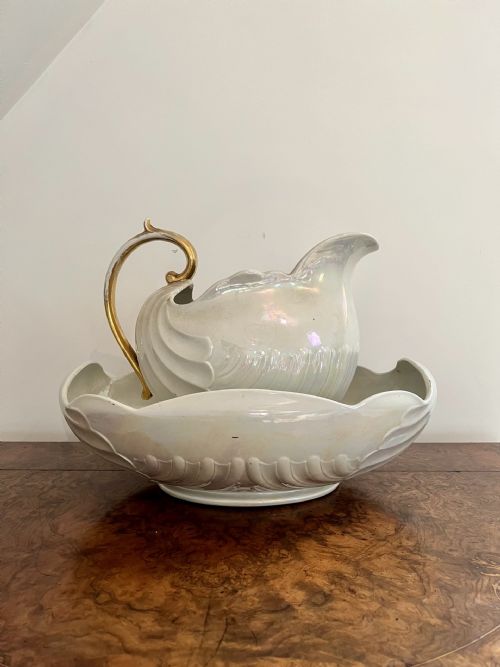
A porcelain wash jug is a functional household vessel designed for personal hygiene before plumbed bathrooms became common, typically appearing as part of a larger basin set. Buyers seeking a porcelain wash jug will find pieces primarily originating from the Victorian and Edwardian eras, alongside examples from the early twentieth century. These items frequently manifest within washstand sets or jug and basin combinations intended for bedroom use.
The selections available span from large water jugs dating back to the mid nineteenth century down to miniature sets and commemorative pieces. Stylistic influences across the inventory range from traditional Victorian aesthetics to flowing Art Nouveau curves and Chinoiserie motifs. Most examples survive as paired sets incorporating both the jug and its matching basin.
How They Were Made
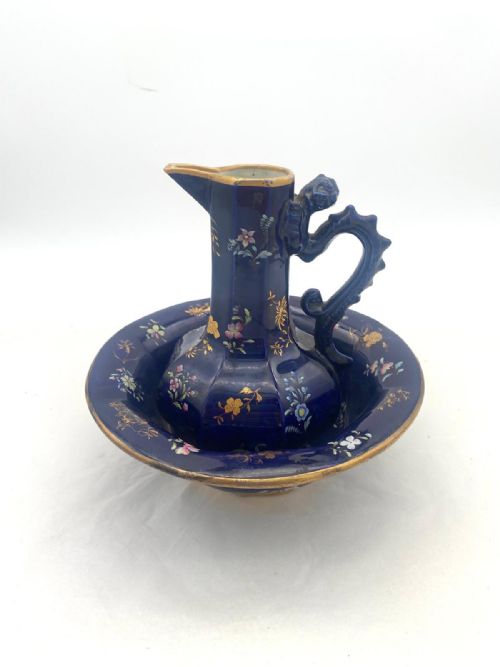
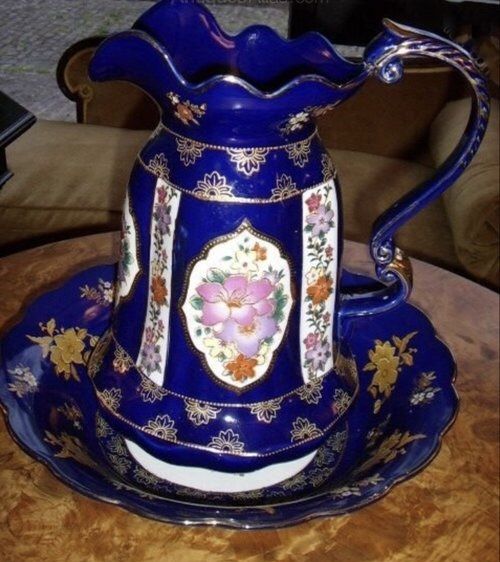
Potters constructed these vessels using ceramic bodies such as ironstone and porcelain, shaped into robust pitchers designed to hold water. Makers applied coloured glazes, including cobalt blue, alongside enamel details and gold leaf or gilt highlights to decorate the exterior surfaces.
Techniques varied from standard earthenware production to finer porcelain casting, often featuring floral designs applied beneath or over the glaze. Certain factories utilised octagonal moulds and specialised moulding methods to create distinct geometric profiles before kiln firing.
Porcelain Wash Jug Retail Price Guide 2026
Typical asking prices for porcelain wash jug among the pieces listed under this phrase on Sellingantiques today, from the lower quarter to the upper quarter. They describe what is for sale here now, not the wider market.
Some Victorian jugs commemorate specific historical figures, letting you wash up next to John Baley.
What Varies in Quality
Quality in these vessels rests upon the crispness of the moulding, the complexity of the ceramic body, and the refinement of the glaze work. Superior examples exhibit intricate hand-painted floral designs and well-preserved gilding rather than simple monotone finishes.
The distinction between standard utility items and finer decorative pieces often lies in the maker's execution of decorative motifs like Art Nouveau lines or Chinoiserie patterns. Complete matching sets displaying consistent glaze application represent the higher standard of production.
Masons Ironstone·Doulton Burslem·Shelley
The Porcelain Wash Jug Glossary
- Ironstone
- A heavy, durable type of earthenware patented in the nineteenth century. It provided a strong ceramic body well suited for daily washing vessels.
- Gilt
- A thin layer of gold applied to the ceramic surface for decoration. It is frequently seen highlighting the rims and handles of better quality jugs.
- Enamel
- Opaque vitreous paint fused to the pottery during firing. This technique allowed makers to add durable, colourful floral patterns to the white ceramic ground.
- Cobalt Blue
- A deep blue metallic oxide used to colour glazes before firing. It creates striking contrasts against white porcelain and earthenware surfaces.
Porcelain Wash Jug: Frequently Asked Questions
What is a porcelain wash jug used for?
These jugs served as water containers for washing hands and faces in the bedroom before indoor plumbing was installed. They sat upon matching washstands alongside large basins.
Today, they function primarily as decorative interior pieces or floral display containers in modern homes.
How do I date a wash jug?
Dating relies on observing stylistic markers such as Victorian floral patterns, Edwardian shapes, or Art Nouveau flowing lines recorded in the manufacturing details. Maker marks stamped on the ceramic base also provide specific periods of origin.
Comparing the ceramic material, whether ironstone or fine porcelain, helps narrow down the decade of production.
Are jugs and basins sold together?
Many listings offer the pitcher alongside its matching basin as a complete set. These paired items originate from bedroom washstand groupings.
Individual jugs also appear separately when the corresponding basin did not survive.
How do I care for antique porcelain?
Wash these ceramic pieces gently by hand using warm water and mild soap to protect the surface glaze and enamel decorations. Avoid harsh scrubbers that might damage gilt highlights or gold leaf.
Keep them away from rapid temperature changes to prevent stress on the antique ceramic body.