

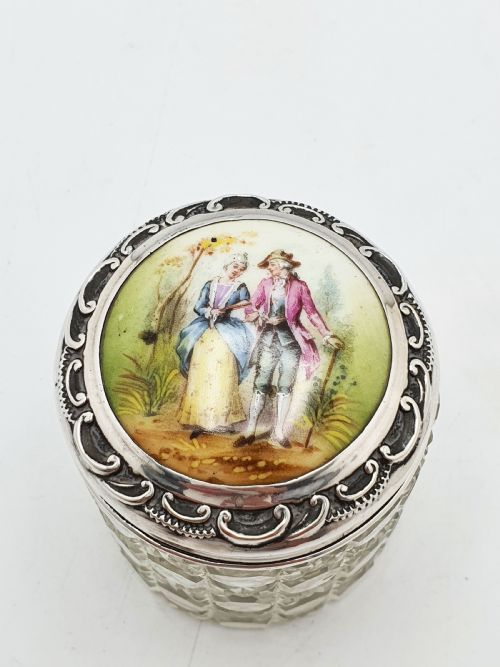


Porcelain Vanity Box
A porcelain vanity box keeps dressing table essentials in order while adding period charm to the room.
Porcelain Vanity Box
A porcelain vanity box encompasses lidded containers, powder bowls, trinket boxes, and jewellery caskets designed for the dressing table. You will frequently encounter Art Deco pieces from nineteen thirty featuring figural half dolls, flapper girls, and bathing belles.
Earlier Victorian and nineteenth-century examples lean towards French Rococo Revival and Chinoiserie styles. These earlier pieces often utilise cobalt blue glaze, ormolu mounts, and hand-painted details.
Origins span France, Germany, and Austria, with notable output from factories such as Sevres, Meissen, and Limoges. Forms vary from simple round bowls to novelty figures, jester motifs, and powder puff stands.
Materials and Craftsmanship
The foundation rests on ceramic, porcelain, and glass, shaped into bowls, jars, and half doll figures. Glaze provides a smooth surface finish, sometimes paired with enamel work.
Decoration relies on hand painting, black dragon motifs, and applied gold leaf or gilt detailing. Ormolu metal mounts appear on nineteenth-century caskets to frame the porcelain panels.
Porcelain Vanity Box Retail Price Guide 2026
Typical asking prices for porcelain vanity box among the pieces listed under this phrase on Sellingantiques today, from the lower quarter to the upper quarter. They describe what is for sale here now, not the wider market.
Some Art Deco powder boxes feature cheeky jester motifs alongside porcelain puppies keeping watch over the powder puff.
Evaluating Quality
The integration of secondary materials dictates overall refinement. Ormolu mounts and gilt detailing should align neatly with the ceramic body, while glass elements require clean edges.
Sevres·Meissen·Limoges
The Porcelain Vanity Box Glossary
- Half doll
- A ceramic doll figure moulded from the waist up, historically used to top powder boxes and whisk brooms. They became particularly popular during the Art Deco period.
- Ormolu
- Gilded bronze mounts applied to furniture and decorative objects. It provides structural framing and ornamental trim on nineteenth-century pieces.
- Chinoiserie
- European artistic style reflecting Chinese motifs and decorative techniques. It appears on porcelain boxes with painted Eastern-inspired scenes.
- Flapper girl
- A cultural archetype of the nineteen twenties and thirties. Figurines representing this style frequently top powder bowls and jars from that era.
Porcelain Vanity Box: Frequently Asked Questions
What is a half doll powder box?
A half doll powder box combines a ceramic bowl with a porcelain upper figure attached to the lid. These pieces served practical functions on dressing tables during the early twentieth century.
The figural lids often depict flapper girls, bathing belles, or pierrots. They lift off to reveal storage for powder puffs and cosmetics.
How do I date an antique porcelain box?
Dating relies on stylistic markers such as the geometric lines of Art Deco design or the ornate curves of French Rococo Revival. Maker marks on the underside also help pinpoint the factory and era.
Nineteenth-century pieces often feature heavier ormolu mounts and hand-painted cobalt blue finishes. Nineteen thirty items typically lean towards novelty figures and ceramic flapper designs.
Where were these vanity boxes made?
Production centred primarily in European ceramic hubs across France, Germany, and Austria. Factories like Limoges, Sevres, and Meissen produced notable decorative wares.
French workshops frequently favoured gilt details and Rococo forms. German and Austrian kilns produced many of the figural half doll powder jars seen from nineteen thirty.
What were vanity boxes used for?
These containers held loose face powder, puffs, pins, and small pieces of jewellery on dressing tables. They kept personal grooming accessories neatly contained.
Many double as powder bowls or trinket caskets. Their decorative painted surfaces added elegance to Victorian and Art Deco bedrooms.