




Porcelain Mounted Side Cabinet
A porcelain mounted side cabinet brings together polished timber and painted plaques to anchor a grand interior.
Porcelain Mounted Side Cabinet
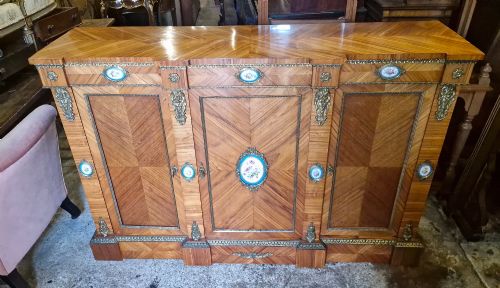
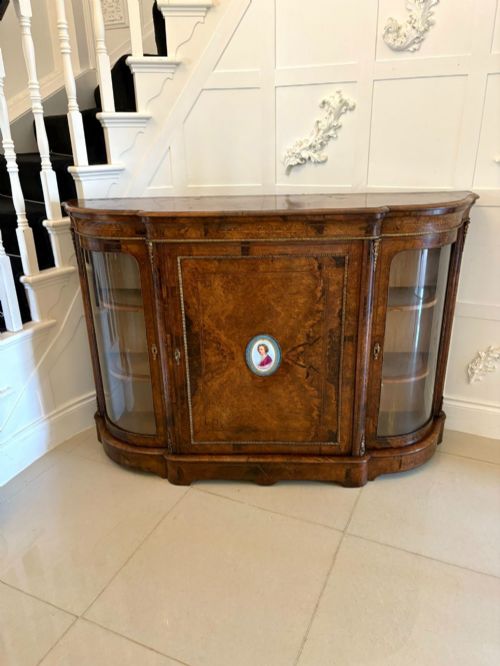
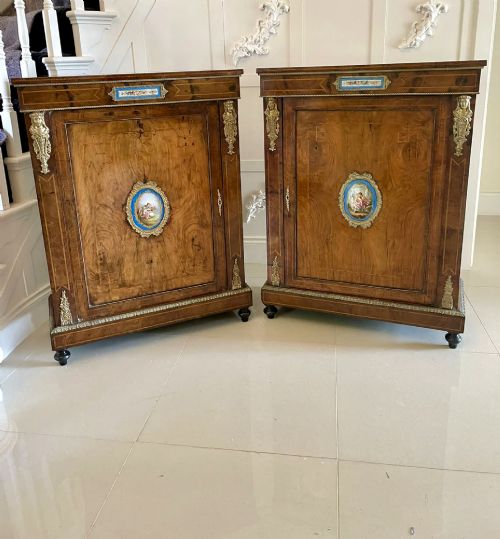
A porcelain mounted side cabinet is a substantial piece of furniture designed for display and storage, appearing most frequently in Victorian and nineteenth-century French revival forms. These items combine timber carcases with inset ceramic plaques, serving as focal points in formal rooms.
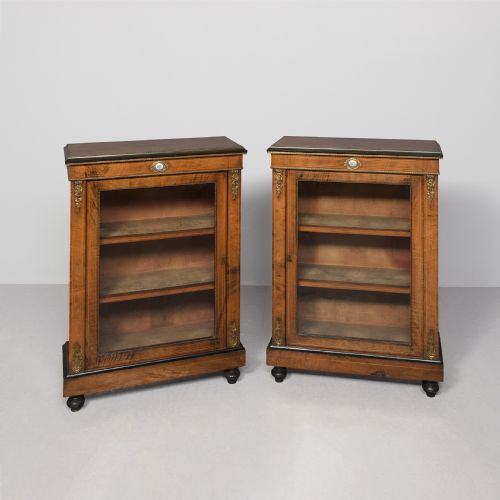
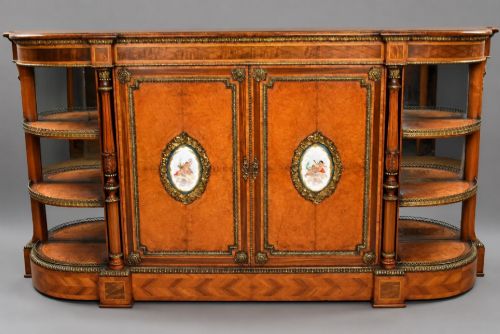
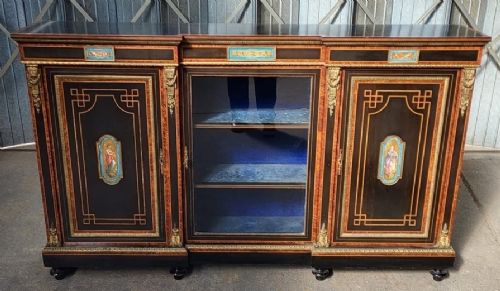
The versions most commonly met on this page span the mid-nineteenth century up to the early twentieth century, featuring burr walnut, ebonised wood, and satinwood foundations. Cabinets arrive as single units, pairs of pier cabinets, or large multi-door credenzas.
Origins stretch between English workshops and French ateliers, embracing Louis styles alongside domestic Victorian tastes. The integration of glazed doors, marble tops, and ceramic panels defines the physical presence of these pieces.
Materials and Construction
Construction relies on timber carcases veneered in burr walnut, kingwood, coromandel, or ebonised wood, often enhanced with marquetry inlay. Cabinets utilise glass for door panels and display shelves to house collections safely.
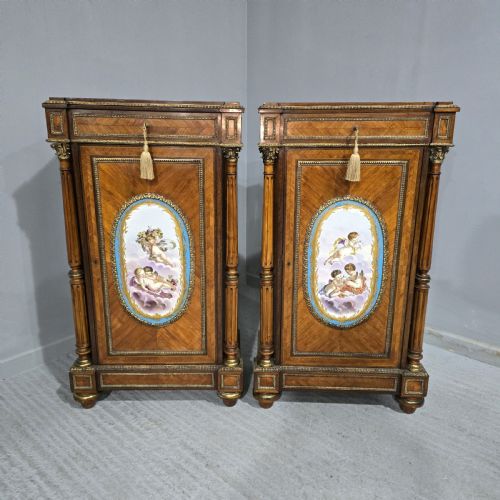
Mounts of ormolu, gilt bronze, and gilt-metal frame the porcelain plaques and accent corners, cornices, and feet. Marble slabs frequently top the French pieces, providing a contrasting surface.
Painted ceramic plaques, frequently styled after Sevres, are set directly into the timber or held within metal mounts. Joinery techniques reflect the high standards of nineteenth-century cabinet makers.
Porcelain Mounted Side Cabinet Retail Price Guide 2026
Typical asking prices for porcelain mounted side cabinet among the pieces listed under this phrase on Sellingantiques today, from the lower quarter to the upper quarter. They describe what is for sale here now, not the wider market.
Cabinet makers occasionally concealed shallow drawers behind decorative ormolu friezes to hide private correspondence.
Assessing Quality and Execution
Quality rests upon the depth of the timber grain, the precision of the marquetry inlay, and the crispness of the ormolu mounts. Finer pieces demonstrate superior hand-chasing in the metalwork and meticulous matching of veneer patterns.
The painted porcelain plaques reveal variations in skill, where hand-painted details and richer ceramic colours distinguish superior items from simpler productions. The weight and thickness of the marble top also indicate the grade of the piece.
Structural integrity, the quality of the timber preparation, and the harmony between ceramic, metal, and wood determine the standing of an individual cabinet within the range.
Lamb of Manchester
The Porcelain Mounted Side Cabinet Glossary
- Ormolu
- Gilded bronze mounts applied to furniture for decoration and protection of corners. This technique requires mercury gilding or electroplating on brass or bronze bases.
- Credenza
- A large sideboard or cabinet used historically for displaying plate and serving food. In nineteenth-century contexts, it denotes a low, multi-door display piece.
- Pier Cabinet
- A narrow cabinet designed to stand against the wall space between windows. These are often encountered in matched pairs.
- Sevres Style
- Ceramic plaques painted in imitation of the French royal porcelain factory. They typically feature pastoral scenes or exotic birds against a coloured ground.
- Ebonised Wood
- Timber treated to resemble ebony through staining and polishing. This finish provides a dark background that highlights gilt mounts and porcelain plaques.
Porcelain Mounted Side Cabinet: Frequently Asked Questions
Where were these cabinets placed?
These cabinets stood in formal reception rooms, dining parlours, and drawing rooms where guests gathered. Their polished surfaces and glazed compartments displayed prized porcelain and glassware.
Pairs of pier cabinets were positioned against specific wall spaces between tall windows, while large credenzas anchored the main walls of a room.
How do I clean the wood and ormolu?
Maintenance requires soft, dry cloths to remove dust from the timber veneer and carved details. Moisture and harsh cleaning agents damage polished surfaces and gilded finishes.
Ormolu mounts benefit from gentle dusting without chemical polishes that strip the original fire gilding or lacquering applied by the maker.
How do I identify French revival styles?
French revival pieces incorporate Louis XV or Louis XVI design motifs such as curved cabriole legs, classical symmetry, and extensive ormolu mounts. They often feature marble tops and Sevres style plaques.
English Victorian pieces lean towards darker timbers like burr walnut or ebonised finishes with subtle marquetry, merging domestic comfort with continental ornamentation.