



Porcelain Mantle Figures
Porcelain mantle figures are decorative ceramic sculptures designed for display, bringing domestic character and classical form to a traditional fireplace setting.
Porcelain Mantle Figures
Porcelain mantle figures encompass a diverse array of ceramic sculptures, decorative figurines, and clock garnitures designed to sit upon a fireplace surround. When you search for porcelain mantle figures, you encounter pieces ranging from Staffordshire pottery animals and English Derby shepherds to French bisque groups and ornate clock sets.
The selection spans from the Georgian era through the Victorian period, capturing changing tastes in domestic ornament. English Staffordshire pottery and Derby porcelain sit alongside French bisque figures and gilt ormolu clock garnitures.
Formats include pairs of sheep and greyhounds, spill vases, allegorical figures like Mars, and sculptural busts of historical figures. These objects served purely decorative purposes in period interiors, often arranged symmetrically on the mantelpiece.
Materials and methods
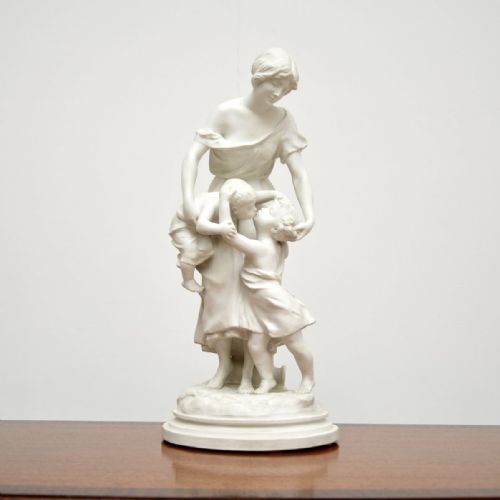
Makers utilised porcelain, bisque porcelain, and earthenware as the primary ceramic bodies for these sculptures. Bisque porcelain provided an unglazed, matte finish resembling carved marble, while standard porcelain and earthenware received hand-painted enamel colours and glossy glazes.
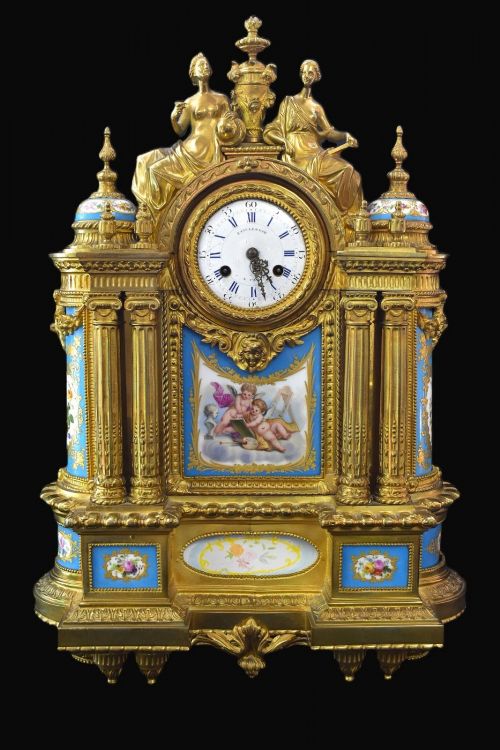
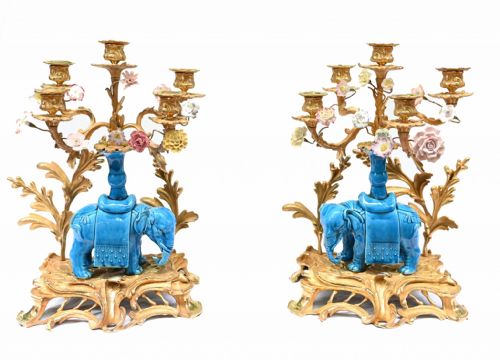
Many elaborate French and English examples incorporate metal mounts, combining porcelain components with ormolu, gilt bronze, and gold leaf. These metal elements formed structural frames, candelabra branches, or decorative clock surrounds to complement the ceramic figures.
Porcelain Mantle Figures Retail Price Guide 2026
Typical asking prices for porcelain mantle figures among the pieces listed under this phrase on Sellingantiques today, from the lower quarter to the upper quarter. They describe what is for sale here now, not the wider market.
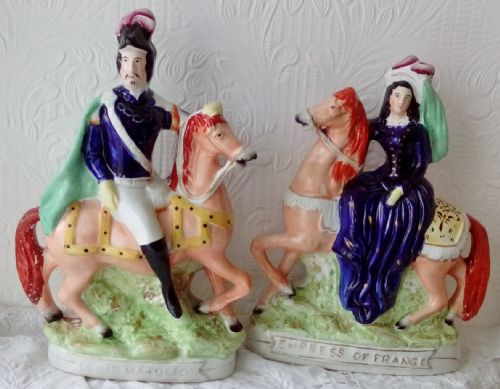
Napoleon and the Empress of France watch faithfully from the mantelpiece alongside pairs of Staffordshire sheep and greyhounds.
Judging the work
Quality rests upon the crispness of the modelling and the precision of the hand-painted enamel details. Superior figures display fine facial expressions, careful rendering of drapery, and clean separation between colours without muddy bleeding.
The integration of secondary materials dictates the standard of the piece, particularly in French ormolu clock garnitures and mounted porcelain. Rigorous chiselling in the gilt bronze and careful firing of the porcelain body separate standard production items from exceptional workshop outputs.
Luca Madrassi·Etienne Lenoir·Ernst Whaliss·Phillipe H. Mourey
The Porcelain Mantle Figures Glossary
- Bisque porcelain
- Un-glazed white porcelain fired to a matte finish that resembles marble. It gained popularity in the nineteenth century for classical and sentimental figural groups.
- Ormolu
- Gilt bronze mounted on decorative objects and clock cases. The technique involves applying a gold amalgam to bronze before heating.
- Staffordshire pottery
- Earthenware figures produced in the English Midlands during the nineteenth century. These sturdy domestic ornaments typically depict animals, literary scenes, or political figures.
- Spill vase
- A hollow figural sculpture incorporating a small cylindrical holder designed to store taper spills for lighting fires. They are frequently found in pairs among nineteenth-century ceramics.
- Garniture
- A set of matching decorative objects, usually comprising a central clock flanked by vases, candelabras, or matching figural sculptures. They anchored the decorative scheme of a period mantelpiece.
Porcelain Mantle Figures: Frequently Asked Questions
What are porcelain mantle figures?
Porcelain mantle figures are decorative ceramic sculptures, animals, and clock garnitures created to adorn domestic fireplace surrounds.
They reflect the prevalent decorative styles of the eighteenth and nineteenth centuries across English and continental workshops.
How were mantle figures used?
These pieces served as ornamental displays on mantelpieces, often arranged in balanced pairs flanking a clock or mirror.
Some integrated practical elements such as spill holders for lighting candles or fires, though most remained purely decorative.
How do I clean ceramic figures?
Dust glazed porcelain gently with a soft, dry brush to prevent the accumulation of dirt in recessed areas.
Avoid using water or liquid cleaners on bisque porcelain or painted enamel surfaces, as unglazed bodies absorb moisture.
How to tell periods apart?
Georgian and early nineteenth-century pieces often exhibit hand-modelled details and soft paste porcelain bodies associated with English factories.
Later Victorian and French examples frequently employ harder earthenware, mechanical pressing techniques, or elaborate ormolu mounts.