





Porcelain Lidded Ginger Jar
A porcelain lidded ginger jar brings centuries of global ceramic artistry into a room, offering both sculptural presence and enclosed storage.
Porcelain Lidded Ginger Jar
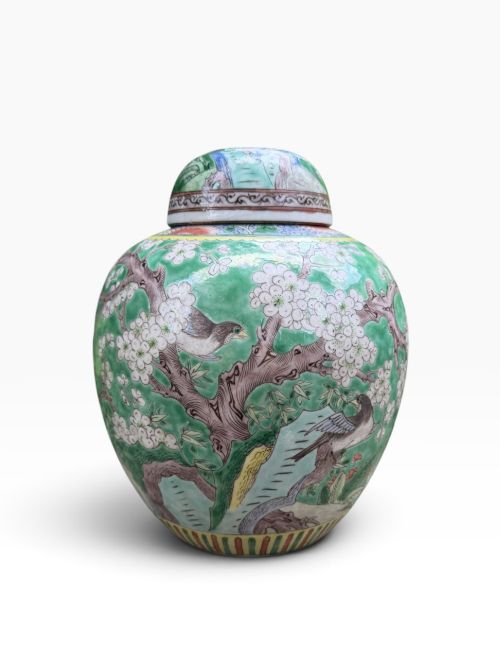
A porcelain lidded ginger jar is a covered vessel originally designed to hold spices and herbs, evolving into a centrepiece of interior display across diverse decorative traditions. When you search for this phrase, you encounter forms ranging from export blue and white wares to richly coloured Japanese Imari and European revival pieces.
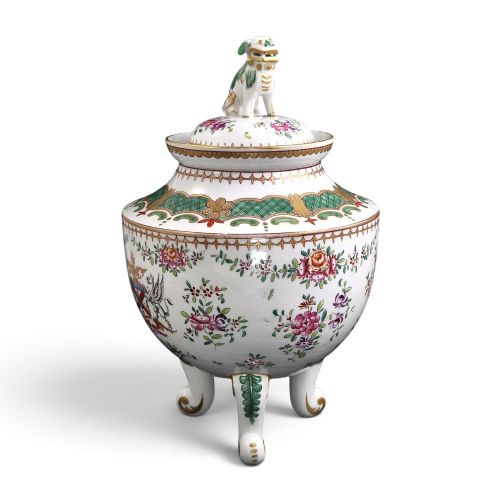
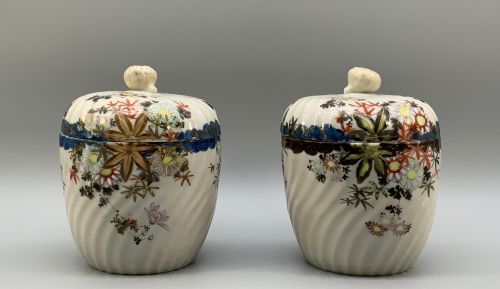
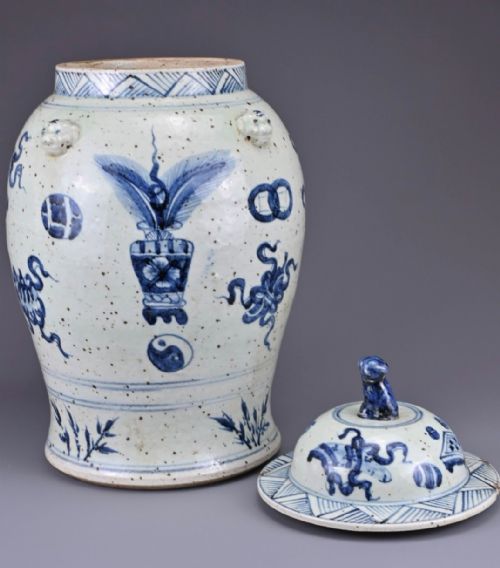
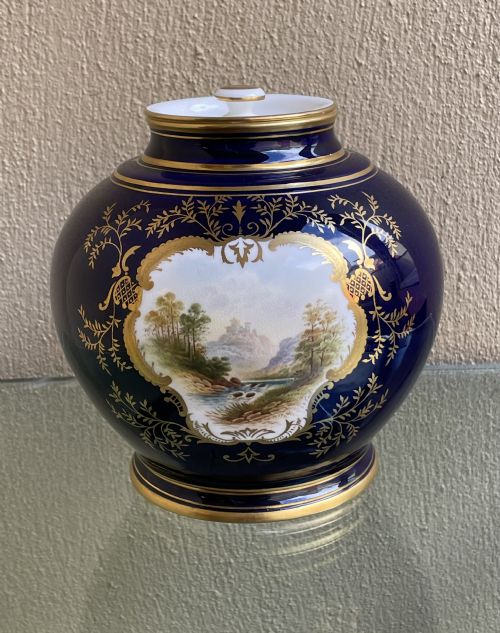
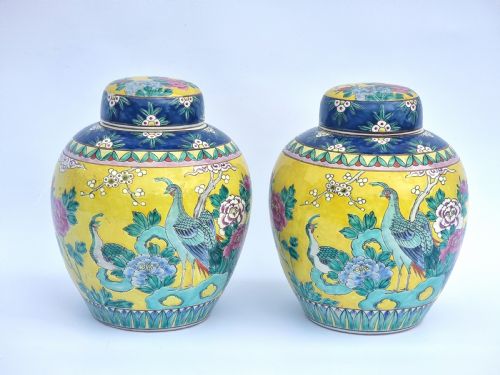
The pieces appearing on this page span several centuries, including 18th-century Delft and Chinese Qing Dynasty examples alongside 19th-century Japanese Meiji exports and early 20th-century English ceramic works. Japanese Imari jars and Chinese blue and white vessels dominate the selection, accompanied by Samson of Paris copies and English factory productions.
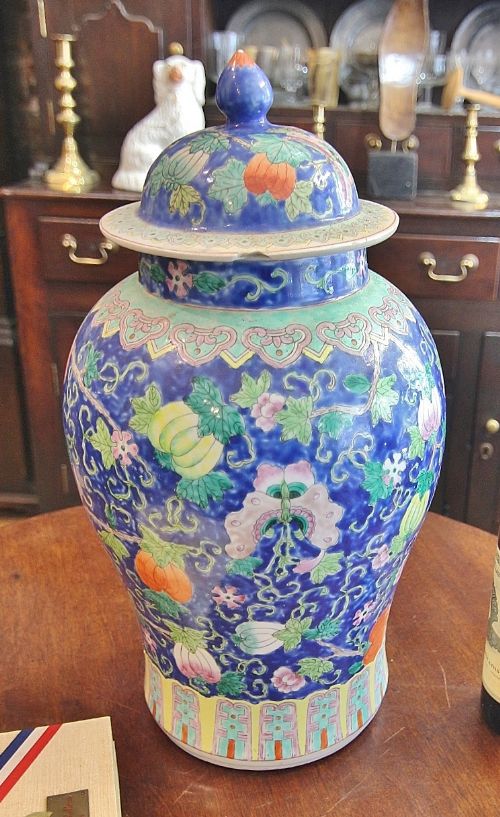
Forms vary from traditional baluster shapes to octagonal profiles and miniature vessels, each paired with a matching ceramic lid. Collectors select these items for their painted decoration, which incorporates floral motifs, armorial designs, and traditional Asian landscapes.
Materials and manufacture
The foundation of these vessels lies in fine porcelain, ceramic, or earthenware, shaped on the potter's wheel or cast in moulds before receiving intricate hand-painted underglaze blue, polychrome enamel, or gilt decoration. Artisans applied glazes to seal the porous clay bodies and vitrify the painted surfaces during high-temperature kiln firing.
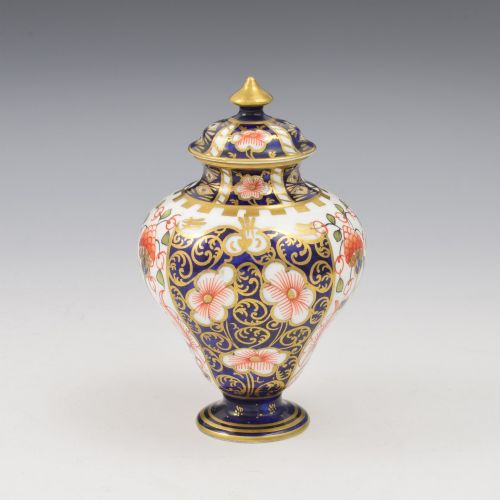
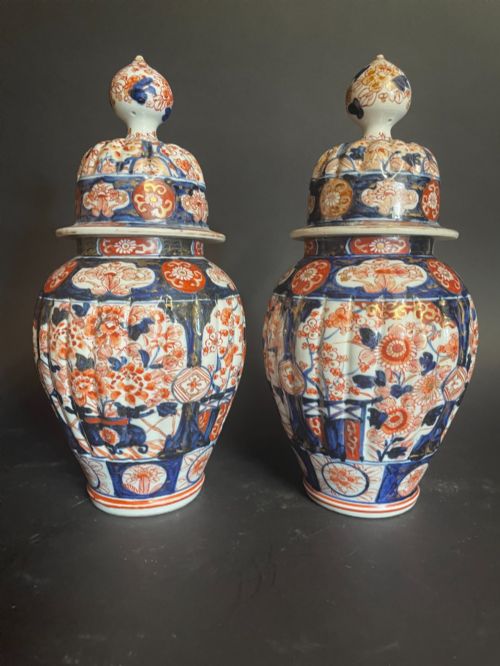
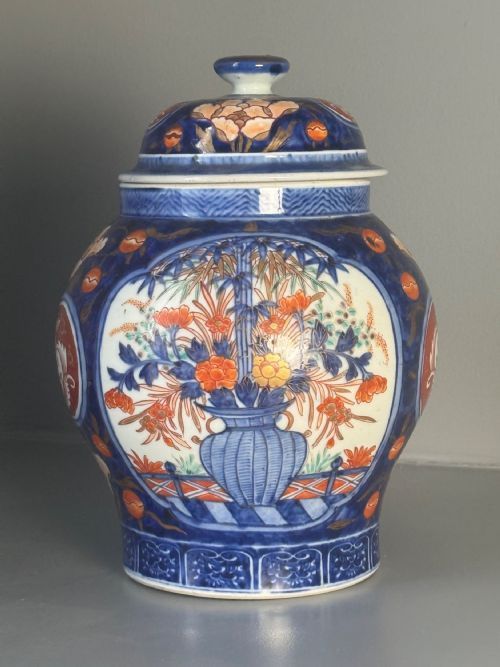
Many 19th-century Japanese and Chinese examples utilise the vibrant Imari palette of cobalt blue, iron red, and gold leaf applied over a white porcelain base. European factories such as Samson of Paris, Royal Worcester, and Coalport employed similar hand-painting techniques, often incorporating gilding and enamel highlights to emulate earlier Asian or Meissen styles.
Listings include porcelain, earthenware, enamel, and gold leaf across multiple centuries.
Judging quality and execution
Quality in a porcelain lidded ginger jar resides in the crispness of the hand-painted brushwork, the evenness of the glaze, and the precision with which the lid fits the shoulder of the vessel. Superior examples display confident, detailed pigments without blurring, whereas lesser pieces show rushed or mechanical transfer printing.
The integrity of the piece depends heavily on whether the lid is original to the jar, as matched replacements alter the historical cohesion of the object. Weight, potting fineness, and the richness of any applied gilding or enamel work further distinguish standard production items from exceptional studio or factory outputs.
Royal Crown Derby·Samson Paris·Coalport·Royal Vienna·Herend·Wolfsohn Dresden·Royal Winton·Royal Worcester
The Porcelain Lidded Ginger Jar Glossary
- Imari
- A style of Japanese porcelain decorated in underglaze blue, iron red, and gold, named after the port from which these wares were shipped to Europe.
- Baluster
- A vertical architectural form with a swelling lower portion that tapers towards the top, commonly found in the profile of ginger jars.
- Chinoiserie
- The European interpretation and imitation of Chinese and East Asian artistic traditions, popular in decorative arts during various historic periods.
- Underglaze
- A method of decorating pottery in which pigments are applied to the unfired ceramic body before the transparent glaze layer is added.
- Enamel
- Opaque glass-like pigments applied over a fired and glazed ceramic surface, requiring a secondary low-temperature firing to fuse.
Porcelain Lidded Ginger Jar: Frequently Asked Questions
What were ginger jars originally used for?
These vessels were initially produced in China to store and transport spices, salt, and oils, protecting their contents from moisture and pests.
Over time, Western markets adopted the jars purely for decorative display, leading to more ornate painting and the inclusion of matching lids.
How do I identify Japanese Imari pieces?
Japanese Imari ceramics are instantly recognisable by their distinct palette combining deep cobalt blue underglaze with iron red and supplementary gold leaf.
Most examples date from the Meiji period or the late 19th century, often featuring dense floral and geometric panel designs.
Are lids usually original to the jars?
Many surviving jars have lost their original covers over centuries of handling, meaning replacement lids are frequently encountered in the antiques trade.
A correct match should share the same clay body, glaze tone, and decorative style as the base jar.
How should I display a lidded jar at home?
These jars work well positioned on sideboards, mantels, or within cabinets where their height and painted surfaces catch ambient light.
Pairs look balanced when placed symmetrically, while large single examples serve as focal points on open shelving.