



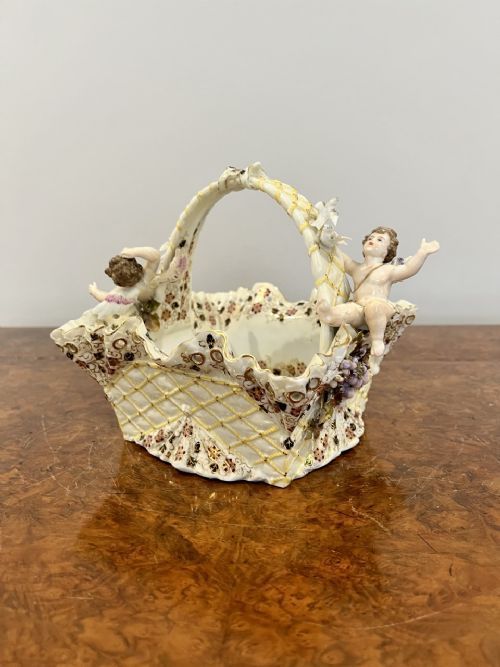


Porcelain Flower Bowl
Porcelain flower bowls bring botanical forms and handpainted floral decoration to tables and display cabinets across centuries of European and Asian ceramic traditions.
Porcelain Flower Bowl
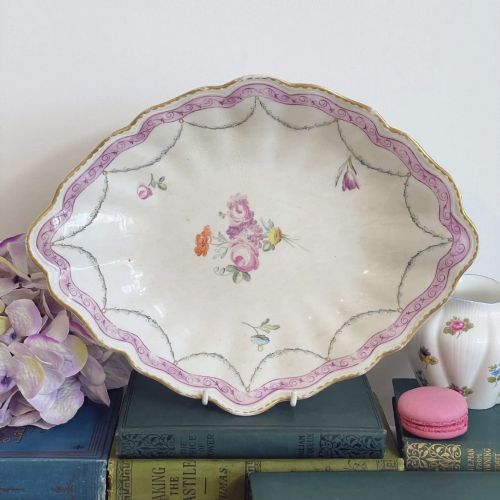
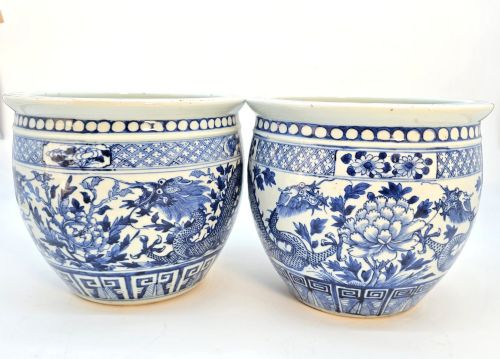
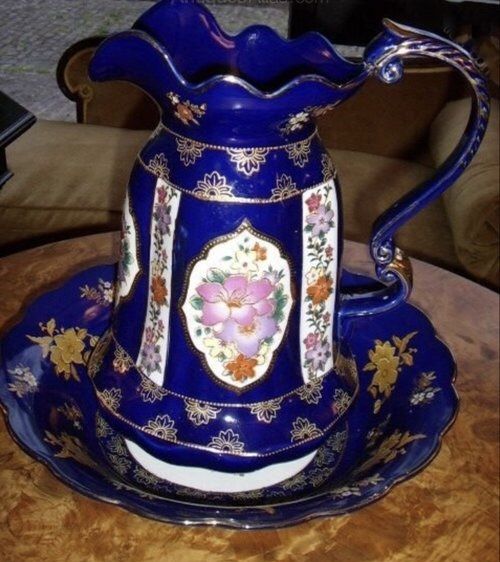
A porcelain flower bowl encompasses diverse forms including large centrepieces, jardinieres, decorative baskets, and serving dishes designed to hold blooms or display floral motifs. When searching for a porcelain flower bowl, buyers encounter pieces ranging from eighteenth-century English serving dishes and Chinese export vessels to nineteenth-century German figural centrepieces and Japanese Imari jardinieres.
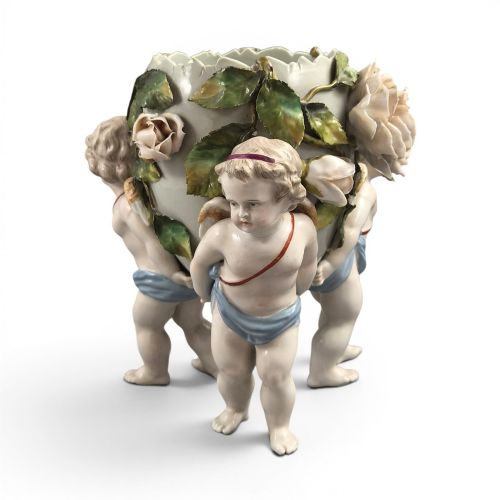
European examples frequently incorporate applied porcelain roses, cherubs, and gilt bronze mounts, reflecting Rococo Revival and Victorian tastes. Asian pieces display blue and white underglaze painting, famille rose enamels, and millefleur patterns across bowls, jardinières, and rectangular vessels.
Materials and construction methods
Makers utilised high-fired ceramic and porcelain bodies, applying liquid glazes and polychrome enamels before secondary kiln firings to set the colours. Gilt leaf and surface gilding highlight rims, handles, and applied botanical details.
Many European centrepieces and baskets feature hand-modelled applied flowers and putti figures fixed to the main ceramic body prior to firing. Japanese and Chinese pieces rely on precise brushwork for underglaze blue designs and multi-coloured enamel overlays.
Porcelain Flower Bowl Retail Price Guide 2026
Typical asking prices for porcelain flower bowl among the pieces listed under this phrase on Sellingantiques today, from the lower quarter to the upper quarter. They describe what is for sale here now, not the wider market.
Musical putti frozen mid-song share shelf space with thousand-flower bowls and porcelain cabbage leaves.
Evaluating craftsmanship and condition
Quality rests in the crispness of the modelling, particularly on pieces with applied flowers, putti, and intricate basketweave forms where fine detail distinguishes superior hand-work. Enamel painting density and brushwork precision separate standard production items from masterworks.
The integration of gilt bronze mounts, the stability of applied botanical elements, and the clarity of factory marks or period glazes indicate the standard of production across English, continental European, and Asian manufactories.
C.G. Schierholz and Sohn·Royal Worcester·Royal Dux·Rockingham·Coalport
The Porcelain Flower Bowl Glossary
- Jardiniere
- A large ornamental pot or bowl designed to hold plants or cut flowers, frequently displayed on pedestals or tabletops. These vessels appear in Chinese porcelain and European ceramic traditions.
- Centrepiece
- A large decorative vessel placed in the middle of a dining table or sideboard, often featuring elaborate figural supports, applied roses, and tiered bowls.
- Famille rose
- A palette of opaque enamel colours dominated by pink or rose shades, introduced to Chinese porcelain during the Qing dynasty and widely exported.
- Imari
- A style of Japanese porcelain decorated in underglaze blue, iron red, and gold, named after the port from which the wares were shipped to Europe.
- Putti
- Plump, winged infant figures, often depicted as cherubs, commonly modelled in porcelain and applied to nineteenth-century European centrepieces.
Porcelain Flower Bowl: Frequently Asked Questions
How do I care for antique porcelain bowls?
Wash porcelain gently by hand using lukewarm water and mild soap, avoiding harsh scrubbing or ultrasonic cleaners that can damage applied enamel or gilding.
Keep fragile pieces out of direct sunlight and away from high-traffic areas where applied elements like porcelain flowers or delicate handles might suffer accidental impacts.
What is the difference between an Imari bowl and a famille rose bowl?
Imari bowls utilise a distinct palette of underglaze blue, iron red, and gold highlights, often featuring dense geometric and floral panels originating from Japanese kilns.
Famille rose bowls rely on opaque pink enamels alongside a wider pastel range, characterising eighteenth- and nineteenth-century Chinese export porcelain.
How can I date a nineteenth-century centrepiece?
Examine the base for factory marks, impressed numbers, or painted symbols that correspond to known operational periods of European potteries such as German and English works.
Style indicators like Rococo Revival curves, applied putti, and Victorian polychrome floral painting styles also help narrow the decade of manufacture.
Were these bowls used for real flowers?
Many jardinieres and flower bowls were specifically designed to hold water and living plants or floral arrangements, protecting tabletops with glazed interior surfaces.
Other highly decorative baskets and figural centrepieces served primarily as visual showpieces for grand dining rooms rather than functional vases.