

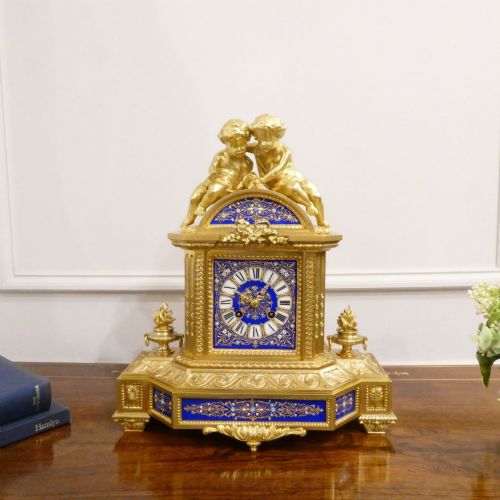
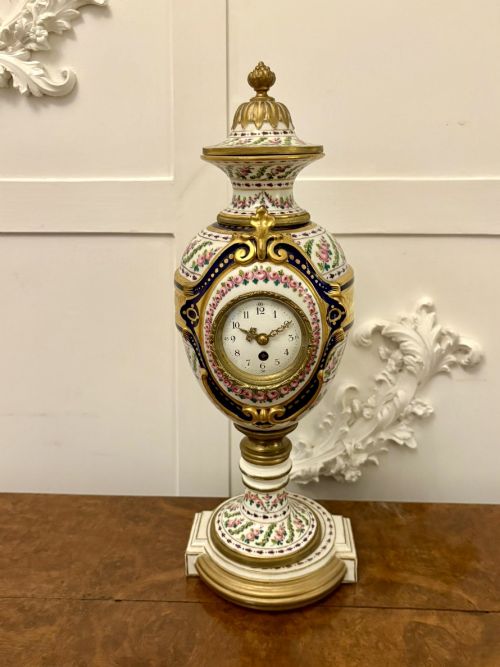
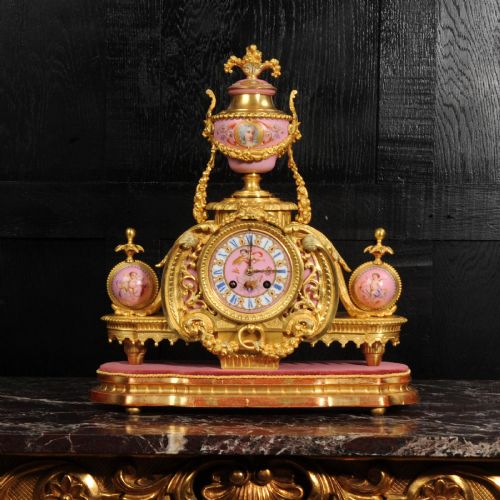
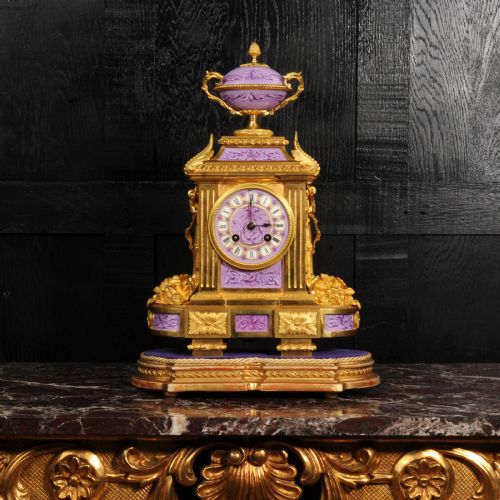



Porcelain Desk Clock
Porcelain desk clock selections bring together 19th-century French artistry and timekeeping, offering ornate gilt mounts and hand-painted ceramic panels for your interior.
Porcelain Desk Clock
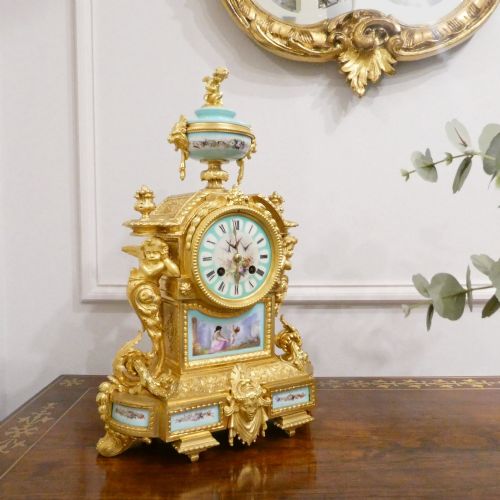
A porcelain desk clock is typically a nineteenth-century French timepiece combining glazed ceramic bodies with metallic mounts. These objects frequently take the form of mantel clocks, boudoir pieces, or urn-shaped designs.
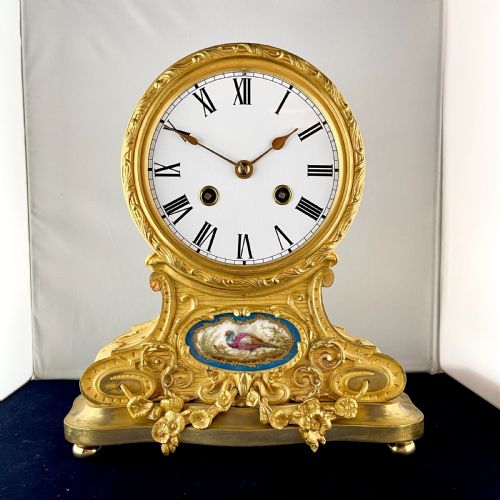
The materials and styles span the Victorian era, utilising revived French Rococo and Louis XVI aesthetics. You will encounter drumhead forms, crystal regulators, and carriage timepieces alongside larger mantel variations.
Makers such as Achille Brocot, Japy Freres, and P.H Mourey feature prominently in these offerings. Their output establishes the benchmark for mid-to-late nineteenth-century horological craftsmanship.
Assessing Quality and Execution
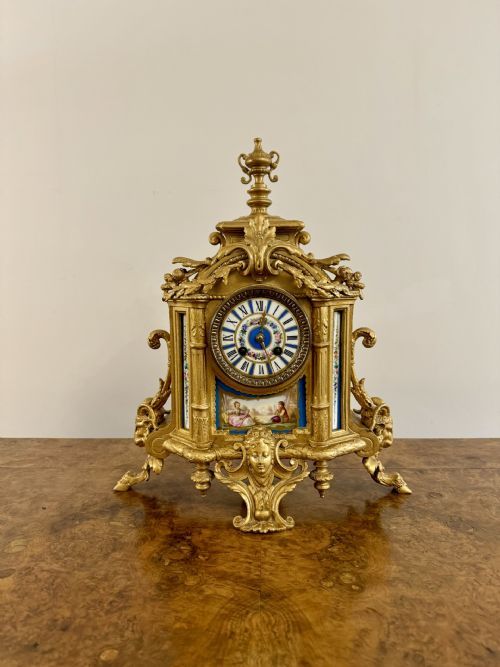
The standard of a porcelain desk clock rests upon the crispness of the gilt bronze or ormolu casting and the finesse of the hand-painted ceramic details. Superior examples display deeply chased metalwork and finely rendered miniature paintings on the porcelain panels.
Movement execution by recognised Parisian makers distinguishes finer horological pieces from standard commercial output. The integration between the ceramic body, metal mounts, and mechanical clockwork determines the overall structural harmony.
Porcelain Desk Clock Retail Price Guide 2026
Typical asking prices for porcelain desk clock among the pieces listed under this phrase on Sellingantiques today, from the lower quarter to the upper quarter. They describe what is for sale here now, not the wider market.
Current selections span the Victorian era, incorporating gilt bronze, ormolu, enamel, and hand-painted porcelain manufactured across France.
Achille Brocot·Japy Freres·P.H Mourey
The Porcelain Desk Clock Glossary
- Ormolu
- Gilded bronze produced by applying a mercury-gilding technique to cast bronze. This treatment creates a durable, warm metallic lustre characteristic of nineteenth-century French decorative arts.
- Sevres
- Porcelain originating from the royal French factory or created in that specific decorative manner. The style employs rich ground colours and hand-painted reserve panels depicting figures or landscapes.
- Crystal regulator
- A mantel clock featuring glass panels on multiple sides that reveal the mechanical movement within. These pieces often incorporate enamel dials and fine brass framing.
- Drumhead clock
- A timepiece featuring a circular clock case mounted upon a base or pedestal. The shape resembles a traditional drum set on its side.
Porcelain Desk Clock: Frequently Asked Questions
How do I wind a nineteenth-century clock?
These timepieces generally utilise a key-wound mechanical movement requiring a gentle turn in the correct barrel aperture. Care must be taken not to overwind the mainspring.
Most surviving examples operate on an eight-day cycle or require daily attention depending on the complexity of the escapement and strike train.
Where were these clocks typically placed?
Nineteenth-century owners positioned these timepieces upon mantelpieces, boudoir desks, or dedicated table stands protected by glass domes. Their decorative facades were intended for prominent display in formal rooms.
Smaller carriage and boudoir variants offered portability between chambers while maintaining a high standard of interior ornamentation.
How do I identify a Sevres style panel?
Sevres style panels feature characteristic glazed porcelain grounds, often in rich blue or turquoise, surrounding hand-painted pastoral scenes or floral reserves. These plaques are frequently signed or bear factory markings beneath the glaze.
Authentication involves examining the crispness of the enamel painting and the quality of the surrounding gilt bronze mounts.
What maintenance do antique clock movements need?
Mechanical movements benefit from periodic professional servicing to clean older oils and ensure the gear train functions smoothly. Dust accumulation inside the case should be minimised through careful handling.
Placing the clock on a level surface ensures the pendulum or balance wheel beats evenly and keeps accurate time.