
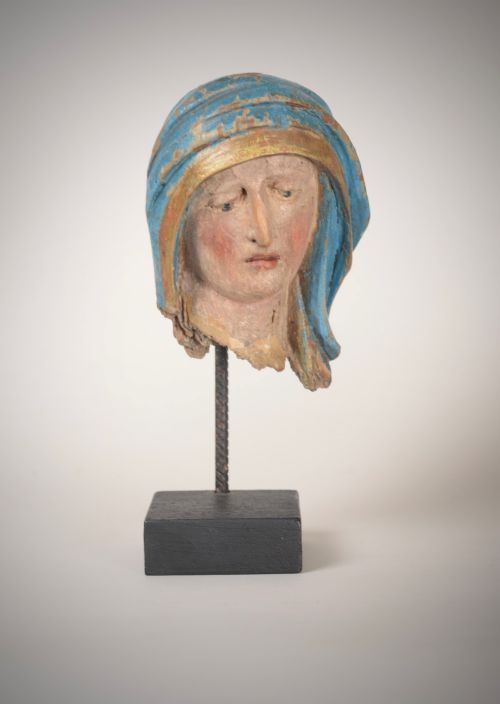
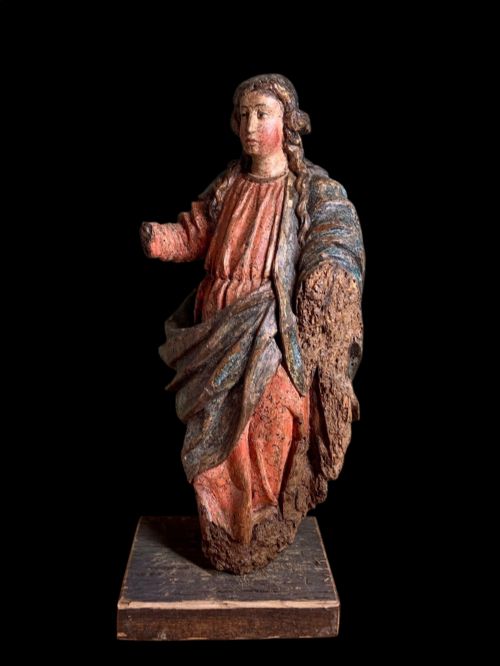


Polychrome Saint Sculpture
These polychrome saint sculpture pieces are hand-carved wooden figures finished with paint and gilding, offering devotional character for your interior.
Polychrome Saint Sculpture
A polychrome saint sculpture represents holy figures and angels carved from wood and finished with paint, gesso, and gold leaf. When you search for polychrome saint sculpture, you encounter religious statues and devotional figures originating from various European regions.
The selections span centuries, ranging from medieval gothic pieces to 17th and 18th-century Baroque works. Italian and German pieces appear frequently, alongside examples from France and Spain.
You find full-length statues, processional figures, and character heads depicting saints such as John the Baptist, Saint Barbara, and Saint Roche. Fragments and busts also feature in the selection, showing the historic nature of these devotional objects.
Materials and construction
Carved wood forms the structural base for these sculptures, utilising timbers such as oak. Artisans shaped the timber into detailed human figures and drapery before applying surface treatments.
Gesso layers provided a smooth ground over the carved wood to receive polychrome paint and gold leaf. This combination of carved wood, polychrome paint, and gilding created the colourful surface decoration characteristic of ecclesiastical art.
The listings span from pre-16th century gothic pieces to 19th-century processional figures, utilising carved wood, gesso, and gold leaf.
Quality factors in historic carving
The preservation of the original polychrome paint and gold leaf surface influences the character of the object. Pieces retaining their historic pigment layers offer a more complete visual record of their period.
Rouillard Angers·Bohumil Kafka
The Polychrome Saint Sculpture Glossary
- Polychrome
- Decoration in multiple colours applied to the surface of wood or stone sculpture. This historic technique gave religious statues a lifelike appearance.
- Gesso
- A plaster mixture applied over wood to prepare the surface for paint and gold leaf. It provides a smooth white ground for fine detail.
- Baroque
- An artistic style from the 17th and 18th centuries characterised by dynamic movement and dramatic expression. Figures from this period often display theatrical drapery.
- Giltwood
- Wood that has been decorated with thin sheets of gold leaf. This finish added luminosity to ecclesiastical sculptures and church interiors.
- Santos
- A devotional figure used in religious processions and domestic shrines. These figures often include carved wooden elements dressed in textiles.
Polychrome Saint Sculpture: Frequently Asked Questions
How were these statues used?
Historic religious figures served as focal points for prayer and contemplation in churches, chapels, and private homes. Some pieces functioned as processional statues carried during religious festivals.
Others stood upon altars or within architectural niches as part of broader ecclesiastical decorative schemes.
How do I live with antique religious woodcarvings?
Placing these sculptures in stable indoor environments protects the historic wood and delicate paint layers from humidity fluctuations. Display them on sturdy surfaces or mount securely to walls depending on the object type.
Allow sufficient space around larger figures so the carved details and polychrome surfaces remain visible.
How can I tell the periods apart?
Stylistic indicators such as medieval gothic proportions differ from the dynamic movement seen in 17th and 18th-century Baroque carvings. Facial expressions, hair styling, and the cut of the garments often reflect the aesthetic of their specific era.
Examination of the wood and the application method of the gesso and polychrome paint also provide clues to the age of the piece.