



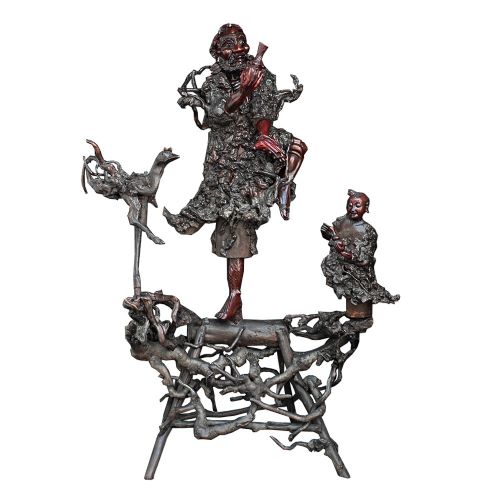


Polished Wood Sculpture
Polished wood sculpture brings warmth and tactile depth to any room through organic forms shaped by carvers across centuries.
Polished Wood Sculpture
A polished wood sculpture comprises carved figures, animal forms, architectural masks and natural root formations brought to a high sheen. These pieces span centuries from the eighteenth onwards, taking inspiration from diverse global traditions including Qing Dynasty workshops, Art Deco studios and Japanese Meiji carvers.
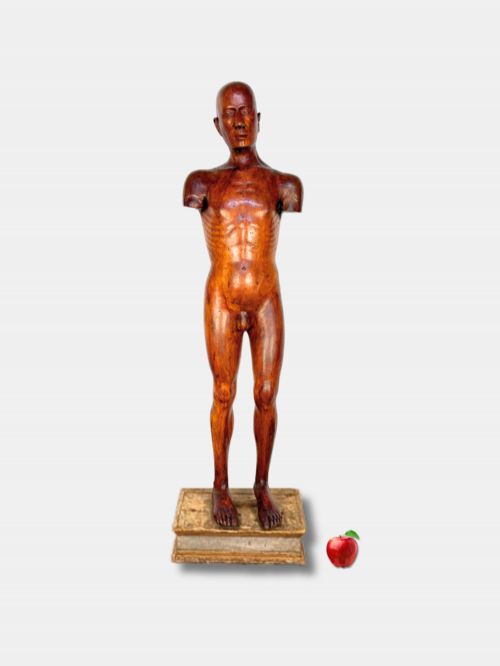
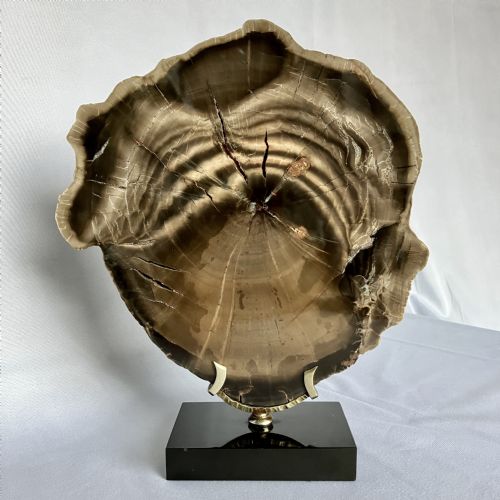
Buyers meet everything from life-size figural santos and expressive busts to functional bookends and stands inset with quartz. The material ranges from standard hardwood and burr walnut to fossilised specimens mounted on bespoke stands.
How they were made
Makers shaped these objects using dense timbers such as hardwood, walnut, yew and root wood, often following the natural contours of the gnarled material. Carvers utilised traditional hand tools to define intricate details on figures, panthers and tribal busts.
The finishing process involved careful sanding and polishing to reveal the rich grain and varied tones inherent in the wood. Certain pieces integrated contrasting elements like deep quartz tops or bespoke metal mounting stands.
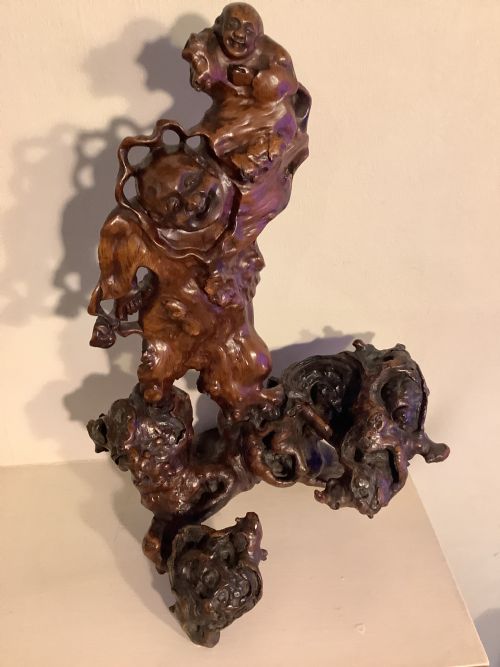
A gnarled piece of wood cleverly reimagined as a man carrying a boy on his shoulders.
What varies in quality
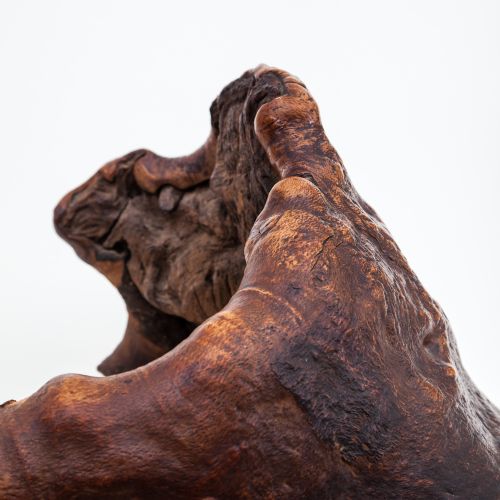
The division between standard works and superior pieces rests on the expressiveness of the carving and the natural character of the timber. Burr walnut and gnarled root wood with complex grain patterns demand greater skill from the maker to shape successfully.
Signed works by known carvers or pieces retaining precise historical context demonstrate superior craftsmanship. The depth of the polish and the harmony between the natural wood formation and the final sculpted form dictate the overall standard.
V . Ramirez Bolivia·Boudewijn Tuerlinckx
The Polished Wood Sculpture Glossary
- Burr Walnut
- A figured wood grain prized for its swirling patterns and knotty formations. It appears frequently in nineteenth-century decorative root carvings.
- Santos
- A carved devotional figure, often life-size, mounted on a plinth. These traditional sculptures reflect European religious art traditions.
- Rootwood
- Timber sourced from the root system of a tree, displaying twisting and organic shapes. Carvers utilise these irregular forms to inspire figurative and abstract sculptures.
- Treen
- Small handmade wooden household objects and decorative items. Architectural wall masks and carved heads often fall under this historic collector category.
- Hardwood
- Dense timber from angiosperm trees used extensively for durable carvings. It provides the structural integrity required for detailed nineteenth-century figures.
Polished Wood Sculpture: Frequently Asked Questions
How do I care for polished wood?
Keep wooden sculptures away from direct heat sources and sudden humidity changes to prevent the timber from splitting or warping.
Dust the surface gently with a dry, soft cloth and avoid chemical polishes that can damage the historical finish.
How are different periods identified?
Dating relies on tool marks, stylistic conventions such as Art Deco streamlining or Baroque ornamentation, and the specific timber choices popular in each era.
Examining the base and mounting methods often reveals whether a piece originates from nineteenth-century workshops or earlier traditions.
What is root wood carving?
Root wood carving is an artistic practice where the natural, twisted growth patterns of tree roots dictate the final form of the sculpture.
Carvers enhance these organic shapes to reveal figures, animals or abstract stands without altering the fundamental silhouette provided by nature.
Where should I display these sculptures?
These sculptures suit tabletops, dedicated stands or mantelpieces where adequate light highlights the grain and polish of the wood.
Pairing them with neutral backgrounds allows the complex textures of burr walnut and carved hardwood to stand out in a room.