


Polished Copper Hearth Vessel
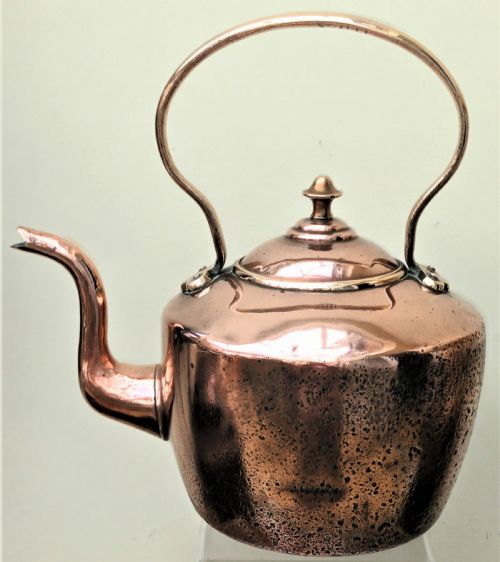
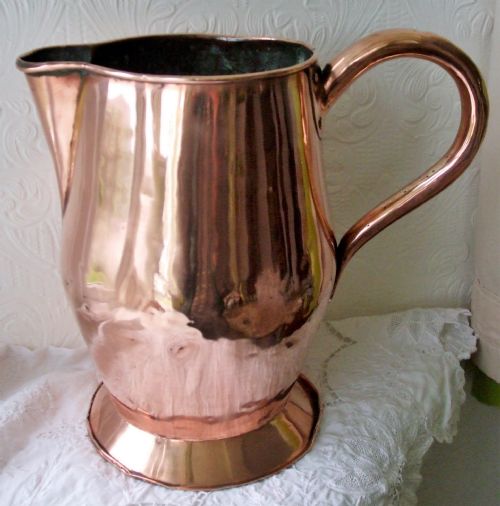
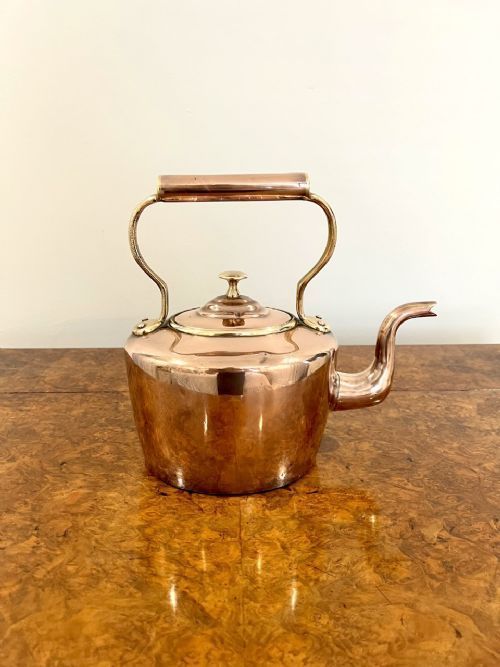
A polished copper hearth vessel brings warmth and reflection to a fireside, taking the form of kettles, jugs, planters, and coal scuttles from Georgian and Victorian times.
Polished Copper Hearth Vessel
A polished copper hearth vessel spans several practical domestic forms, predominantly kettles, jugs, and planters, originating from the Georgian and Victorian periods. These pieces served functional roles in the home before transitioning into decorative items valued for their metallic warmth.
Kettles dominate the selection, appearing in small, large, and oval formats alongside tall jugs and helmet coal scuttles. The grouping relies on metalwork traditions from the nineteenth century and earlier, maintaining utility alongside visual presence.
English origins shape these items, often combining copper bodies with brass and wrought iron elements. Buyers encounter pieces dated to around eighteen hundred through the late nineteenth century.
Materials and construction
Makers shaped sheet copper by hand or with early mechanical assistance, often incorporating brass handles, rims, or fittings to strengthen stress points. Wrought iron occasionally appears in structural mounts and fixings.
The combination of copper and brass creates tonal contrast between the rosy metallic body and the brighter yellow alloy of the accents. Surface polishing highlights the reflective properties of the base metal.
The listings span the Georgian and Victorian periods, utilising copper, brass, tin, and wrought iron in forms ranging from kettles to coal scuttles.
Distinctions in quality
Weight and gauge of the metal set finer examples apart from lighter productions, as thicker copper holds shape and polish more durably over generations of use. Master smiths balanced capacity with clean proportions, visible in the curve of a kettle spout or helmet scuttle.
The integration of brass details, such as handle mountings and rims, demonstrates the standard of workshop execution. Original fixings and uncompromised structural integrity elevate a vessel above later replacements or heavy restoration.
The Polished Copper Hearth Vessel Glossary
- Helmet coal scuttle
- A coal container featuring a high, sloping back and a flared front resembling a classical helmet, designed for carrying fuel to the hearth. These vessels combine functional capacity with decorative brass handles and bases.
- Jardinere
- A large ornamental pot or planter intended for holding growing plants rather than cut flowers. Victorian examples in copper bring reflective texture to interior spaces.
- George III
- The period of British history spanning from seventeen sixty to eighteen twenty, associated with refined domestic metalwork and classical proportions. Pieces from this era often display balanced forms and careful construction.
- Victorian
- The era spanning the reign of Queen Victoria from eighteen thirty-seven to nineteen zero one, noted for diverse revival styles and industrial expansion in metal manufacturing. Domestic copperware from this time meets practical household needs with sturdy design.
Polished Copper Hearth Vessel: Frequently Asked Questions
How were copper kettles used?
Copper kettles sat directly upon hearths or stoves to heat water for domestic tasks, tea, and washing. Their high thermal conductivity allowed them to warm quickly over open coals.
Over time, regular polishing maintained their bright finish, transforming utilitarian kitchen tools into decorative objects displayed near the fireplace when not in active use.
What is a helmet coal scuttle?
A helmet coal scuttle is a specialised bucket shaped with a high back and a pointed, sloping front aperture designed to tip coal cleanly onto a fire. The shape balances ease of pouring with containment.
Fitted with sturdy handles for lifting and carrying heavy loads of fuel, these vessels combined workshop utility with the polished appearance expected in nineteenth century reception rooms.
How do I date a copper vessel?
Dating relies on stylistic markers, construction methods, and material combinations typical of periods such as the Georgian and Victorian eras. Dovetailed seams, hand-beaten surfaces, and specific handle fixings offer clues to age.
Proportions and secondary metals like brass and wrought iron further anchor a piece within a specific manufacturing decade or century.
Can I use these vessels outdoors?
While copper withstands outdoor elements by developing a stable green patina, antique hearth vessels are generally suited for indoor display and dry storage. Weather exposure can pit the thin historic metal and compromise original surface treatments.
Planters and buckets function well indoors for holding potted plants when paired with protective inner liners to prevent moisture damage to the historic base.