
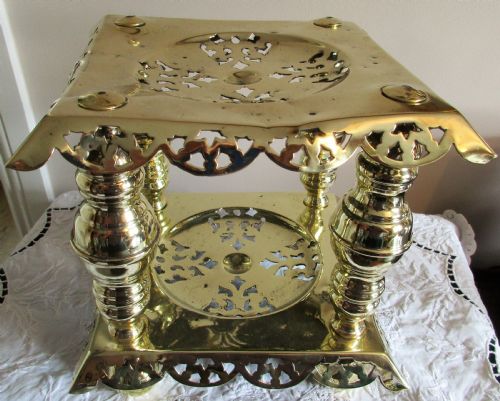


Polished Brass Plate
These pieces of polished brass plate bring bright metallic reflection and utilitarian character to an interior.
Polished Brass Plate
A polished brass plate encompasses items such as door hardware, trays, chargers, and fireplace accessories originating from the Victorian, Edwardian, and early twentieth-century periods. These objects merge decorative metalwork with functional household tasks, ranging from hearth warmers to decorative door knockers and circular trays.
The versions most commonly met on this page include Victorian and Edwardian door furniture alongside brass chargers and trivets. Each piece demonstrates how nineteenth and early twentieth-century households utilised polished metal finishes for both utility and display.
Materials and construction
The primary material is brass, frequently encountered in solid or plated forms alongside related metals like bronze, nickel, iron, and steel. Workshops shaped these metals through casting, hammering, and turning to produce durable domestic objects.
Decorative surfaces often incorporate specific period motifs, seen in Art Nouveau undulating lines, Arts and Crafts hand-hammered chargers, and Gothic Revival architectural details.
A miniature suit of armour stands ready to guard the desktop.
Distinctions in quality
Quality rests in the crispness of the casting and the depth of hand-finishing across the metal surface. Pieces displaying purposeful weight, clean geometric or organic lines, and intact original fixings stand apart from simpler utilitarian hardware.
The integrity of the polish and the retention of original details like engraved borders or repoussé motifs indicate the level of skill applied in the original workshop.
The Polished Brass Plate Glossary
- Brass
- An alloy of copper and zinc known for its bright golden appearance when polished. It forms the primary material for the plates and hardware seen here.
- Charger
- A large decorative plate or tray intended for display rather than service. These often feature chased or embossed ornamentation.
- Trivet
- A metal stand raised on feet used to support kettles or dishes near a hearth. They frequently incorporate brass plates in their construction.
- Repoussé
- A metalworking technique where the metal is hammered from the reverse side to form a raised design in relief. This method appears on decorative chargers and trays.
Polished Brass Plate: Frequently Asked Questions
How do I clean polished brass plate?
Clean polished brass plate using a soft cloth and a proprietary metal polish formulated specifically for brass. Avoid abrasive pads that scratch the reflective surface.
After polishing, buff the metal gently to restore its bright finish and remove any residual cleaning paste from crevices or engraved lines.
Where were these plates used originally?
These items served various roles throughout Victorian and Edwardian homes, functioning as door furniture, fireplace hearth warmers, or decorative wall chargers. Door plates and knockers were mounted at principal entrances.
Trays and trivets populated the dining room and drawing room, combining daily utility with the warm aesthetic of polished metal.
Are these pieces made of solid brass?
The selection includes both solid brass objects and items fashioned from alternative metals such as bronze, iron, or steel with brass components. Descriptions indicate specific material variations.
Examining the weight and reverse sides of a plate often reveals whether it is cast solid brass or plated metal.
How do I date a brass plate?
Dating relies on stylistic indicators such as Victorian ornamentation, Art Nouveau flowing lines, or Arts and Crafts hand-worked details. Manufacturing marks and screw types also provide clues to the period.
Comparing the decorative motifs against known nineteenth and early twentieth-century design repertoires helps narrow the decade of production.