


Pocket Watch Swivel Clasp
These pocket watch swivel clasp pieces anchor watch chains and guard chains securely while offering period metalwork from the nineteenth and early twentieth centuries.
Pocket Watch Swivel Clasp
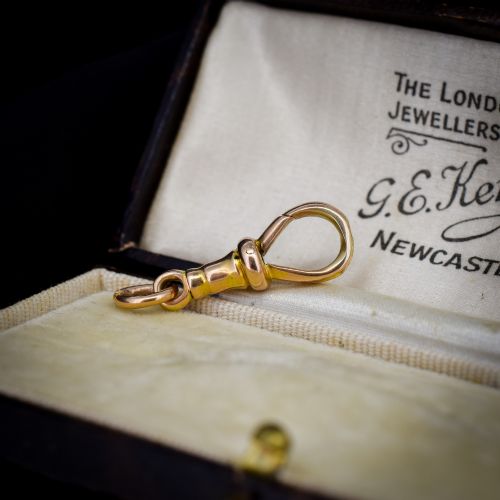
A pocket watch swivel clasp secures a timepiece or charm to an albert chain, longuard, or necklace, operating with a spring-loaded gate that pivots on a central barrel.
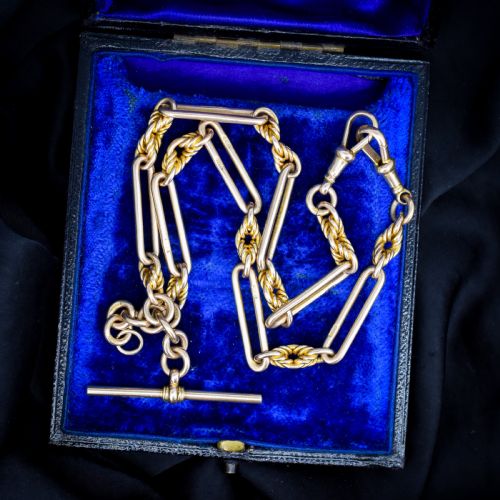
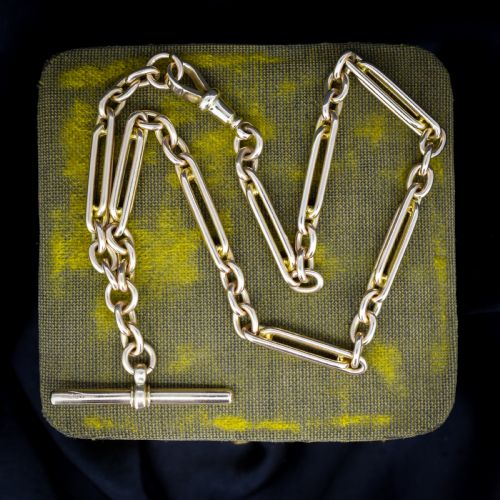
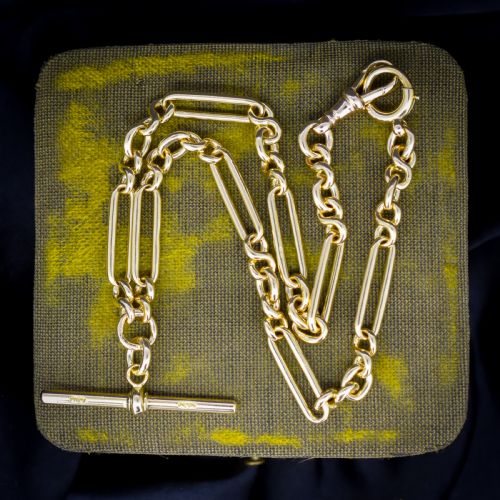
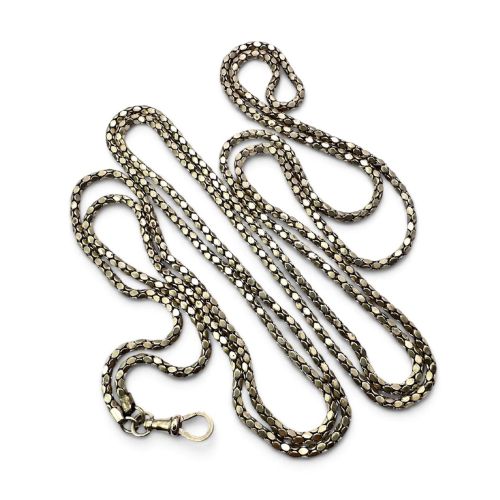
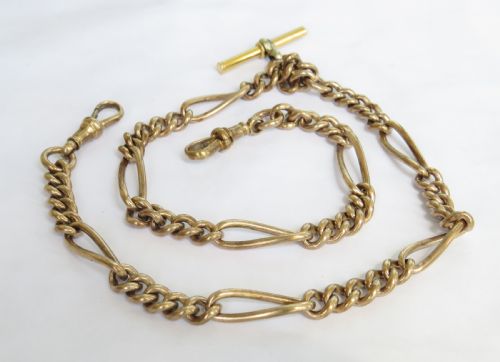
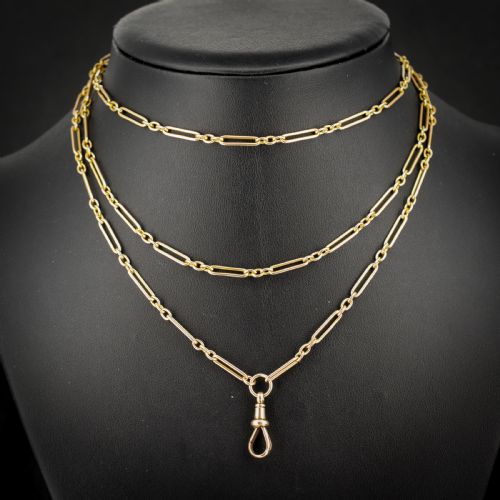
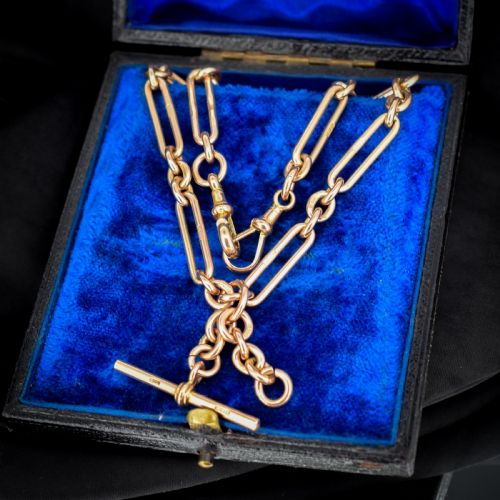
The selections on this page appear attached to watch chains, guard chains, and necklaces formed from trombone, curb, paper, and fetter links.
Originating predominantly from Victorian, Edwardian, Art Deco, and 1920s periods, these components integrate into antique gold and silver jewellery assemblies.
Materials and Construction
Metals span sterling silver, rolled gold, and yellow, white, rose, and green golds in 9ct, 10ct, 12ct, 15ct, 18ct, and 18K finenesses.
Manufacturing methods involve linking hollow or solid shaped metal components into albert chains and fashioning mechanical swivels with internal spring mechanisms.
Irish football fobs occasionally swing from these silver chains, bringing unexpected athletic history to Edwardian waistcoats.
Quality Variations
The standard depends upon metal purity, ranging from sterling silver and rolled gold variants up to high-carat 18ct yellow and white gold examples.
Construction heft and link complexity, such as heavy curb links, hollow fetter patterns, or intricate trombone links, dictate the substance of each piece.
The Pocket Watch Swivel Clasp Glossary
- Swivel clasp
- A mechanical fastening featuring a rotating loop attached to a spring-loaded gate. This design prevents watch chains from twisting during wear.
- Trombone link
- A watch chain link design characterised by alternating long rectangular bars and short round links. It gained popularity during the Victorian and Edwardian eras.
- Longuard chain
- An exceptionally long Victorian necklace designed to be worn looped or doubled around the neck. These pieces frequently incorporate swivel clasps for suspending watches or fobs.
- Rolled gold
- A composite material formed by bonding a sheet of gold to a base metal core under heat and pressure. It offers the appearance of solid gold with increased durability.
Pocket Watch Swivel Clasp: Frequently Asked Questions
What is a pocket watch swivel clasp used for?
A pocket watch swivel clasp connects a timepiece or decorative fob to a watch chain or necklace. The pivoting loop stops the chain from twisting while the spring gate holds the attachment firmly.
These clasps appear on historical albert chains, longuard chains, and converted necklaces. They function reliably for modern wear when the internal spring remains strong.
How do I date a gold swivel chain?
Dating relies upon hallmarks, assay office marks, link styles, and metal purity standards recorded in the listing. Victorian and Edwardian pieces show specific characteristics like trombone links or rose gold hues.
Assay marks on silver and gold components provide precise decade or year indicators where present. Unmarked pieces are evaluated through construction techniques and prevailing period aesthetics.
Can I wear a watch chain as a necklace?
Many watch chains and guard chains find new life as necklaces worn around the neck. The incorporated swivel clasps and dog clips serve as practical attachment points for pendants and charms.
Longer guard chains slip easily over the head while shorter albert chains sit close to the collarbone. Their substantial link construction suits everyday contemporary jewellery wear.
What is the difference between rolled gold and solid gold?
Solid gold pieces contain precious metal throughout their entire structure, marked with carat designations like 9ct, 15ct, or 18ct. Rolled gold items feature a mechanical bond of gold over a base metal core.
Both materials survive from the Victorian and Edwardian periods in robust condition. Hallmarks or stamps usually distinguish solid metal components from gold-filled or rolled alternatives.