



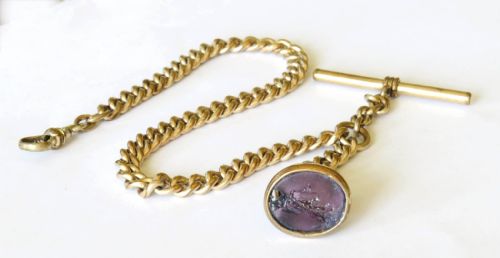


Pocket Watch Seal
These pocket watch seal examples are functional charms and pendants from the Victorian and Edwardian eras that secured personal documents.
Pocket Watch Seal
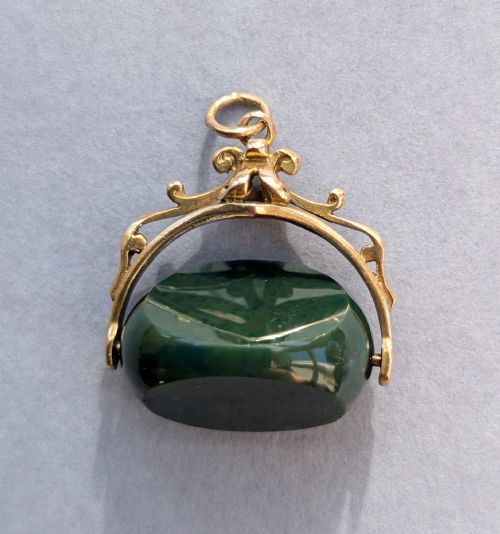
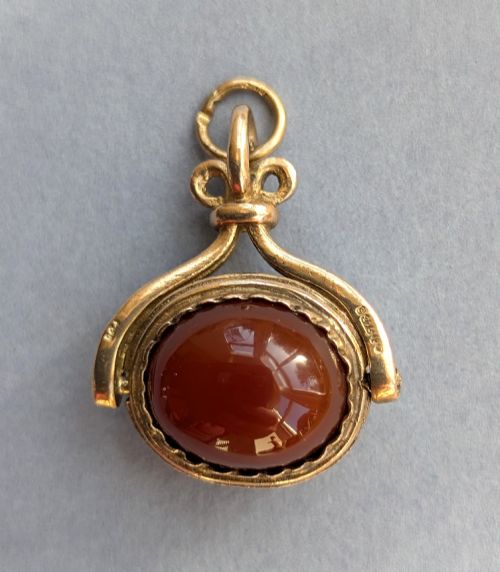
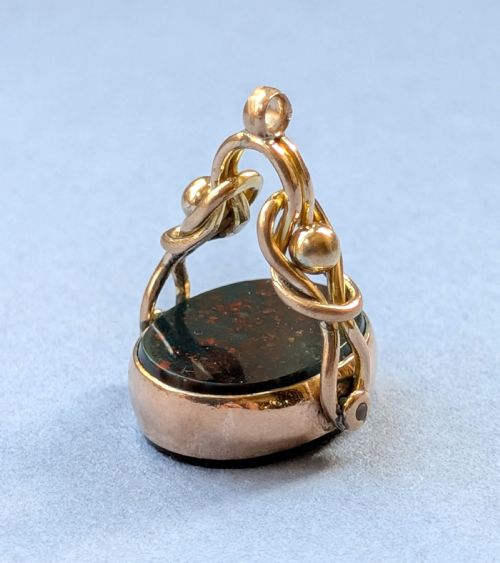
When you search for a pocket watch seal, you find small hanging ornaments historically suspended from waistcoats on chains. These pieces combine utility and ornament, frequently taking the form of spinning fobs with hardstone faces or engraved signets.
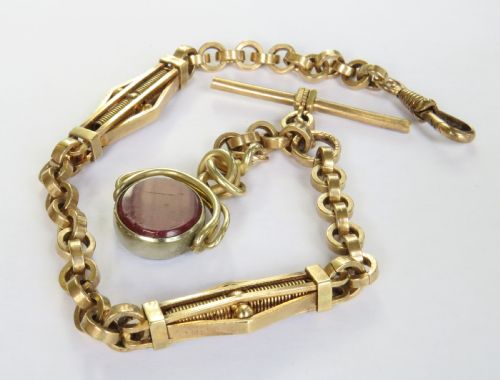
The selections available here span from the late nineteenth century into the 1920s, with Victorian and Edwardian examples forming the majority of the stock. They appear alongside watch keys and albert chains, functioning today primarily as unique pendants or charms.
How they were made
Maker workshops utilised precious metals like nine carat and eighteen carat gold alongside rolled gold and gold cased constructions to form the structural mounts and swivels. These metal housings hold securely fashioned hardstones such as carnelian, bloodstone, agate, and chalcedony.
Many stones feature hand cut intaglio designs, ranging from family crests and Roman Emperor motifs to specific names like Ann. Enamel details and intricate ornamentation occasionally supplement the metalwork, alongside integrated watch keys.
Pocket Watch Seal Retail Price Guide 2026
Typical asking prices for pocket watch seal among the pieces listed under this phrase on Sellingantiques today, from the lower quarter to the upper quarter. They describe what is for sale here now, not the wider market.
The periods represented span from the late Victorian era through the Edwardian years up to the 1920s.
What varies in quality
Quality rests primarily in the depth and clarity of the intaglio carving upon the stone face, where sharper detail distinguishes finer work. The choice and polish of natural stones such as bloodstone and carnelian also shape the overall merit of the piece.
The weight and purity of the gold mount, from rolled brass bases up to solid eighteen carat metal, dictates the enduring substance of the fob. Additionally, the mechanical complexity of a smoothly functioning spinning mechanism or an integrated watch key elevates the object.
The Pocket Watch Seal Glossary
- Intaglio
- A design carved into the surface of a gem so that an impression pressed in wax appears in relief. This technique is traditional for signet seals.
- Carnelian
- A brownish-red variety of chalcedony quartz widely used in antique jewellery. It provides a warm background for carved intaglio seals.
- Bloodstone
- A dark green jasper flecked with red spots of jasper, historically popular for signet fobs. It offers a distinct contrasting appearance.
- Rolled gold
- A method where a sheet of gold is mechanically bonded to a base metal core. This technique provided the appearance of solid gold at a lower cost during the nineteenth century.
Pocket Watch Seal: Frequently Asked Questions
What is a pocket watch seal used for?
These pieces were originally used to press into warm sealing wax to secure letters and documents. The engraved intaglio on the bottom left a distinct personal signature.
Today, they are predominantly worn as pendants on necklaces or attached to charm bracelets and modern watch chains. Their historical utility has transitioned into decorative jewellery.
How do I date a pocket watch seal?
Dating relies on stylistic clues, metal hallmarks, and the specific materials favoured during particular decades. Victorian pieces often display heavier ornamentation, while Edwardian versions can be lighter and more refined.
Reference points like inscribed dates or known maker marks, where present, help narrow the timeframe. Examining the construction of the swivel mount also offers clues to the manufacturing period.
Are these seals made of solid gold?
The listings include a mix of solid gold tiers, such as nine carat and eighteen carat variations, alongside rolled gold and gold cased items. Hallmarks stamped into the metal mount usually indicate the exact purity.
Rolled gold examples feature a layer of genuine gold bonded to a base metal core for durability and economy. Each listing specifies the exact material composition of the mount.
Can I still use them to seal wax letters?
Many of these antique seals retain their original carved stone matrices and can still impress wax successfully. The stone base is durable enough for occasional use if handled with care.
Collectors often test the intaglio design by pressing it into softened sealing wax. However, many owners choose to wear them purely as decorative pendants.