
Pocket Watch Chain Necklace
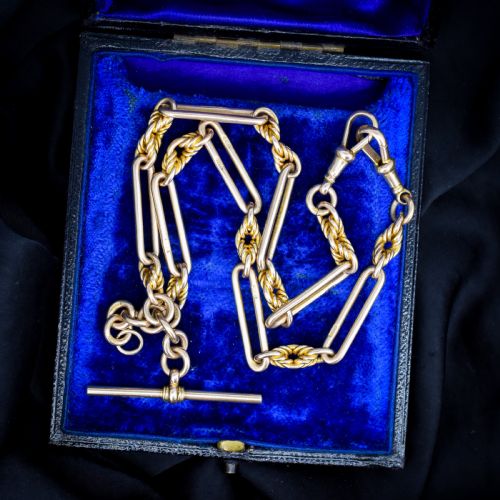
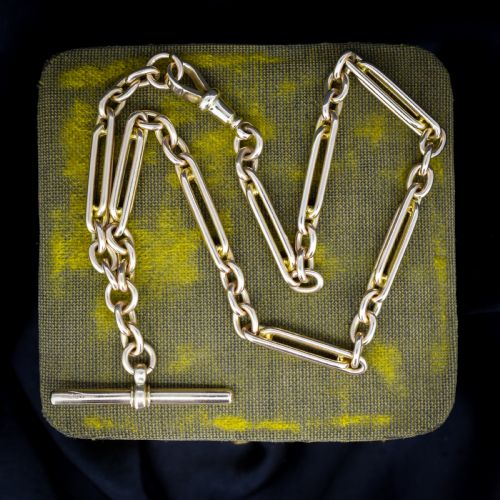
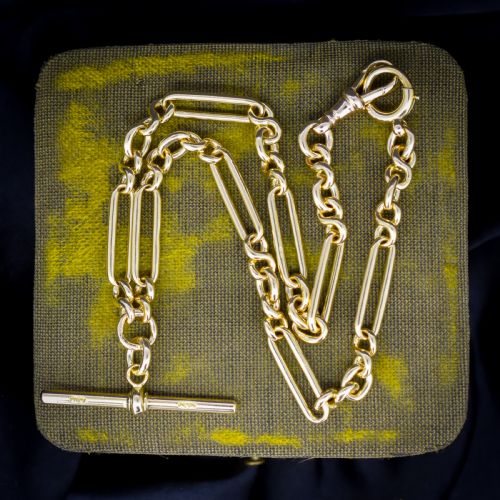
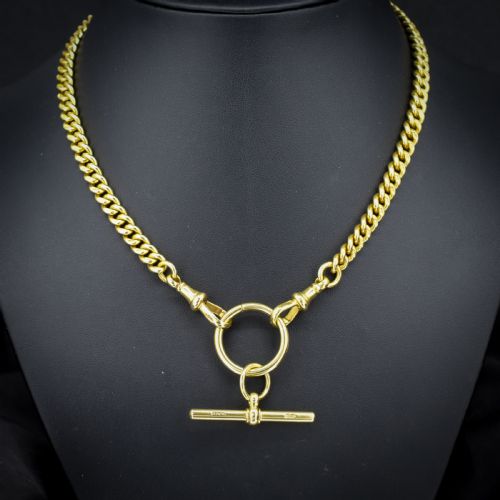
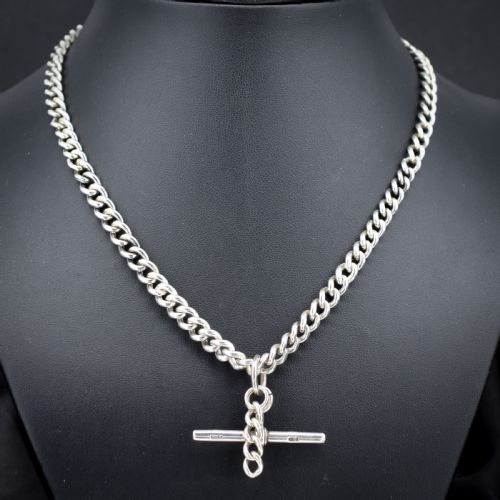
A pocket watch chain necklace adapts nineteenth and early twentieth century functional horological links into neckwear.
Pocket Watch Chain Necklace
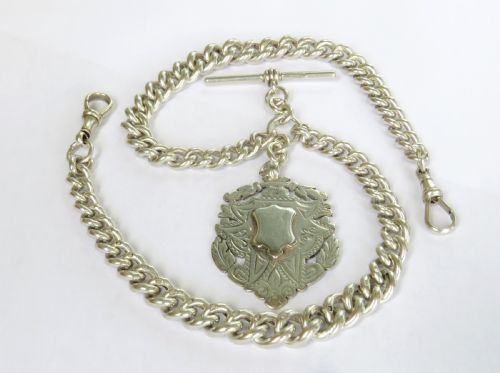
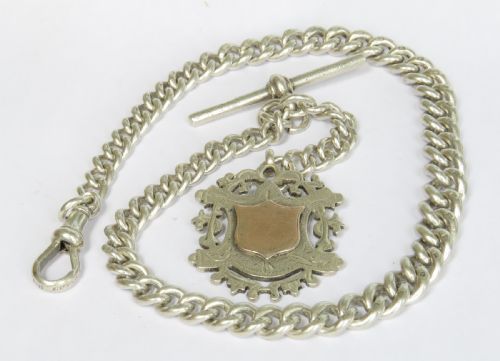
A pocket watch chain necklace adapts nineteenth and early twentieth century functional horological links into neckwear, utilising surviving pieces originally fashioned to secure timepieces in pockets or waistcoats. Buyers selecting a pocket watch chain necklace encounter robust designs originating from Victorian, Edwardian, and Art Deco eras, spanning the 1880s through the 1930s.
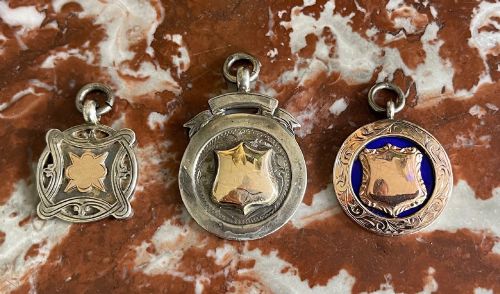
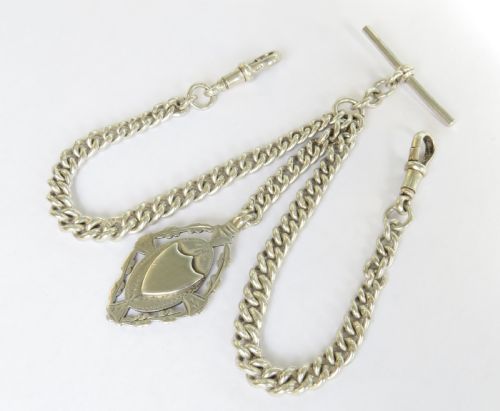
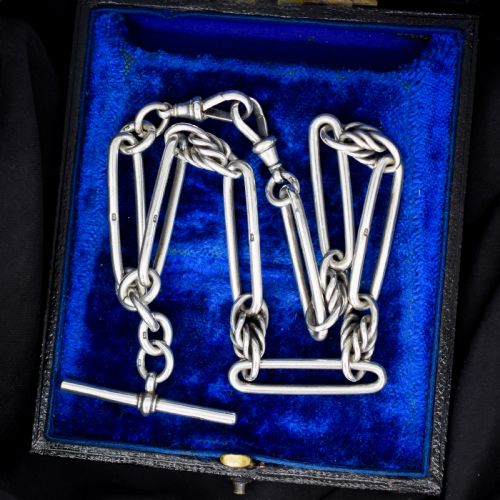
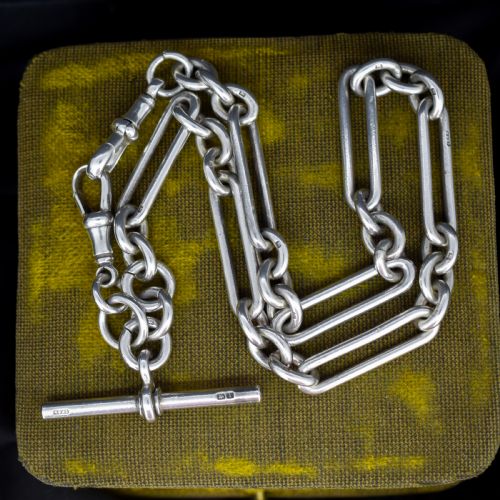
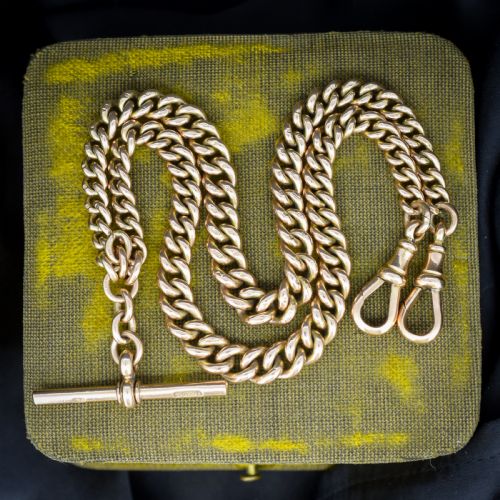
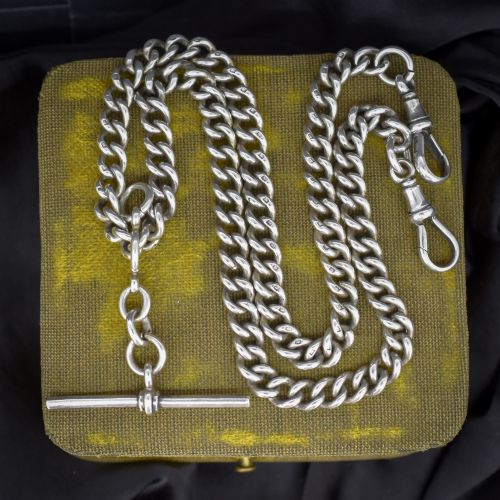
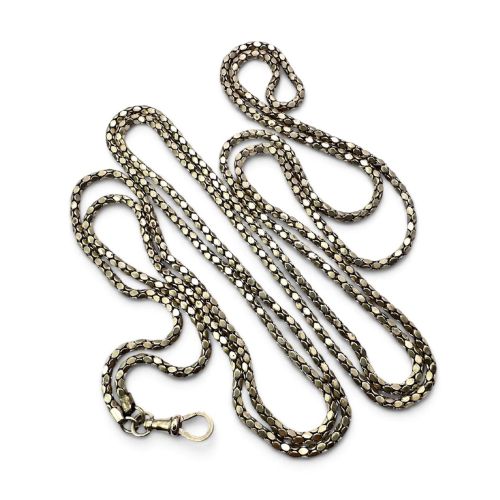
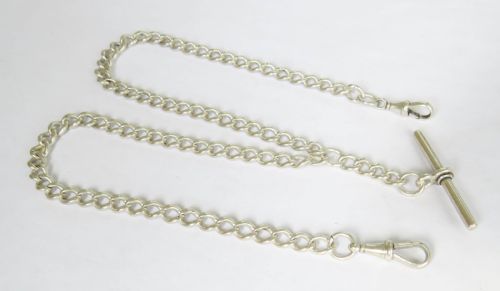
Most examples found on this page take the form of traditional Albert chains, double watch chains, or long guard chains adapted with dog clips and T-bars. These pieces bridge utilitarian origins and decorative utility, presenting substantial metalwork designed to sit neatly around the neck.
Origins trace across English assay offices including Birmingham and Chester, alongside continental workshops, reflecting standard manufacturing outputs of the period. The survival of original fastenings and pendant fobs maintains the distinct character of these historical accessories.
How they were made
Construction relies heavily on durable precious metals, predominantly sterling silver and various grades of gold including 9ct yellow and rose gold, 15ct, 18ct, and occasional rolled gold. Goldsmiths and silversmiths formed individual components by hand or through early mechanical stamping, soldering links securely to withstand daily use.
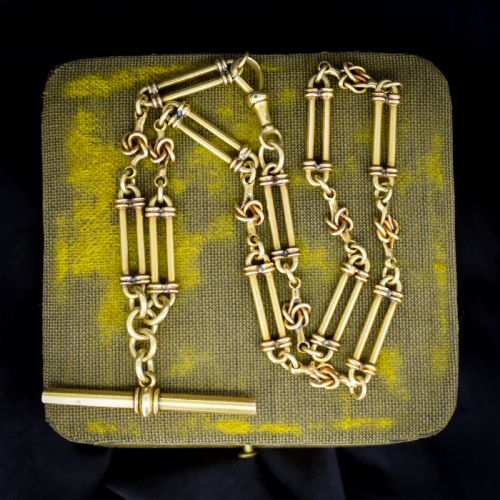
Link configurations such as curb, trombone, oval, figaro, and love knot patterns were assembled individually before integration with swivel dog clips and T-bars. Hallmarks stamped directly onto links or T-bars record assay office marks, purity standards, and date letters corresponding to years of manufacture.
Many pieces retain their tiny original T-bars, once meant for buttonholes but now dangling merrily as unexpected chest ornaments.
What varies in quality
Quality rests in the structural integrity of the individual links and the original working condition of swivel dog clips and spring rings. Uniformity across graduated or uniform link patterns demonstrates superior manufacturing standards, ensuring the chain drapes evenly without stiffness or twisted sections.
The presence of crisp, legible hallmarks and makers' marks indicates better documentation and higher metal purity execution. Furthermore, original components such as matching T-bars and functional dog clips preserve the complete integrity of the piece.
The Pocket Watch Chain Necklace Glossary
- Albert chain
- A type of watch chain designed to attach a pocket watch to a waistcoat, frequently adapted as a necklace today.
- Dog clip
- A spring-loaded swivel clasp used to secure the chain to a pocket watch, fob, or matching link.
- T-bar
- A short transverse bar attached to the centre of the chain, originally designed to pass through a buttonhole.
- Trombone link
- An elongated rectangular metal link with rounded corners, alternating with smaller connecting rings.
- Hallmark
- A stamp indicating the purity of the metal, the assay office of origin, and the year of manufacture.
Pocket Watch Chain Necklace: Frequently Asked Questions
How do I wear a pocket watch chain necklace?
These chains fasten securely around the neck utilising the existing swivel dog clips and jump rings. The T-bar can hang loosely as a decorative front drop or be tucked neatly into a link.
Adjusting the length depends on the specific piece, with shorter styles sitting close as chokers and longer guard chains accommodating multiple loops.
What is the difference between an Albert chain and a guard chain?
Albert chains are typically shorter and heavier, often featuring a central T-bar and dog clips designed to anchor a pocket watch securely. They present uniform or graduated links meant to display prominent fob medals.
Guard chains are substantially longer, originally intended to be worn long around the neck or doubled over, lacking the heavy central drop bar found on standard Alberts.
How can I date my watch chain necklace?
Dating relies primarily on official hallmarks stamped onto the metal links, T-bars, or dog clips, which record specific assay office symbols and date letters. Comparing stylistic elements like trombone links or love knots against Edwardian and Victorian design eras also assists in establishing an accurate period.
Are these chains made of solid gold or silver?
The listings comprise solid sterling silver alongside various gold purities, including 9ct, 15ct, and 18ct yellow and rose gold. Occasional pieces utilise rolled gold over a base metal core, all indicated through specific hallmarking or material descriptions.