

Pocket Watch Chain Link
Pocket watch chain link pieces are functional items transformed into necklaces and bracelets, offering tactile weight and historic craftsmanship to modern wearers.
Pocket Watch Chain Link
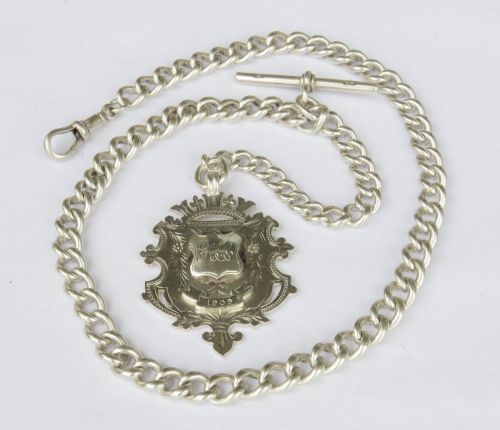
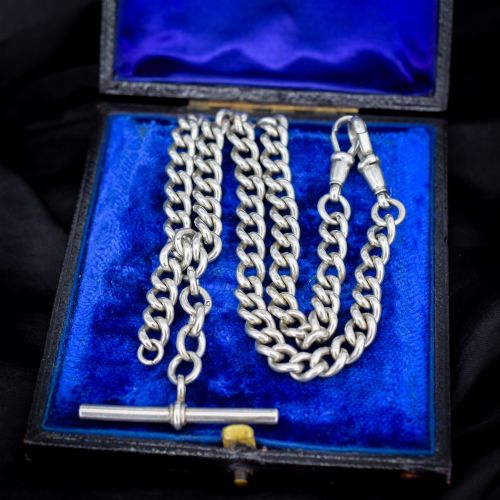
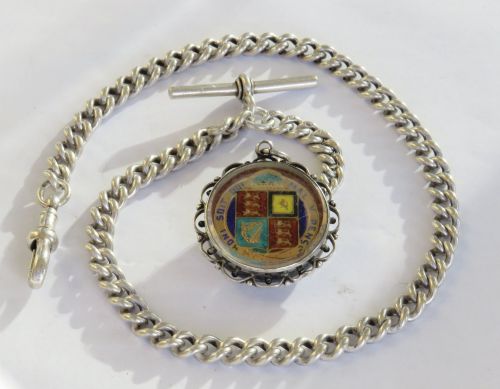
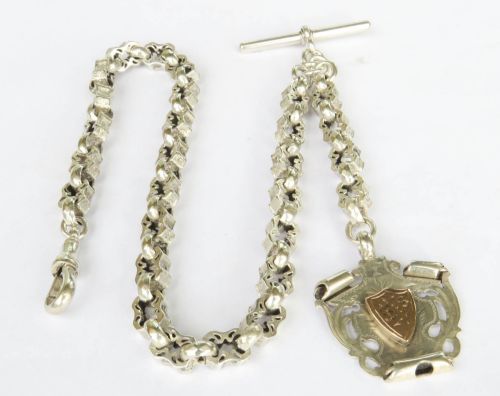
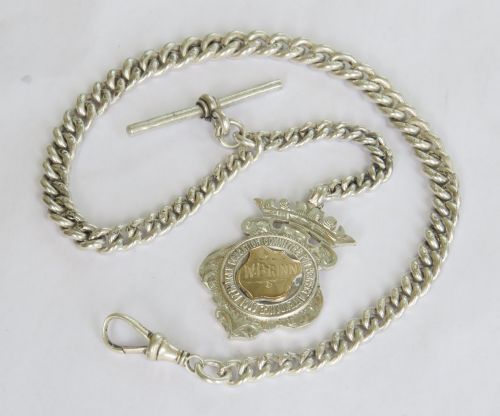
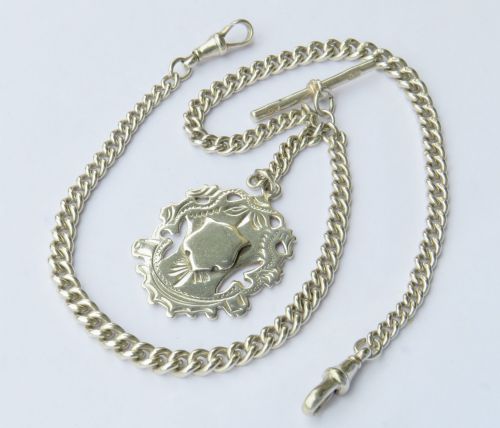
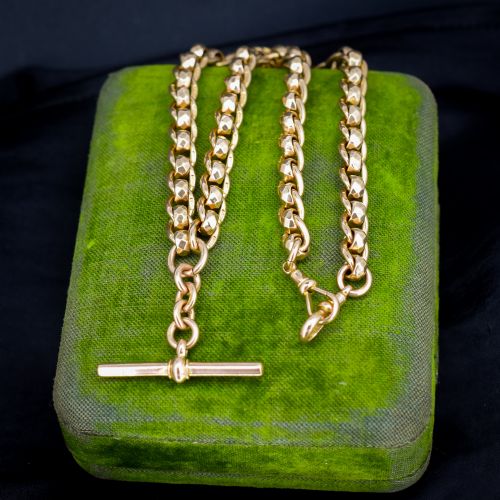
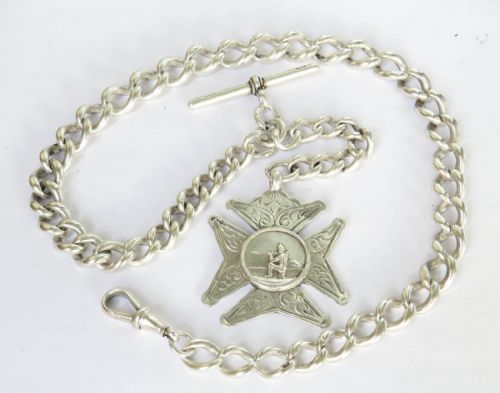
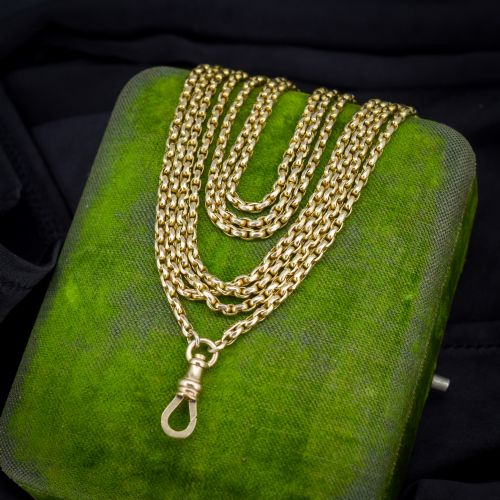
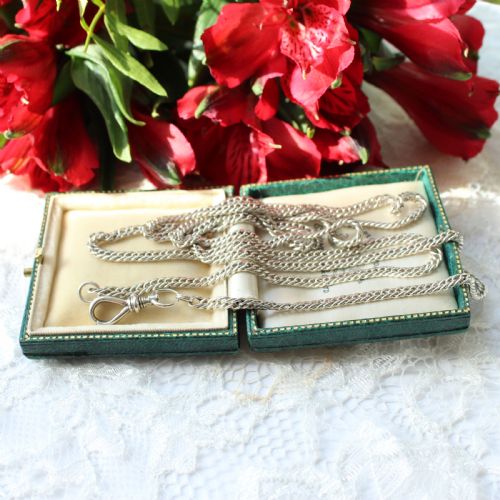
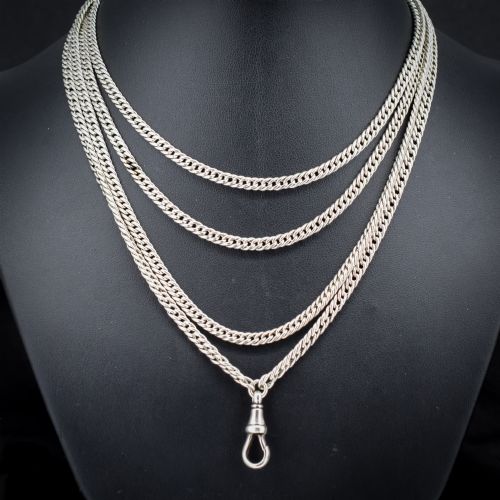
A pocket watch chain link typically originates from the Victorian and Edwardian eras, spanning into the 1920s and 1930s, when pocket watches were everyday accessories. These items surface frequently as heavy silver or gold albert chains, often adapted as necklaces or guard chains.
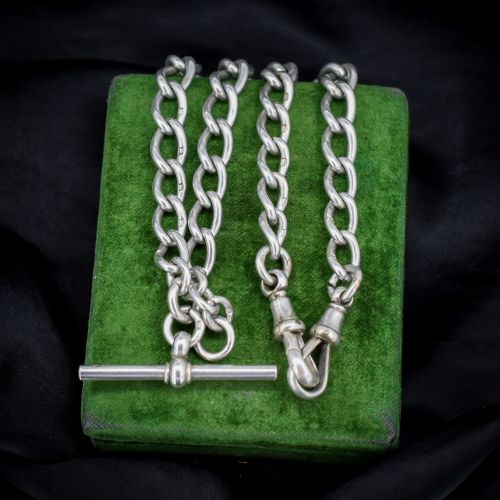
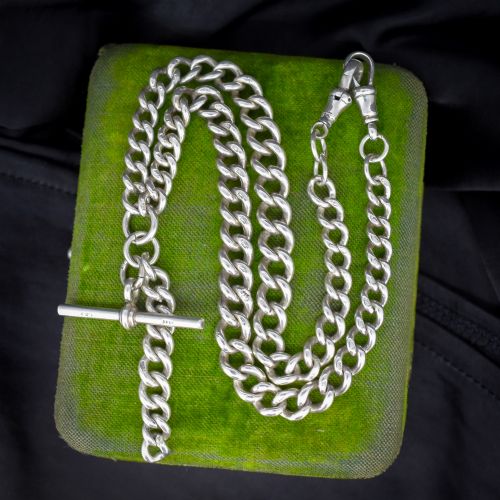
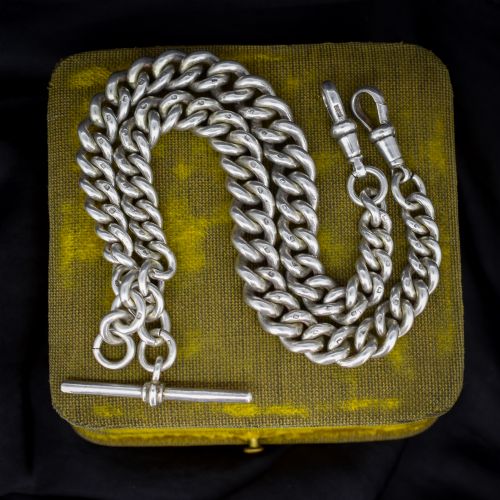
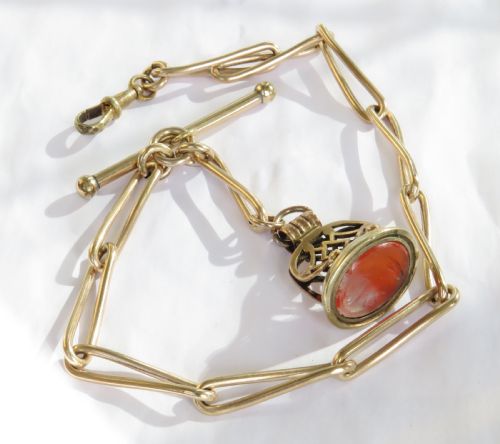
The primary forms met here include curb links, trombone links, and love knot patterns, accompanied by original T-bars, dog clips, and fobs. Surviving examples demonstrate how men secured timepieces to waistcoats before women and men repurposed the substantial metal lengths for personal adornment.
Origins stretch across British assay offices, with sterling silver and 9ct or 18ct gold dominating the selection. Pieces range from short, single-strand albert chains to long guard chains measuring over sixty inches.
How they were made
Goldsmiths and silversmiths constructed these chains from solid sterling silver, rolled gold, and yellow or rose gold, utilising durable link configurations like the flat curb and paper clip. Individual links were stamped, drawn, or twisted by hand before being assembled into continuous strands.
Many links bear hallmarks indicating the assay town and year of production, reflecting strict British manufacturing standards of the nineteenth and early twentieth centuries. Secure closures such as dog clips, bolt rings, and screw-lock fasteners were engineered to withstand daily wear.
Pocket Watch Chain Link Retail Price Guide 2026
Typical asking prices for pocket watch chain link among the pieces listed under this phrase on Sellingantiques today, from the lower quarter to the upper quarter. They describe what is for sale here now, not the wider market.
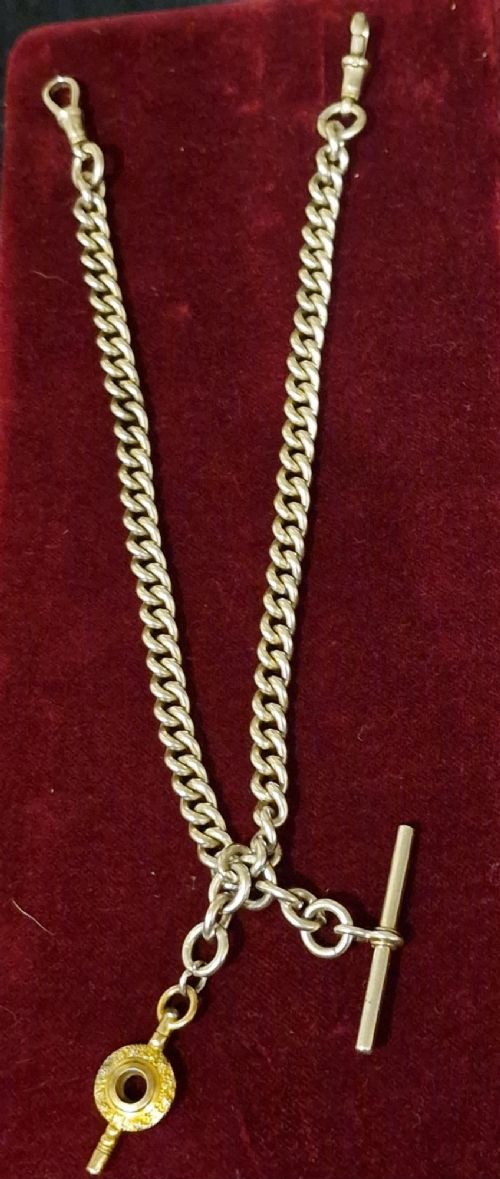
A hay-making intaglio fob swings from one golden chain, preserving a miniature pastoral scene carved for a Victorian waistcoat.
What varies in quality
Substantial differences in quality stem from the weight of the metal, the integrity of the individual links, and the presence of complete, matching hallmarks. Heavy solid silver or high-carat gold retain structural rigidity and crisp detail far better than lighter rolled gold alternatives.
The survival of original components such as T-bars, dog clips, and decorative fobs elevates an example, whereas worn swivel mechanisms or replacement parts indicate heavier historical use. Crisp stamping on the links points to superior initial manufacture.
J W Benson·Tavannes·Horos
The Pocket Watch Chain Link Glossary
- Albert chain
- A type of watch chain named after Prince Albert, designed to secure a pocket watch to a waistcoat through a buttonhole. They appear frequently in silver and gold.
- T-bar
- A transverse bar attached to the centre of an albert chain, slipped through a garment buttonhole to anchor the watch. It remains a defining design feature.
- Dog clip
- A small spring-loaded snap hook used to fasten the watch chain to the timepiece or fob. This mechanism secures the suspended items.
- Guard chain
- An exceptionally long chain worn around the neck, designed to support a pocket watch or lorgnette safely. Lengths often exceed fifty inches.
- Rolled gold
- A material formed by bonding a thin sheet of gold to a base metal core, offering the appearance of solid gold at a different scale. It provides durability without the weight of solid metal.
Pocket Watch Chain Link: Frequently Asked Questions
What is the difference between a curb link and a trombone link?
Curb links consist of uniform, twisted metal loops that lie flat against the skin, offering a heavy and continuous drape. They are typical of robust Victorian and Art Deco designs.
Trombone links feature alternating long rectangular bars and small round connections, creating an open geometric pattern. Both styles provide distinct tactile qualities.
How can I tell the period of my chain?
British pieces often carry hallmarks stamped directly onto the links or dog clips, revealing the assay office and exact year of manufacture. Stylistic clues like love knots or specific clip mechanisms also point to Victorian or Edwardian origins.
Heavier curb chains frequently date to the late nineteenth century. Lighter rolled gold or geometric patterns more often align with the 1920s and 1930s.
Are these chains made of solid silver or gold?
The materials vary between solid sterling silver, solid gold in various carats, and rolled gold alternatives. Hallmarks on the metal links confirm the precise standard of silver or gold used.
Rolled gold versions combine a base metal core with a gold outer layer, offering an alternative weight and finish. Inspecting the hallmarks helps clarify the composition.