





Plein Air Painting
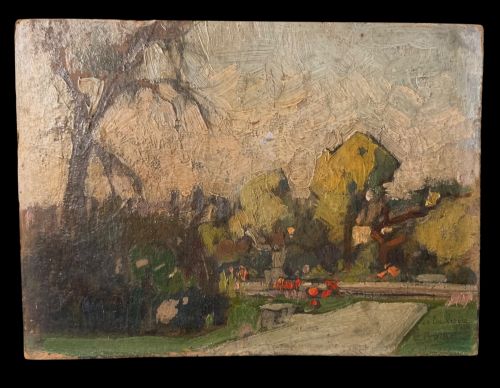
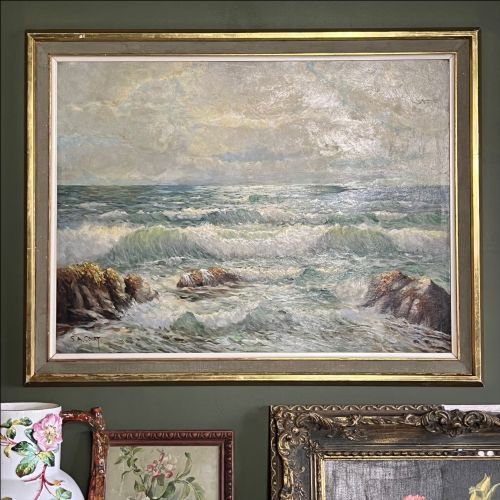
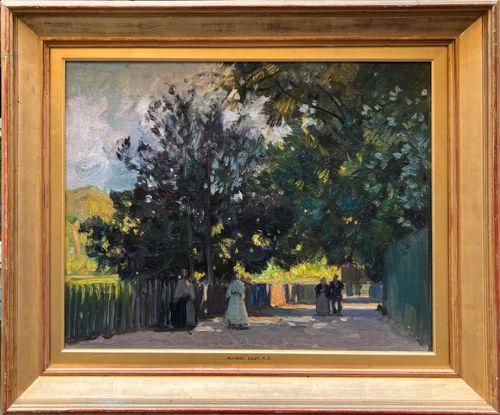
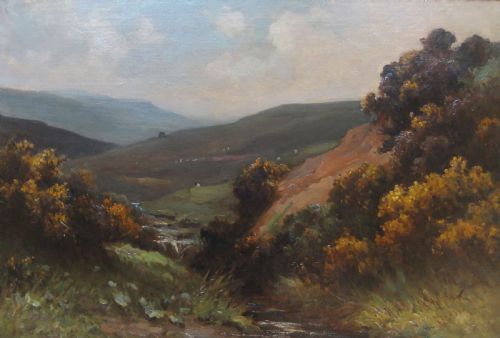
These plein air painting works capture natural light on canvas or panel, offering an immediate window into landscapes shaped by the open air.
Plein Air Painting
A plein air painting brings the spontaneity of outdoor light directly onto canvas, wood panel, or board, capturing landscapes as they shift in the open air. When searching for plein air painting examples, buyers encounter coastal views, river paths, and moorland streams framed in period wood and gilt settings.
The works span from Victorian origins through the 1870s and into the mid-twentieth century, recording natural scenery across British, French, and Californian settings. Subjects range from tranquil park picnics and river sunbathers to bustling barges on the Seine and quiet chateau grounds.
Most pieces on this page utilise oil paint applied with expressive brushwork, reflecting the direct observation favoured by impressionist and post-impressionist movements. Collectors find both signed works by known artists and intimate unsigned studies that preserve the immediate touch of the maker.
What Varies in Quality
Quality rests in the handling of light and the confidence of the brushwork, where swift strokes successfully convey atmospheric depth and movement. Stronger examples demonstrate a sure command of tone, capturing the specific quality of light in places like Cornwall, Normandy, or the Loire.
The relationship between the painted surface and its housing also influences the piece, as period frames selected or paired by the artist enhance the visual weight of the landscape. Condition of the pigment layer, stability of the panel or canvas, and legibility of signatures further distinguish individual works.
Plein Air Painting Retail Price Guide 2026
Typical asking prices for plein air painting among the pieces listed under this phrase on Sellingantiques today, from the lower quarter to the upper quarter. They describe what is for sale here now, not the wider market.
The selection includes works from British Impressionism, French Impressionism, Post-Impressionism, and the Barbizon School.
Sidney A. Court·Sir Alfred East·Honore Cavaroc·Ernest Higgins Rigg·Edmond Defonte·Fred Stead·Pierre Peltier·Kershaw Schofield·Kenneth Washburn·Henri Harpignies
The Plein Air Painting Glossary
- Plein air painting
- The practice of painting outdoors to capture direct observations of landscape and natural light. It relies on speed and direct brushwork to record transient atmospheric conditions.
- Impressionism
- A nineteenth-century movement focused on accurate depiction of light in its changing qualities. Artists use small, thin yet visible brush strokes and open composition.
- Barbizon School
- A part of an art movement towards realism in art, inspired by the French countryside. Painters of this circle worked closely from nature and forest scenes.
- Impasto
- The process or technique of laying on paint or thick pigment so that it stands out from a surface. This technique adds tactile relief and catches actual light on the canvas.
- Panel
- A rigid flat piece of wood used as a support for painting instead of stretched canvas. Artists often favoured panels for outdoor sketching due to their durability.
Plein Air Painting: Frequently Asked Questions
What is plein air painting?
Plein air painting is the act of painting outdoors to capture the natural light and atmosphere of a landscape directly onto the canvas or panel.
Artists work quickly on location to record fleeting effects of weather and shadow before the natural lighting conditions shift entirely.
How should I hang these paintings?
These works suit domestic spaces with stable humidity and indirect sunlight to protect the oil pigments and wooden frames from environmental stress.
Matching the frame style to your interior helps anchor the landscape view within the room while preserving the historical character of the piece.
How do I date a painting?
Dating relies on recorded artist signatures, exhibition labels, stylistic markers of impressionism or post-impressionism, and the construction methods of the frame.
Examining the back of the canvas or panel often reveals period inscriptions, maker stamps, or historical gallery labels that provide clues to its origin.
Are these works signed?
Many examples feature artist signatures or monograms written directly into the wet paint or noted on the reverse support.
Unsigned works still carry strong attribution through stylistic traits, brushwork comparisons, and period framing that link them to specific artistic circles.