








Pleated Fabric Work Table
These pleated fabric work table pieces combine storage and surface space, offering useful elegance for sewing and needlework.
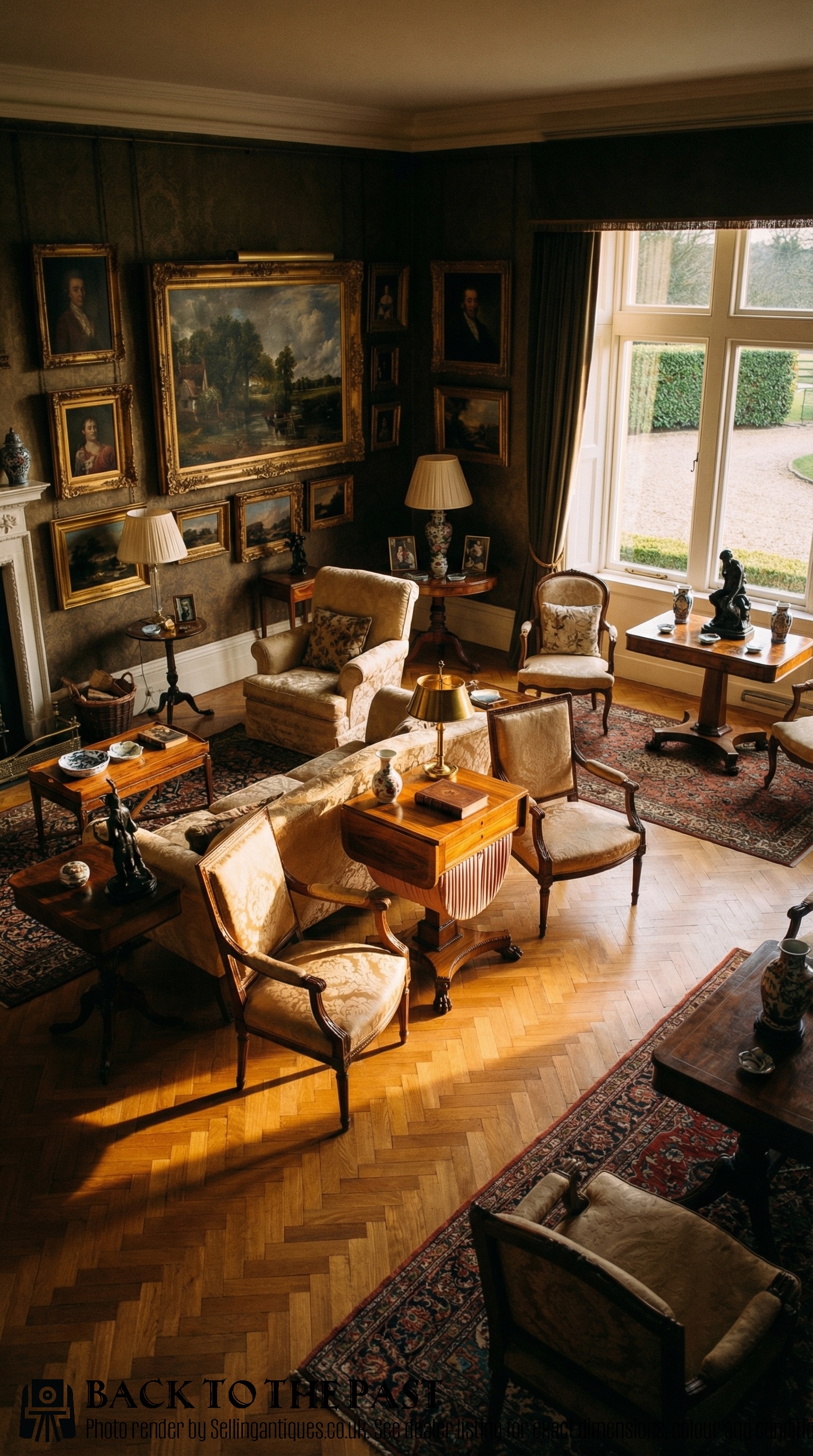
Pleated Fabric Work Table
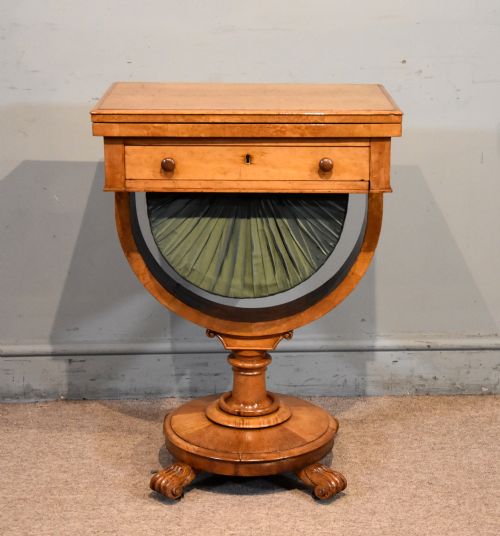
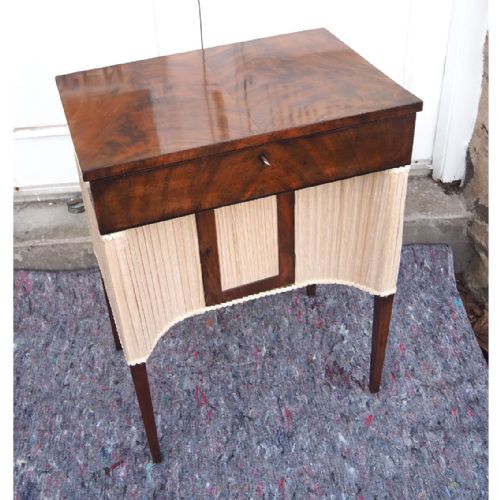
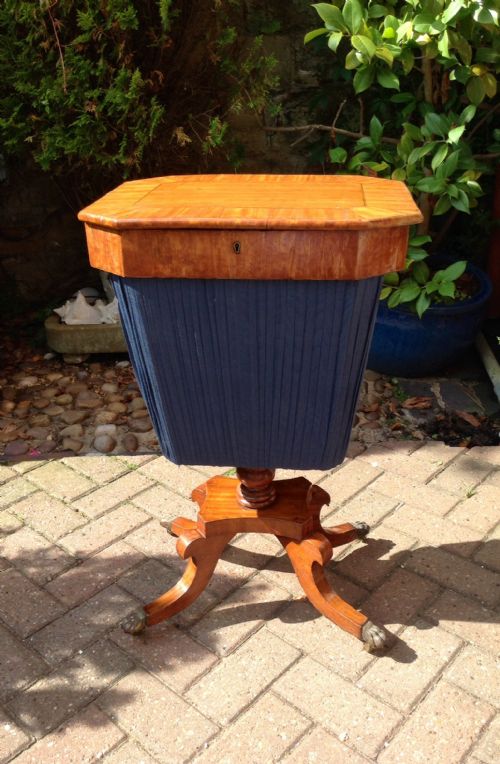
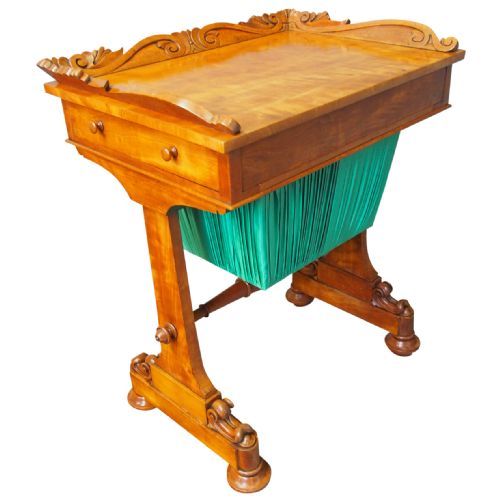
A pleated fabric work table is typically encountered as a sewing table, work table, or occasional table dating from the Georgian, Regency, and Victorian periods. These pieces combine a compact wooden top with a suspended fabric bag underneath designed for sewing materials and needlework.
The materials span mahogany, rosewood, satinwood, maple, pollard oak, and burr walnut, reflecting the cabinet-making preferences of the nineteenth century and earlier decades. Most examples function simultaneously as small side tables or dressing tables within domestic interiors.
Construction and materials
Cabinet makers utilised dense hardwoods such as mahogany, rosewood, and satinwood to construct the frames, frequently incorporating inlaid details and pedestal bases. Timber selection dictated the structural integrity of the table and provided a contrasting surface to the softer elements.
Silk and other fabrics form the pleated hanging bags suspended beneath the tables, secured to wooden or brass frameworks. This textile component required careful pleating to accommodate sewing accessories while maintaining a neat appearance.
Pleated Fabric Work Table Retail Price Guide 2026
Typical asking prices for pleated fabric work table among the pieces listed under this phrase on Sellingantiques today, from the lower quarter to the upper quarter. They describe what is for sale here now, not the wider market.
Listings span the Georgian, Regency, Victorian, and Edwardian periods, constructed from mahogany, rosewood, satinwood, maple, and brass.
Judging quality and craftsmanship
Quality rests upon the choice of timber figure, such as flame mahogany, burr walnut, or figured rosewood, and the precision of any inlay work. Finer examples display superior timber selection and cleaner joinery throughout the pedestal or leg assembly.
The integrity of the fabric bag construction and the preservation of original brass fittings influence the overall standard of the piece. Tables retaining well-executed pleated silk components demonstrate a higher degree of original craftsmanship.
GILLOWS of LANCASTER
The Pleated Fabric Work Table Glossary
- Work table
- A small domestic table fitted with drawers or a hanging bag designed to hold sewing equipment and needlecraft supplies.
- Regency
- An English design period spanning the early nineteenth century, characterised by classical influences, pedestal bases, and refined mahogany or rosewood surfaces.
- Satinwood
- A luminous yellowish timber sourced from tropical trees, utilised for fine cabinet-making and decorative inlay work during the eighteenth and nineteenth centuries.
- Drop flap
- A hinged leaf on a table top that can be raised to extend the surface area or lowered when space is restricted.
- Pedestal
- A central columnar support resting on a platform or footed base, frequently employed in nineteenth-century table design.
Pleated Fabric Work Table: Frequently Asked Questions
What is a pleated fabric work table?
A pleated fabric work table is a nineteenth-century or earlier piece of furniture designed for needlework, featuring a top surface and a suspended fabric bag.
These tables provide both a compact surface for writing or display and concealed storage for sewing materials within the pleated silk or textile pocket.
How were work tables used historically?
These tables served as functional items for women undertaking embroidery, sewing, and other needlecraft tasks in domestic sitting rooms.
The drawers and hanging fabric bags kept threads, fabrics, and tools organised close to hand while the top remained clear for the work itself.
Which woods are common in these tables?
Cabinet makers predominantly used mahogany, rosewood, satinwood, and walnut for the framework of these tables.
Finer versions often incorporate figured veneers such as burr walnut, flame mahogany, or pollard oak to enhance the visual appeal of the timber.
How do I identify a Regency work table?
Regency examples typically date from the early nineteenth century and feature classical proportions, often supported by a central pedestal or sabre legs.
They frequently utilise rosewood or mahogany, sometimes incorporating brass inlay or drop flaps alongside the characteristic pleated fabric compartment.
Are these tables suitable for modern rooms?
Their compact dimensions make these tables adaptable as side tables, lamp tables, or small dressing tables in contemporary interiors.
The combination of a wooden top and a soft fabric bag introduces texture and traditional storage into a modern living space.