



Platinum Tie Pin
These platinum tie pin pieces are refined accessories holding stones like diamond and ruby, prized for their secure metalwork and classic styling.
Platinum Tie Pin
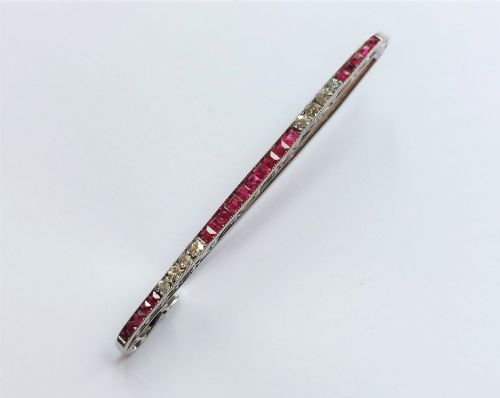
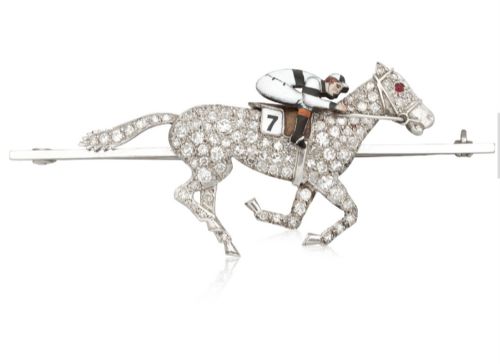
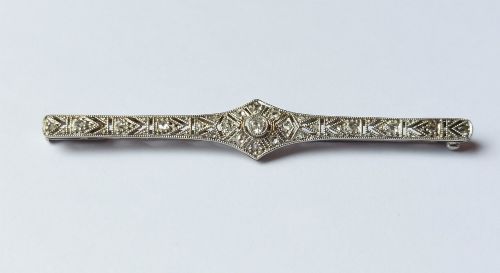
A platinum tie pin brings together precious metalwork and gemstone settings, appearing primarily in bar brooch, bow, and equestrian racing brooch configurations across this selection. These items function as secure fastening accessories designed to anchor garments with understated elegance.
The periods represented stretch across the late nineteenth and mid-twentieth centuries, capturing Edwardian, Belle Epoque, Art Deco, and Mid-Century Equestrian designs. Buyers encountering this selection will find platinum combined frequently with 18ct gold, white gold, enamel, pearls, and diamonds.
How they were made
Makers utilised platinum alongside 18ct gold and 18kt white gold to construct durable mountings capable of holding delicate stones securely. This combination provided both the bright silvery finish of platinum and the structural warmth of gold.
Gems including old-cut diamonds, rubies, pink pearls, natural pearls, and onyx were set meticulously into the metal framework. Artisans incorporated enamel details and bow or bar configurations to achieve the distinct Edwardian and Art Deco aesthetics seen in the collection.
Platinum Tie Pin Retail Price Guide 2026
Typical asking prices for platinum tie pin among the pieces listed under this phrase on Sellingantiques today, from the lower quarter to the upper quarter. They describe what is for sale here now, not the wider market.
An enamelled racing brooch reminds us that someone once pinned their equine loyalties directly to their lapel.
What varies in quality
The distinction between standard and exceptional pieces rests upon the precision of the stone setting and the complexity of the design. Workshops such as Cartier and Garrard & Co. achieved superior execution in their platinum-topped mountings and gemstone arrangement.
Materials elevate the standard when natural pearls, high-carat old-cut diamonds, and vibrant rubies or enamel work are integrated into the composition. The refinement of the Edwardian lace-like openwork or the geometric rigour of Art Deco styling defines the upper tier of the range.
Cartier Paris·Garrard and Co
The Platinum Tie Pin Glossary
- Platinum
- A dense, ductile precious metal prized for its strength and bright white lustre, used extensively in fine jewellery mountings. It allows for delicate claw and channel settings without sacrificing durability.
- Old-cut diamond
- A vintage diamond cut characterised by a small table, high crown, and open culet, hand-faceted to catch candlelight. These stones display a softer, deeper scintillation than modern brilliant cuts.
- Bar brooch
- A slender horizontal metal pin designed to fasten garments or secure neckties, frequently decorated with gemstones. This form was especially popular during the Edwardian and Art Deco periods.
- Jabot pin
- An ornamental pin originally designed to fasten the jabot frill on a shirt or cravat, featuring decorative terminals at both ends. They are worn today as versatile lapel or collar ornaments.
- Belle Epoque
- A period of French design spanning the late nineteenth century to the First World War, known for platinum garland motifs and delicate diamond work. It follows the Edwardian aesthetic closely in fine accessories.
Platinum Tie Pin: Frequently Asked Questions
What periods do these pieces date from?
The items span from the late nineteenth century through the Edwardian era, Belle Epoque, Art Deco, and into the mid-twentieth century. Each era brings distinct motifs, ranging from delicate floral garlands to geometric lines.
Buyers will notice shifts in metal combinations and gemstone cuts that reflect the prevailing aesthetic of each specific decade.
How are platinum and gold used together?
Many pieces pair a platinum top or face with an 18ct gold or white gold reverse and pin mechanism. This technique combined the bright white appearance of platinum for diamond settings with the structural resilience of gold.
Such dual-metal construction is a hallmark of fine jewellery manufacturing from the early twentieth century.
What gemstones appear in these designs?
Diamonds, rubies, natural pearls, pink pearls, and onyx are integrated into the metal frameworks. Old-cut diamonds and calibrated rubies provide contrast against the bright platinum surface.
Enamel work also appears to add colour and linear detail to equestrian and geometric motifs.
How do I identify Art Deco style?
Art Deco pieces display strong geometric patterns, symmetrical lines, and stylised motifs that break away from nineteenth-century organic curves. You will observe sharp angles alongside contrasting materials like onyx and diamonds.
This aesthetic dominated jewellery design during the nineteen-twenties and nineteen-thirties.