


Platinum Target Cluster Ring
A platinum target cluster ring draws the eye with concentric tiers of diamonds and coloured gems.
Platinum Target Cluster Ring
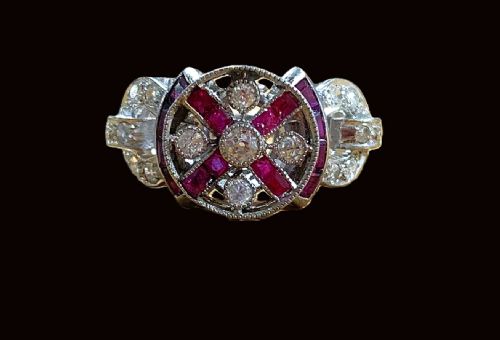
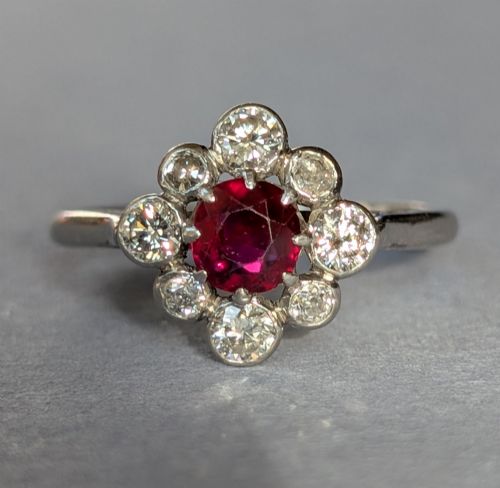
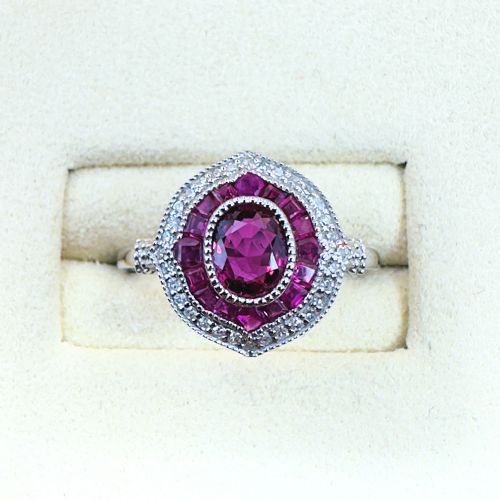
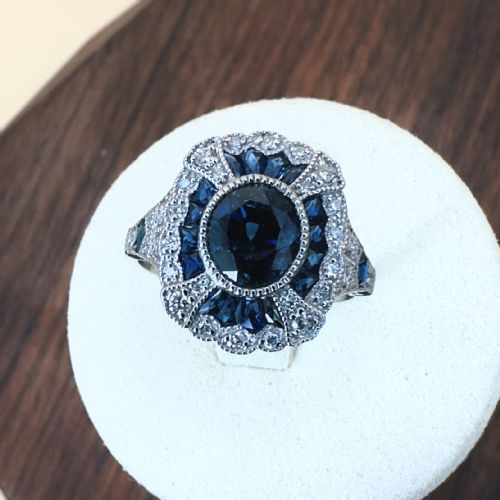
A platinum target cluster ring centres on a central diamond or coloured gemstone, encircled by geometric rows of smaller stones that mimic a bullseye. These jewels emerge predominantly from the Art Deco period and the Edwardian era, alongside mid-century interpretations.
Makers construct these rings as dress rings, cocktail rings and engagement rings using platinum, often paired with 18ct gold. The format relies on geometric concentric circles, square plaques or floral motifs to maximise the visual presence of the stones on the finger.
Buyers encounter forms ranging from strict Art Deco target designs to softer Edwardian daisy clusters and later vintage variations. Platinum provides the crisp white structural strength required to hold delicate millegrain edges and complex stone arrangements securely in place.
How they were made
Goldsmiths forge these rings primarily in platinum, sometimes combining it with 18ct white or yellow gold to anchor the settings. Platinum allows artisans to fashion ultra-fine claws and knife-edge bands that disappear behind the brilliance of the gems.
Artisans set old cut diamonds, sapphires, rubies and emeralds using grain setting, bezel setting and calibré cuts where stones are shaped precisely to fit geometric channels. Hand-applied millegrain beaded borders frame the edges of the platinum mounts for textural contrast.
Listings feature platinum, 18ct gold, diamonds, sapphires, rubies, emeralds and pearls across Edwardian, Art Deco and mid-century periods.
What varies in quality
Quality rests on the precision of the geometric layout and the matching of the central stone to its concentric border. Superior examples demonstrate uniform calibré cutting in the outer gemstone rings and minimal metal intrusion around each stone.
The integrity of the platinum claw work and the preservation of hand-carved millegrain detail separate exceptional pieces from lesser work. Heavier platinum gauge prevents the gallery from warping over decades of wear, maintaining the sharp concentric symmetry of the target motif.
The Platinum Target Cluster Ring Glossary
- Target ring
- A concentric cluster ring featuring a central stone surrounded by one or more geometric rings of contrasting gemstones. This layout creates a strong visual bullseye effect on the hand.
- Calibré cut
- Small gemstones specifically cut and faceted to fit tight, precise geometric channels within a mount. This technique defines sharp edges in Art Deco jewellery.
- Millegrain
- A decorative technique featuring tiny raised metal beads along the edge of a platinum setting. It adds a soft, textured border typical of Edwardian and Art Deco pieces.
- Old cut diamond
- A diamond cut by hand before modern machinery, characterised by a smaller table, higher crown and open culet. These stones display a distinctive softer candlelit sparkle.
- Plaque ring
- A flat, wide ring face set entirely with diamonds and gemstones, creating a decorative disc shape on the finger.
Platinum Target Cluster Ring: Frequently Asked Questions
How do I care for a platinum target cluster ring?
Clean your ring using warm soapy water and a soft brush to remove everyday oils from beneath the cluster setting. Avoid harsh chemical dips, particularly if the ring contains pearls or emeralds.
Store the piece individually in a fabric-lined box to prevent the platinum edges from scratching softer items in your collection. Regular checks by a jeweller ensure the tiny claws holding the outer stones remain secure.
Can I wear a target cluster ring every day?
Platinum provides exceptional durability for daily wear because the metal resists thinning and holds tiny stone settings firmly. However, rings set with softer gems like emeralds or pearls require extra care during manual tasks.
Consider removing the ring during heavy lifting or gardening to protect the delicate calibré cut outer stones and millegrain edges from impact damage.
How do I distinguish an Art Deco target ring from an Edwardian one?
Art Deco target rings favour strict geometric symmetry, sharp concentric circles, and bold colour contrasts between diamonds and calibre-cut sapphires or rubies. Platinum dominates these linear compositions.
Edwardian cluster rings lean towards softer floral motifs, open wirework galleries, and natural pearls alongside diamonds, often blending yellow gold shanks with platinum topped settings.
What is a calibré cut gemstone?
Calibré cut refers to small coloured stones, such as sapphires, rubies or emeralds, shaped individually to fit specific geometric channels in a mounting. This meticulous technique allows stones to form continuous borders without visible gaps.
Jewellery makers utilise this method extensively in Art Deco target rings to create precise, uninterrupted rings of colour around the central diamond.