

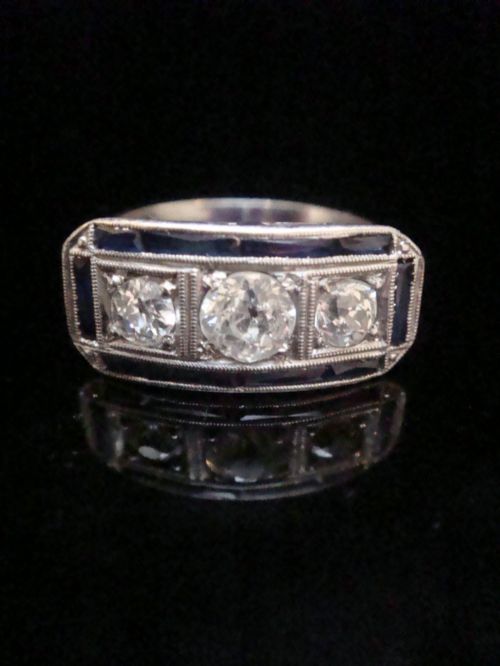


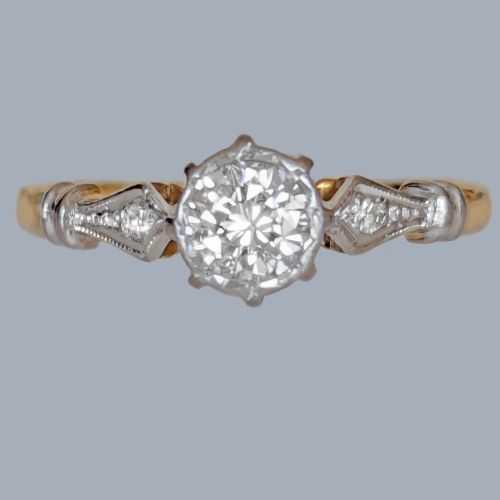
Platinum Geometric Diamond Ring
When you handle a platinum geometric diamond ring, you hold the sharp, architectural lines of the 1920s and 1930s.
Platinum Geometric Diamond Ring
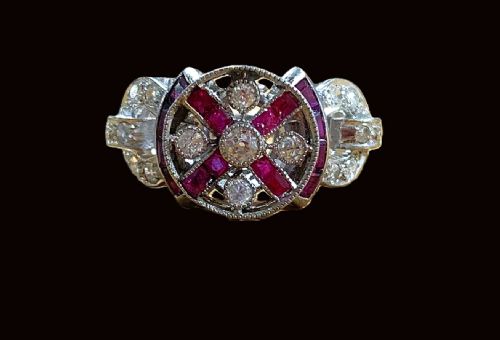
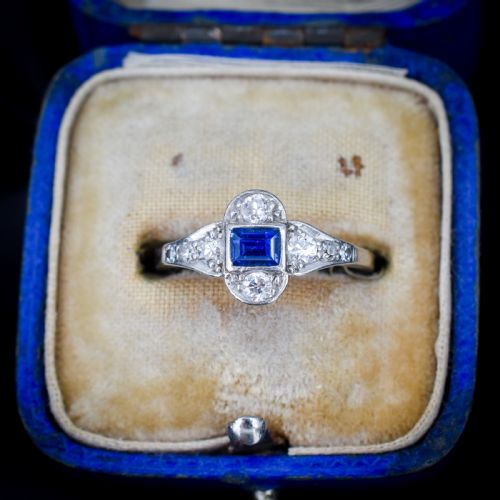
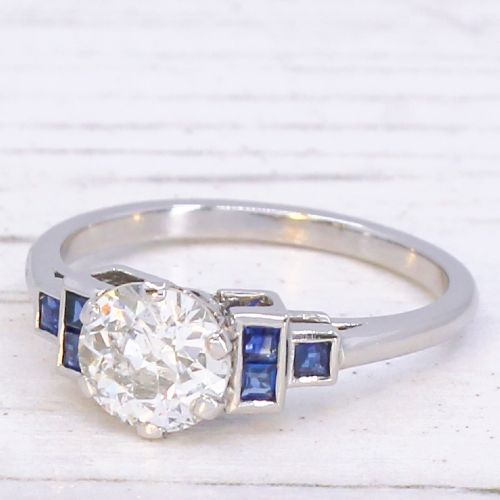
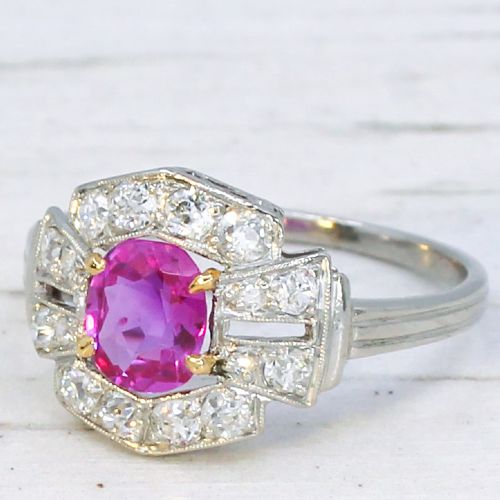
A platinum geometric diamond ring brings together the linear, angular motifs of the Art Deco period with the enduring strength of platinum settings. These pieces primarily manifest as engagement rings, dress rings, and cocktail clusters created between 1920 and 1940, alongside later mid-century revivals.
You will most commonly encounter these items as platinum-topped bands paired with 18ct gold, yellow gold, or white gold shanks. The designs rely heavily on symmetry, checkerboard patterns, and starburst silhouettes rather than organic curves.
The aesthetic is grounded in the geometry of the machine age, using calibrated sapphires, rubies, and emeralds to frame central diamonds. Surviving examples demonstrate how makers balanced severe architectural layouts with delicate millegrain edges.
How they were made
Craftsmen utilised platinum sheet and wire to construct rigid, lightweight geometric mountings that held stones securely without obscuring their facets. This metal allowed artisans to achieve knife-edge borders and pierced openwork plaques that would have warped in softer alloys.
Diamonds within these rings are predominantly old cut, transitional cut, or old European cut stones featuring characteristic small tables and open culets. These gems were hand-set into channel, bezel, or pavé formations alongside calibre-cut rubies, emeralds, and sapphires.
Many mountings were constructed using a combination of platinum for the white metal display face and 18ct yellow or white gold for the underlying band. Jewellers finished these assemblies with fine millegrainbeading along the metal edges to catch the light.
Listings feature platinum, 18ct gold, and 9ct gold combined with diamonds, sapphires, emeralds, and rubies across Art Deco forms.
What varies in quality
The distinction between standard commercial output and superior craftsmanship rests on the precision of the geometric layout and the uniformity of the stone cutting. Master jewellers ensured that every calibré sapphire or emerald was shaped precisely to fit the specific angles of the platinum framework without irregular gaps.
Quality also shows in the depth and complexity of the openwork piercing beneath the main stones, where lesser examples remain flat and cast rather than hand-pierced. The crispness of the millegrain work and the structural integrity of the platinum claws separate ordinary production from high-tier workshop output.
The Platinum Geometric Diamond Ring Glossary
- Platinum
- A dense, durable white metal utilised extensively during the Art Deco period for secure, fine-claw stone settings. It permits ultra-thin bridges and sharp metalwork without bending.
- Old cut
- A diamond facet arrangement shaped by hand before modern symmetrical standards were adopted in the mid-twentieth century. These stones typically exhibit smaller tables and softer, broader light reflection.
- Plaque ring
- A ring featuring a flat, wide top surface covered in intricate geometric arrangements of diamonds and coloured stones. This style sits flush or slightly raised against the finger.
- Calibré cut
- Small gemstones specifically shaped and cut to fit exact geometric channels within a patterned cluster. This technique creates unbroken blocks of colour beside pavé diamond sections.
- Millegrain
- A decorative technique involving tiny raised metal beads rolled along the edges of a platinum setting. It provides a soft textural border that diffuses the transition between metal and skin.
Platinum Geometric Diamond Ring: Frequently Asked Questions
How do I care for a platinum geometric diamond ring?
Clean your ring using warm water, mild washing liquid, and a soft brush to remove everyday oils from beneath the intricate geometric settings. Avoid harsh ultrasonic cleaners if the piece incorporates emeralds or pearls.
Store the item separately in a fabric-lined box to prevent the sharp platinum edges and diamond points from scratching softer jewellery pieces.
Can these rings be resized easily?
Resizing depends entirely on the construction of the shank and whether the geometric pattern extends down the shoulders of the band. Rings with platinum tops and gold shanks can usually be altered by a skilled jeweller.
Take care to protect calibré-cut stones near the shoulders, as heat from torch work during sizing can crack fragile rubies, sapphires, or emeralds.
What defines the Art Deco geometric style?
The style relies on straight lines, chevrons, target motifs, and rectangular plaque layouts inspired by early twentieth-century modern architecture. It stands in direct contrast to the flowing, asymmetrical curves of the preceding Edwardian and Art Nouveau eras.
Jewellers utilised contrasting colour combinations, such as diamonds paired with deep blue sapphires or black onyx, to emphasise the sharp angles.
Are these rings suitable for daily wear?
Platinum provides a robust and durable foundation that resists daily wear better than white gold or silver. The secure metal claws hold old cut diamonds firmly through routine activities.
However, delicate openwork platinum galleries and flush-set calibré stones require mindful protection against heavy impacts or manual labour.