
Platinum Engagement Dress Ring
A platinum engagement dress ring brings together durable white metal and brilliant stones, offering lasting elegance for daily wear.
Platinum Engagement Dress Ring
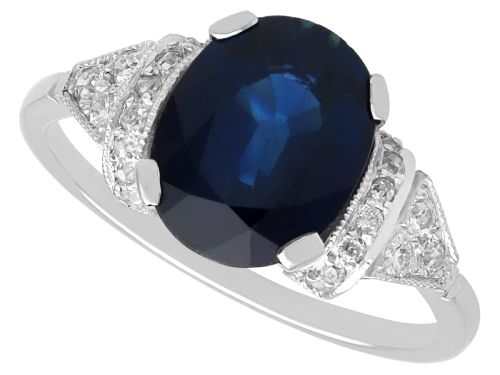
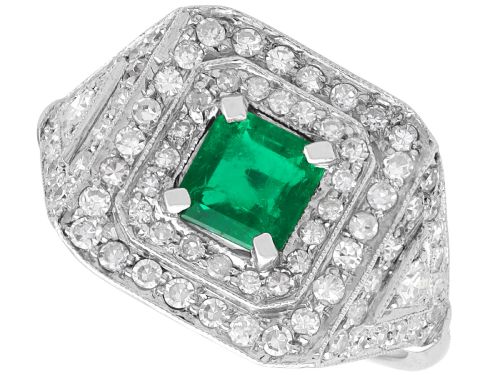
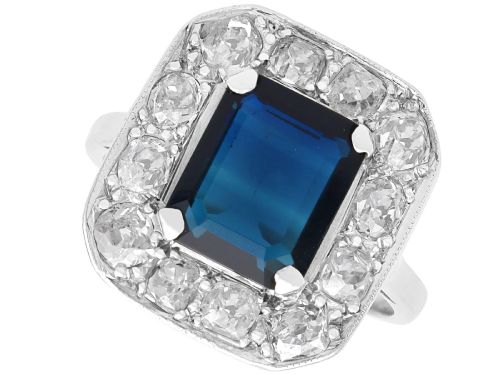
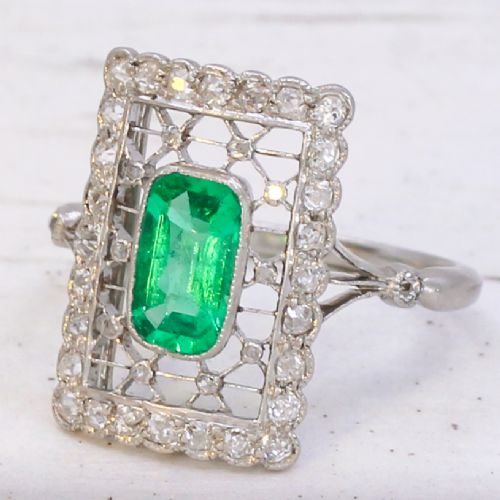
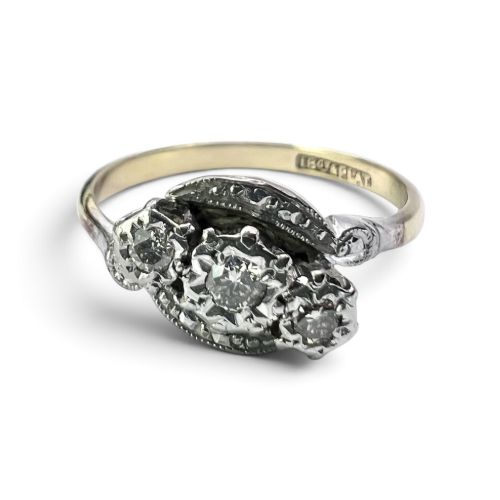
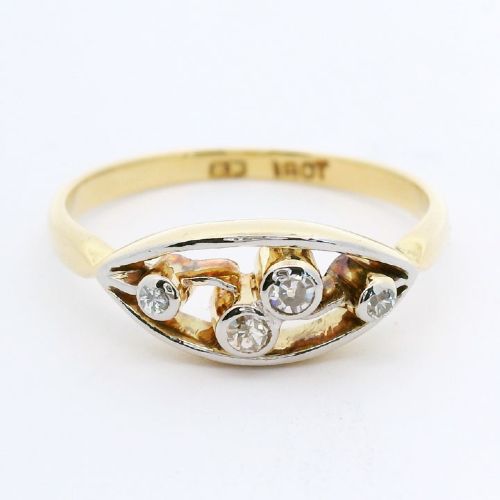
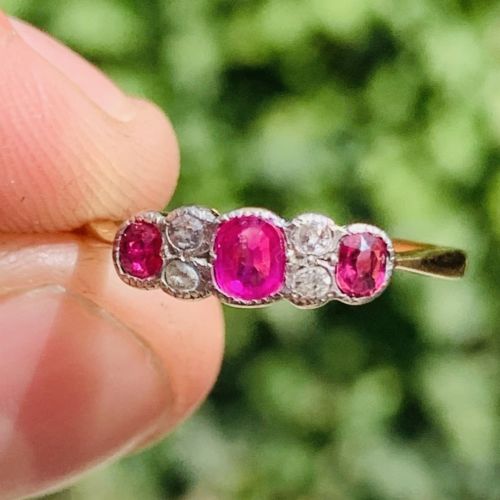
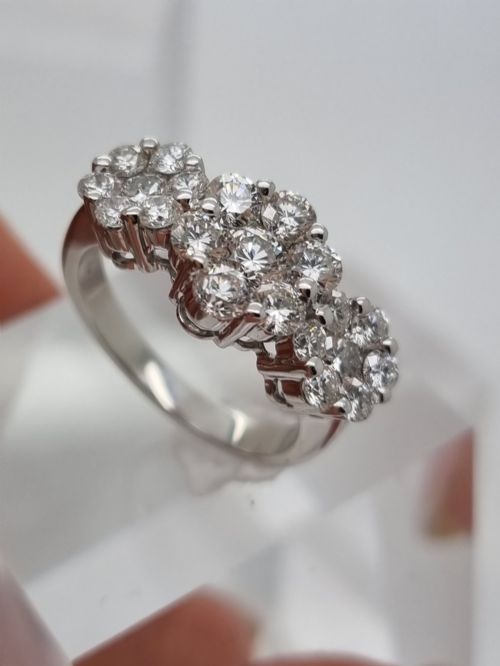
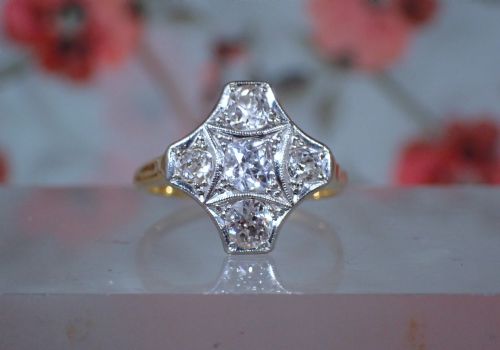
A platinum engagement dress ring combines the robust strength of platinum with gemstones such as diamond, sapphire, emerald, ruby, tanzanite and aquamarine. These pieces span the Edwardian, Art Deco and Mid-Century periods, featuring clusters, trilogies, navettes and twist designs.
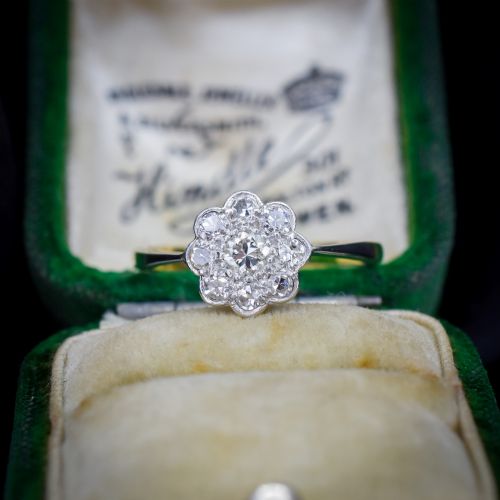
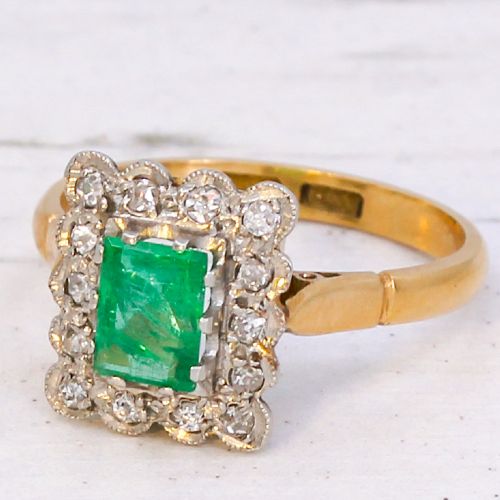
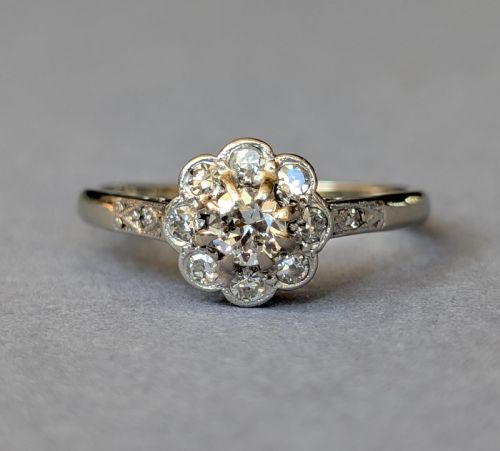
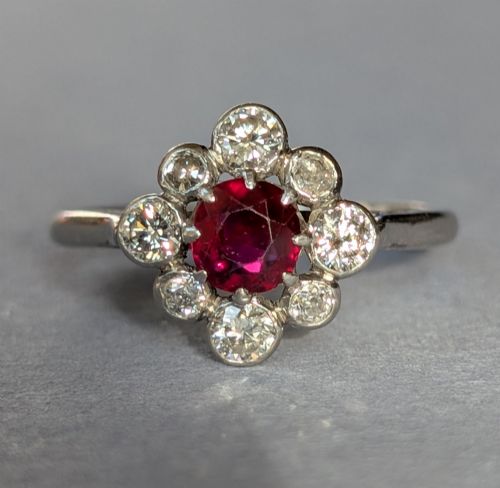
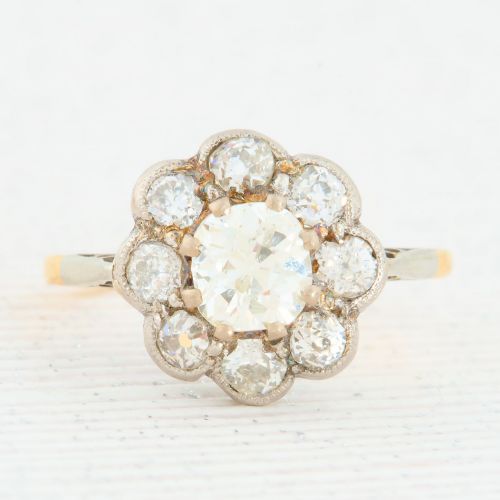
The most common form met on this page is the cluster ring, particularly the daisy cluster, where a central diamond or coloured gemstone is surrounded by smaller stones. Many examples pair platinum settings with 18ct yellow gold shanks, reflecting the transition of manufacturing styles from the turn of the twentieth century onwards.
Materials and construction methods
The pieces rely on platinum for its strength, which allowed jewellers to create secure, delicate settings for old cut diamonds and coloured gemstones without excess bulk. Combinations of platinum and 18ct gold appear frequently, using gold for the band and platinum for the claw or bezel heads to maximise the brilliance of the white stones.
Gemstones are shaped in various cuts including old cut, oval cut, pear cut, baguette cut and elgonated oval cuts. Settings utilise cluster arrangements, three stone layouts, and navette configurations to showcase unheated sapphires, Colombian emeralds, and Burmese rubies alongside natural pearls.
Distinctions in quality and execution
Quality separates through the natural characteristics of the primary gemstones, such as unheated origin reports for sapphires and rubies or negligible oil treatments in emeralds. The precision of the stone cutting, particularly with old cut diamonds and calibre-cut rubies or sapphires, dictates the visual impact of the design.
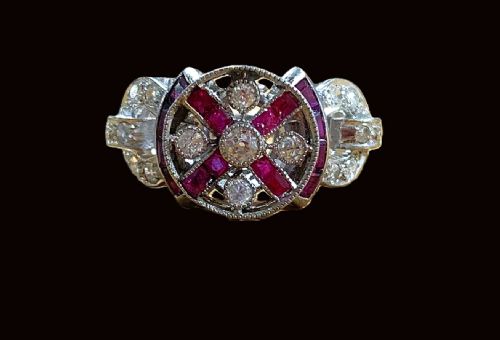
The integrity of the metalwork, whether an intricate Edwardian platinum piercing or a bold Art Deco geometric mount, demonstrates the maker's skill. Well-preserved settings protect the stones securely while maintaining the fine proportions characteristic of their specific period.
Le Vian
The Platinum Engagement Dress Ring Glossary
- Navette
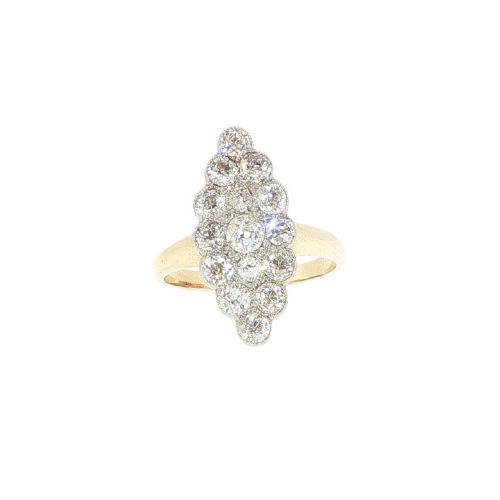
- A boat-shaped cluster setting featuring tapered ends that sit lengthwise along the finger.
- Old cut
- A diamond facet style hand-cut before modern brilliant standards, featuring a smaller table and higher crown.
- Daisy cluster
- A ring design with a central round stone encircled by a ring of matching smaller stones.
- Trilogy
- A three-stone ring configuration often interpreted as representing the past, present and future.
- Toi et Moi
- A French term meaning you and me, describing a two-stone twist ring representing two intertwined lives.
Platinum Engagement Dress Ring: Frequently Asked Questions
What periods do these rings come from?
The selection spans several distinct eras, beginning in the late Victorian and Edwardian periods around nineteen hundred. Pieces also frequently date through the nineteen twenties and thirties Art Deco era, extending into mid-century designs.
Each period brings characteristic design elements, from delicate Edwardian filigree to bold geometric Art Deco cluster layouts.
What gemstones are typically set in platinum?
Diamonds are the most common stone, frequently paired with sapphires, emeralds and rubies. Other rarer stones like tanzanite and aquamarine also appear in mid-century cluster rings.
Coloured stones often feature specific geographical origins, such as Burmese rubies or Colombian emeralds, documented in gemmological reports.
How do I care for a platinum ring?
Platinum is an exceptionally durable and dense metal that withstands daily wear well, holding its secure grip on stones over decades. Regular cleaning in warm soapy water restores the brightness of both the metal and the gemstones.
Professional checks ensure that the claws holding old cut diamonds or delicate emeralds remain tight and secure.
Can these rings be resized?
Most rings featuring a combination of platinum and eighteen-carat gold can be altered by a skilled jeweller to fit different finger sizes. The feasibility depends on the specific shank design and whether decorative shoulders extend too far down the band.
Consulting a specialist jeweller ensures the structural integrity of the metal and any shoulder stones is maintained during adjustment.