


Platinum Diamond Plaque Ring
A platinum diamond plaque ring delivers geometric elegance, pairing precious metal settings with sparkling stones in distinct Edwardian and Art Deco designs.
Platinum Diamond Plaque Ring
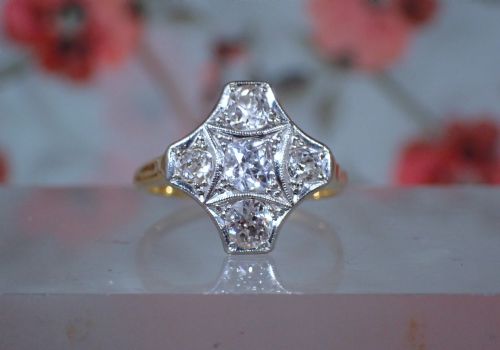
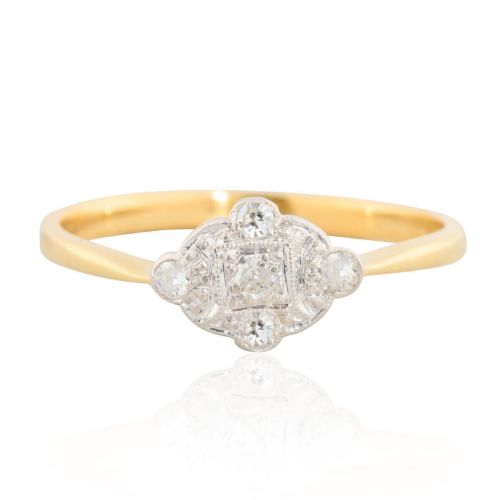
A platinum diamond plaque ring presents a flat, ornamental face across the finger, typical of early twentieth-century jewellery. These items appear most frequently in Art Deco and Edwardian styles, often combining platinum with 18ct gold.
The selection ranges from elongated panel clusters to rectangular and geometric shapes. Alongside diamonds, makers incorporated sapphires, rubies, emeralds, and onyx to build contrast within the plaque surface.
Makers produced dress rings and cocktail rings designed for formal wear, utilising old cut, transitional cut, and rose cut diamonds. Pieces span the decades from 1900 through to the 1960s, keeping the classic plaque silhouette alive.
How they were made
Metalsmiths built these rings using platinum for the top setting surface, frequently supported by 18ct yellow gold shanks. Platinum provided the strength needed for delicate openwork without adding excessive weight to the hand.
Craftsmen set old cut and transitional cut diamonds using pave and claw techniques to maximise light return within the low-profile face. Gemstones such as sapphires, emeralds, and rubies were precision-cut to fit flush against the diamond geometry, alongside contrasting sections of black onyx.
Gemstone pairings include sapphires, rubies, emeralds, and onyx set alongside old cut diamonds.
What varies in quality
The refinement of the piercing and metalwork sets superior examples apart, showing crisp geometric lines and delicate milgrain edging. Higher-tier pieces maintain structural integrity in the openwork gallery while housing well-matched, lively old cut diamonds.
The integration of calibré-cut coloured stones like sapphires, rubies, or emeralds dictates the standard of execution. Stronger examples exhibit seamless stone-to-stone alignment and balanced colour saturation across the plaque face.
The Platinum Diamond Plaque Ring Glossary
- Plaque ring
- A ring featuring a flat, ornamental face that spreads across the finger. These surfaces often display intricate geometric piercing and pavé-set stones.
- Old cut diamond
- A diamond cut by hand before modern machinery, possessing a smaller table, higher crown, and larger culet. This cut produces a softer, warmer candlelit sparkle.
- Milgrain
- A decorative border of tiny raised metal beads along the edge of a setting. Jewellers used this technique extensively in Edwardian and Art Deco pieces to frame gemstones.
- Navette
- A boat-shaped ring design that tapers to points at either end. This elongated silhouette sits horizontally along the finger.
- Calibré cut
- Small gemstones cut specifically to fit a precise geometric channel or pattern within a mounting. Artisans utilised this method for precise borders of sapphire, ruby, or emerald.
Platinum Diamond Plaque Ring: Frequently Asked Questions
What is a plaque ring?
A plaque ring displays a wide, flat decorative surface that covers the finger. These pieces gained popularity during the Edwardian and Art Deco eras.
Craftsmen pierced the metal into geometric patterns and encrusted the top with diamonds and coloured stones. This creates a bold visual impact while maintaining a low profile on the hand.
How do I date a platinum ring?
Dating relies on stylistic clues, metal combinations, and cut types. Pieces from 1900 to 1910 often show delicate garland motifs, while 1920 and 1930 examples favour strict geometric lines.
The presence of platinum paired with 18ct gold, combined with old cut or transitional cut diamonds, points directly to these early twentieth-century manufacturing periods.
Are these rings suitable for daily wear?
Platinum provides a durable setting for diamonds and gemstones, making these rings robust enough for regular use. However, the delicate openwork and fine milgrain require mindful care.
Owners should remove the jewellery during strenuous tasks to protect the intricate metalwork and secure stone settings from impact.
What stones appear with diamonds?
Makers frequently paired diamonds with deep blue sapphires, vibrant emeralds, and rich rubies to create colour contrast. Black onyx also appears as a striking backdrop.
These coloured gems were often shaped into calibré cuts to form precise borders or linear accents within the platinum plaque.