



Platinum Diamond Pave Ring
A platinum diamond pave ring brings together dense clusters of small stones and crisp white metal, spanning Edwardian, Art Deco and later periods.
Platinum Diamond Pave Ring
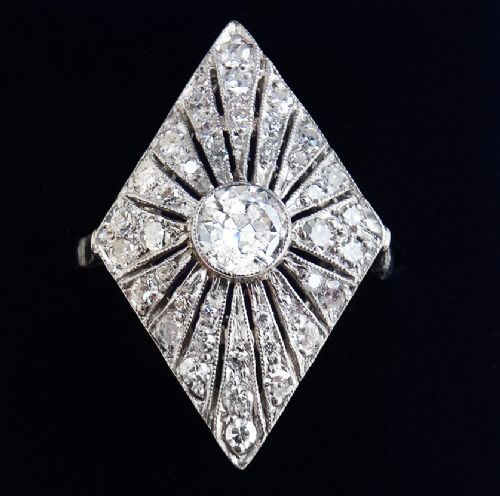
When searching for a platinum diamond pave ring, collectors encounter dress rings and engagement pieces defined by dense surface settings of small stones. The selection draws heavily from the Edwardian period and the 1920s and 1930s Art Deco era, alongside mid-century and later designs.
Most examples combine platinum with 18ct gold or rely entirely on solid platinum mounts to hold the diamonds. Forms range from target settings and clover motifs to geometric French Tank styles and classic clusters.
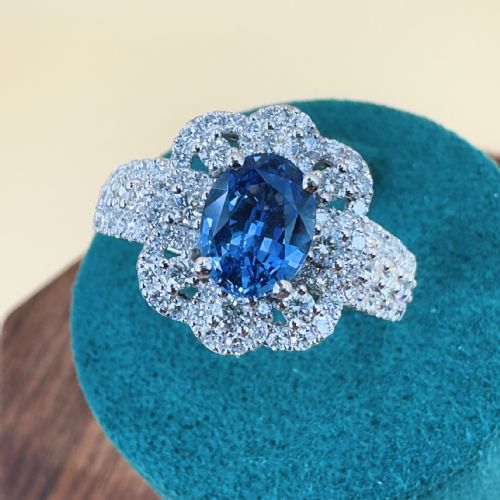
Alongside the diamonds, several pieces incorporate natural sapphire, emerald, chalcedony or blue topaz. The profile spans flat geometric faces, marquise shapes, and intricate low-profile mounts designed to sit flush against the finger.
How they were made
Goldsmiths utilised platinum for its strength and ductile qualities, allowing them to shape delicate bezels and tiny grain settings that secure the diamonds with minimal visible metal. This dense surface work, known as pave, creates the appearance of an uninterrupted field of stones.
Many mountings pair platinum heads with 18ct yellow gold shanks, combining durable white settings for the diamonds with traditional warm gold bands. Stones typically feature old cut, old mine cut or rose cut facets, shaped by hand before the advent of modern standardised cutting.
The construction often incorporates intricate pierced galleries and millegrain edging, where tiny beaded metal borders frame the diamonds and coloured gems such as natural sapphires or emeralds.
Platinum Diamond Pave Ring Retail Price Guide 2026
Typical asking prices for platinum diamond pave ring among the pieces listed under this phrase on Sellingantiques today, from the lower quarter to the upper quarter. They describe what is for sale here now, not the wider market.
Listings feature platinum and 18ct gold alongside accent stones including sapphire, emerald, chalcedony, and blue topaz across Edwardian, Art Deco, and mid-century periods.
What varies in quality
The distinction between standard commercial work and superior examples lies in the precision of the stone arrangement and the crispness of the hand-carved metalwork. Finer pieces demonstrate absolute uniformity in stone size and tightness in spacing, leaving very little exposed metal between the individual diamonds.
The choice and integration of secondary stones also dictate the tier of the piece. Top-grade examples feature matched natural sapphires or emeralds that complement the brilliance of the old cut diamonds without dead spots in the pave layout.
Structural integrity in the under-gallery and the preservation of the tiny millegrain beads separate well-preserved items from those with worn settings. The harmony between the platinum top tier and the gold shank indicates the care taken during original commission or manufacture.
Le Vian
The Platinum Diamond Pave Ring Glossary
- Pave
- A setting style where numerous small stones are positioned closely together and secured by tiny metal beads. This technique creates a continuous surface of sparkle.
- Old Cut
- A diamond cutting style prevalent before modern brilliant standards, characterised by higher crowns, smaller tables, and deep culets. These stones display a softer candlelight shimmer.
- Millegrain
- A decorative technique involving tiny raised metal beads along the edges of a setting. It softens the transition between metal and stone.
- Target Setting
- A concentric ring design featuring a central gemstone surrounded by one or more circular halos of contrasting stones. This layout was particularly popular during the Art Deco period.
Platinum Diamond Pave Ring: Frequently Asked Questions
How do I identify an Art Deco ring?
Art Deco rings are characterised by geometric symmetry, clean lines, and architectural motifs. They frequently combine platinum settings with old cut diamonds and calibré-cut sapphires or emeralds.
Makers of this era favoured precise shapes like squares, rectangles, and target circles.
Are these rings made of solid platinum?
Many examples combine a solid platinum top section with an 18ct yellow gold shank. Others utilise solid platinum for both the mounting and the band.
This dual-metal construction was common in earlier periods to provide strong white housing for stones alongside warm gold bands.
What cut of diamond is most common?
Older pieces predominantly feature old cut, old mine cut or rose cut diamonds shaped by hand. These cuts possess distinct facets and softer light reflection compared to modern brilliant cuts.
Such stones contribute to the authentic vintage character of Edwardian and 1920s examples.