
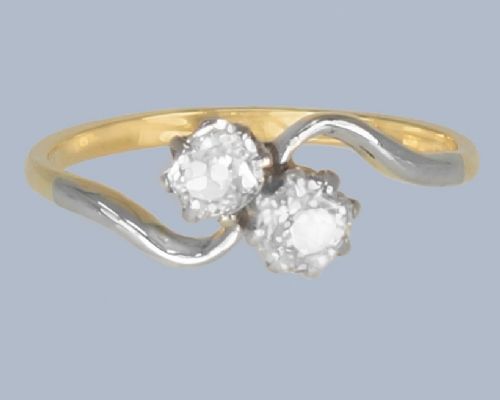
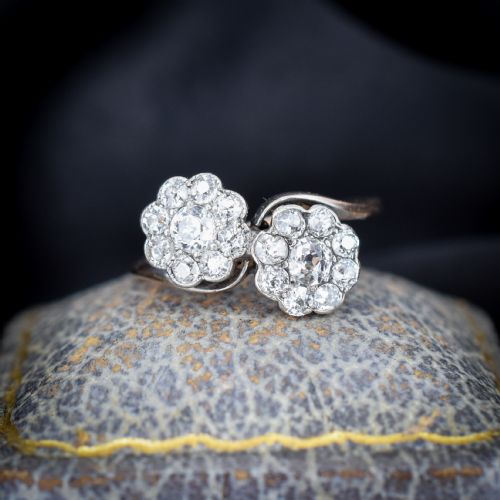
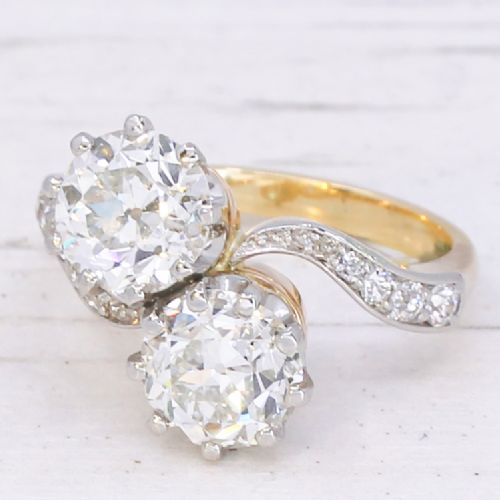


Platinum Crossover Ring
A platinum crossover ring wraps the finger in precious metal and old stones, offering a distinctive twist silhouette that catches the light from every angle.
Platinum Crossover Ring
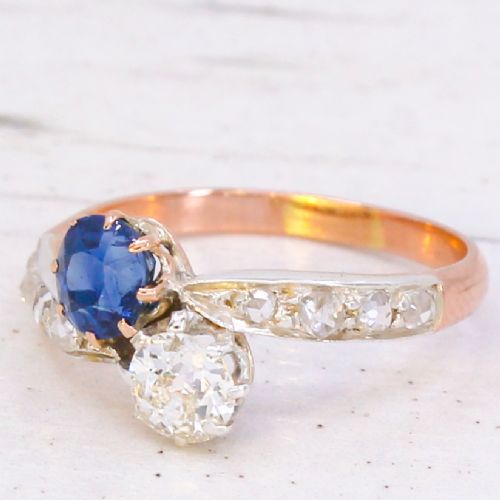
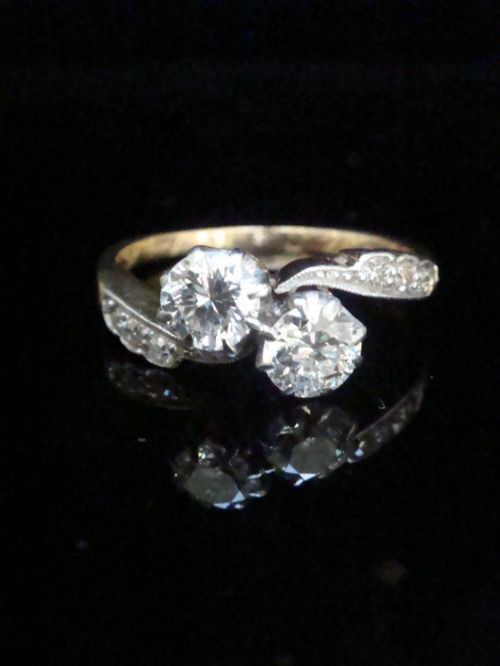
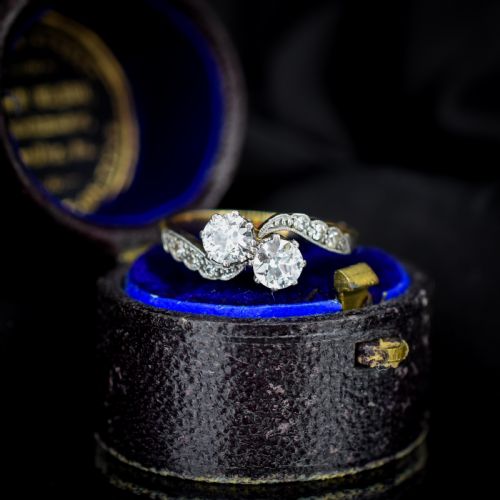
A platinum crossover ring presents a flowing band that sweeps across the finger in a distinctive twist, bypass, or toi et moi configuration. These designs set the stones in an embrace that creates movement within rigid metal.
The versions met most frequently on this page span from the Edwardian era through the Art Deco period and into the mid-century decades. They combine the bright white durability of platinum settings with the warmth of yellow or white gold shanks.
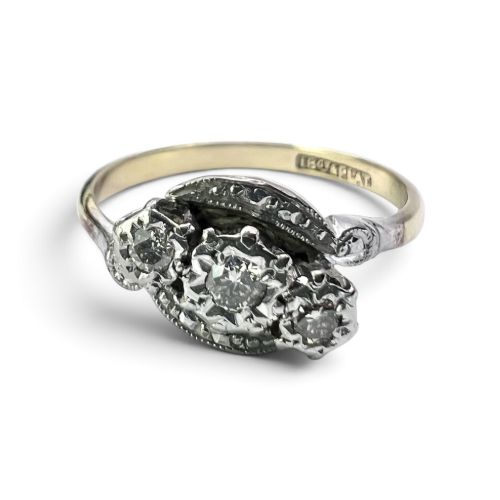
Makers paired the central twist motif with old cut diamonds, natural pearls, and coloured gemstones such as sapphires, rubies, opals, and emeralds. This variety brings together double-stone arrangements and three-stone trilogy variations.
Materials and Construction
Craftsmen utilised platinum primarily as a secure setting material for diamonds and pearls, capitalising on its strength to form delicate claws and bezels without excess bulk. This metal is paired with eighteen-carat gold for the shank to balance durability with traditional tone.
Goldsmiths shaped the twist and bypass bands by hand, integrating old European and old mine cut diamonds into sweeping shoulders. The combination of platinum tops and gold bands allowed workshops to maximise the brilliance of the stones while maintaining structural integrity.
Listings incorporate platinum, eighteen-carat gold, diamonds, natural pearls, sapphires, rubies, opals, and emeralds across Edwardian, Art Deco, and mid-century periods.
Assessing the Range
Quality separates pieces through the precision of the twist and the harmony of the stones. Finer examples display a fluid sweep where the platinum shoulders meet the central gems without awkward angles or heavy-handed metalwork.
The distinction in the upper tier lies in the selection and matching of old cut diamonds or natural pearls, where proportions align evenly. Lesser pieces show heavier, less graceful shanks and less uniformity in the set gems.
The Platinum Crossover Ring Glossary
- Crossover ring
- A ring design featuring bands that cross over one another on the finger, often referred to as a twist or bypass style.
- Toi et Moi
- A French term meaning you and me, describing a two-stone ring where dual gems sit side by side or sweep together.
- Old European cut
- An early form of brilliant-cut diamond featuring a small table, high crown, and large culet, prevalent in antique jewellery.
- Trilogy ring
- A setting that incorporates three main stones arranged in a row or across a curved twist to represent the past, present, and future.
Platinum Crossover Ring: Frequently Asked Questions
How do I wear a crossover ring daily?
These rings pair easily with straight wedding bands or sit comfortably alone on the finger due to their smooth, sweeping lines.
Their low profiles make them practical for regular wear while protecting the settings from daily knocks.
What periods do these rings come from?
The pieces span from the late nineteenth century through the Edwardian and Art Deco eras up to the mid-twentieth century.
Each period brings distinct mount styles, ranging from delicate Edwardian filigree and natural pearls to bold Art Deco geometric twists.
Are the diamonds antique?
Many listings feature old European cuts or old mine cut diamonds characteristic of the Edwardian and Art Deco periods.
These hand-cut stones exhibit softer facet patterns and deeper pavilions than modern brilliant cuts.
What is the difference between platinum and gold here?
Platinum was used for its bright white strength to securely set stones, while eighteen-carat gold frequently forms the supporting shank.
This two-tone construction is a hallmark of the manufacturing techniques used across the early twentieth century.