

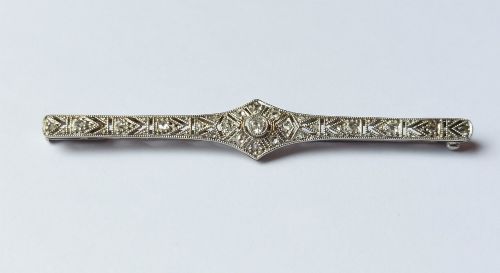
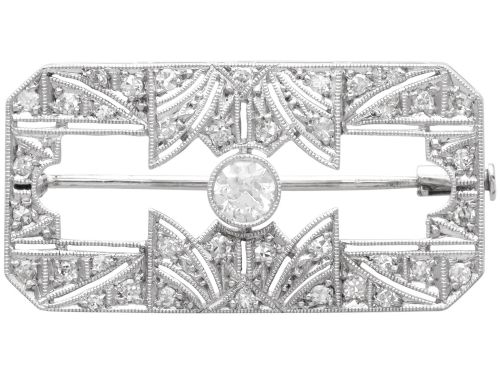
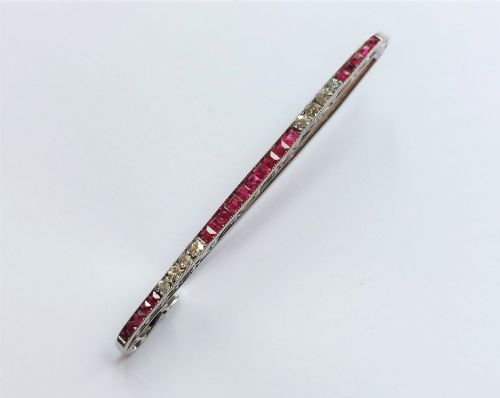
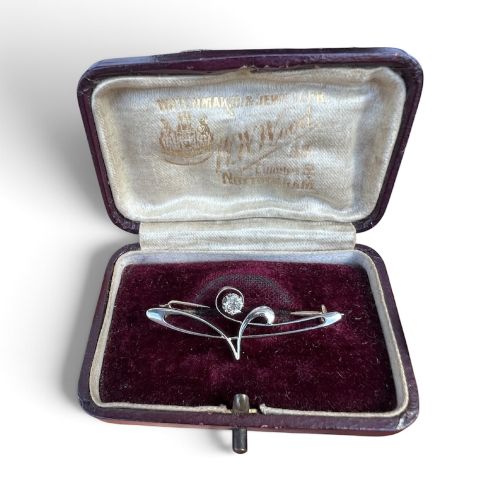


Platinum Bar Pin
A platinum bar pin is a slender, linear jewel designed to fasten a lapel or lace collar, prized for its delicate metalwork and secure mounting of diamonds.
Platinum Bar Pin
A platinum bar pin is most frequently encountered from the Art Deco and Edwardian eras, combining linear geometry with delicate openwork frames. These slender brooches span the late nineteenth century through to the mid-twentieth century, capturing stylistic shifts from Victorian naturalism to twentieth-century abstraction.
The dominant forms on this page pair bright white metal with old cut diamonds, rubies, sapphires, or pearls. Many examples integrate contrasting yellow or white gold structures to support the platinum face, creating subtle colour variation across the pin.
Origins stretch across British, French, and Scandinavian workshops, reflecting diverse regional preferences in gemstone arrangement. Buyers encounter straightforward geometric bars alongside pictorial designs such as flying ducks.
Materials and construction
Platinum serves as the primary structural metal for these pieces, chosen for its tensile strength that allowed jewellers to fashion knife-edge bars and fine millegrain settings without bulk. This dense metal supported intricate pierced galleries while holding small pave-set diamonds securely in place.
Gold frequently appears alongside platinum, utilised either for the pin stem and catch or as a contrasting backing metal in fifteen carat and eighteen carat purities. Gemstones including old cut diamonds, pearls, rubies, and onyx are flush-set or bezel-set into the linear frameworks.
Platinum Bar Pin Retail Price Guide 2026
Typical asking prices for platinum bar pin among the pieces listed under this phrase on Sellingantiques today, from the lower quarter to the upper quarter. They describe what is for sale here now, not the wider market.
One determined Edwardian duck insists on flying across a platinum bar pin, proving that early twentieth-century jewellers possessed a charming sense of humour.
Assessing quality and craftsmanship
Quality in a platinum bar pin rests upon the crispness of the pierced metalwork and the precision of the millegrain border. Finer examples display hand-formed piercing that remains sharp and uniform under magnification, whereas lesser pieces show uneven hand-filing.
The selection and matching of diamonds or coloured stones dictate the upper tier of execution, where uniformly cut old stones sit flush without excessive negative space in the setting. The integrity of the pin stem and the reliability of the safety catch also distinguish superior workshop production.
The Platinum Bar Pin Glossary
- Platinum
- A dense, naturally white precious metal possessing high durability and strength. It became the favoured setting material for fine jewellery from the Edwardian period onward because it required less bulk to secure stones safely.
- Millegrain
- A decorative technique featuring a fine border of tiny raised metal beads along the edges of a setting. This textured edge softens the transition between metal and gemstone.
- Old Cut Diamond
- A general term for diamond cuts preceding the modern brilliant cut, typically characterised by a smaller table, higher crown, and open culet. These stones catch candlelight with a distinctive chunky sparkle.
- Bar Brooch
- A long, narrow brooch form designed to span lapels or fabrics cleanly. The style reached peak popularity during the early twentieth century.
- Pin Stem
- The sharp metal wire that pierces the fabric to secure the brooch. In antique pieces, this component often uses a simple C-clasp or an early safety roll-lock.
Platinum Bar Pin: Frequently Asked Questions
How do I wear a bar pin safely?
Fasten the pin through a sturdy lapel, heavy knit, or reinforced section of fabric to prevent the slender bar from bending under daily movement. Ensure the safety catch or C-clasp is fully engaged before stepping out.
For delicate silks or thin vintage blouses, secure the pin through an inner layer or utilise a small backing disc to distribute the weight evenly across the material.
How do I distinguish Edwardian from Art Deco pieces?
Edwardian platinum bar pins typically showcase garland motifs, softer curves, lace-like openwork, and natural pearls alongside old cut diamonds. The aesthetic draws inspiration from eighteenth-century royal court jewellery.
Art Deco pieces pivot toward strict geometrical abstraction, symmetrical repeats, contrasting onyx accents, and sharp lines. The metalwork reflects industrial modernity rather than organic floral scrolls.
Can I replace a missing safety clasp?
A skilled restorer can laser-weld or solder a replacement clasp onto the reverse of the platinum bar without harming the front face or disturbing adjacent stones. Matching the metal purity is essential to maintain structural harmony.
Original catches add historical integrity, but modern safety conversions are common when wearing these fragile brooches on a regular basis.
Did men wear platinum bar pins?
During the early twentieth century, slender bar pins and stickpins served practical and decorative functions for both men and women. Gentlemen utilised sturdy pins to secure cravats, ties, or lapel buttonholes.
Many geometric Art Deco designs with minimal gem-setting were originally tailored for masculine tailoring before crossing into universal evening wear.