






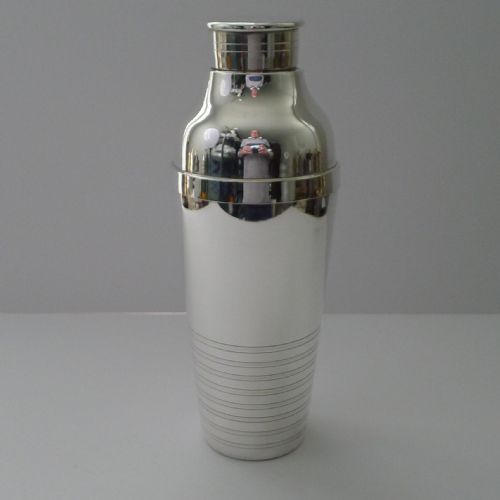


Plated Cocktail Shaker
A plated cocktail shaker brings the sharp geometry of the twentieth century straight to the modern bar.
Plated Cocktail Shaker
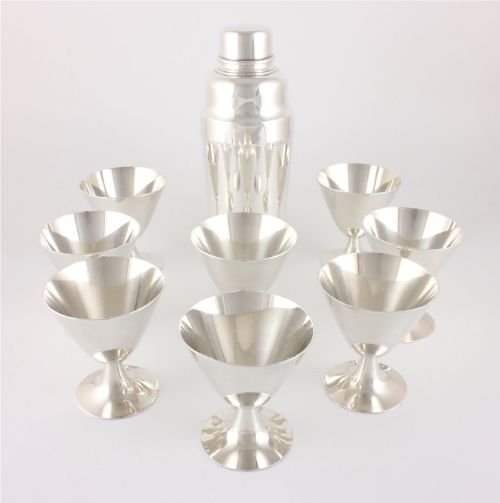
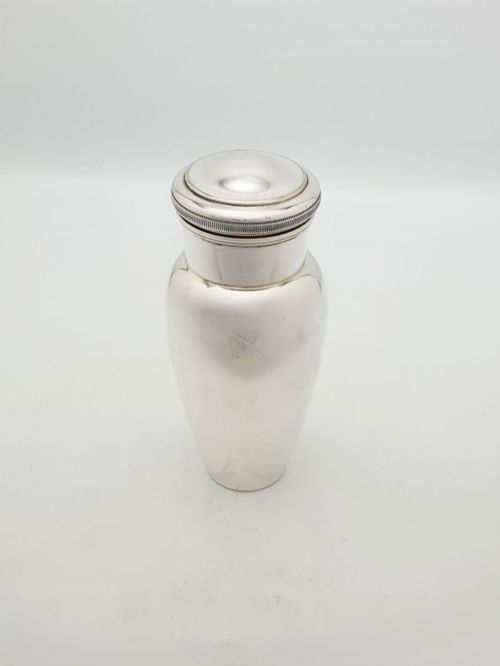
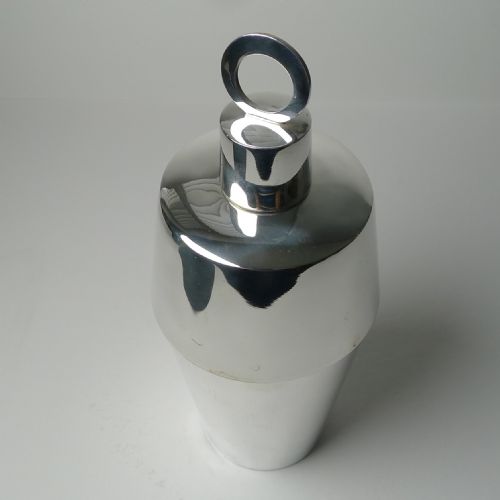
A plated cocktail shaker is a metal bar vessel designed for mixing drinks, emerging in forms from the 1920s through the 1960s. These pieces span classic English and French manufacturing alongside Italian Modernism and Swiss production.
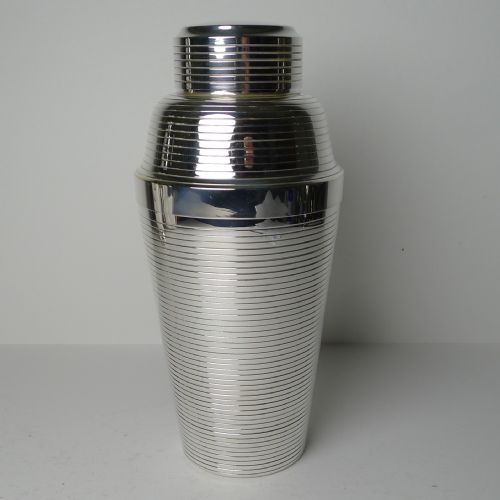
The selection here heavily favours the Art Deco style, translated into everything from cylindrical bodies to novelty shapes like milk churns and bullets. Domestic examples sit alongside pieces equipped with built-in ice breakers, lemon squeezers, and rotating recipe dials.
How They Were Made
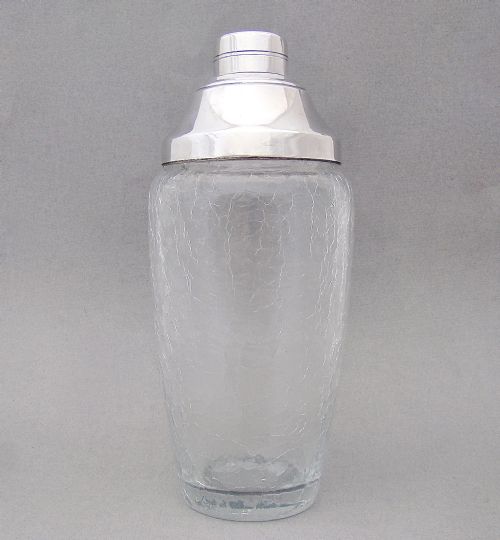
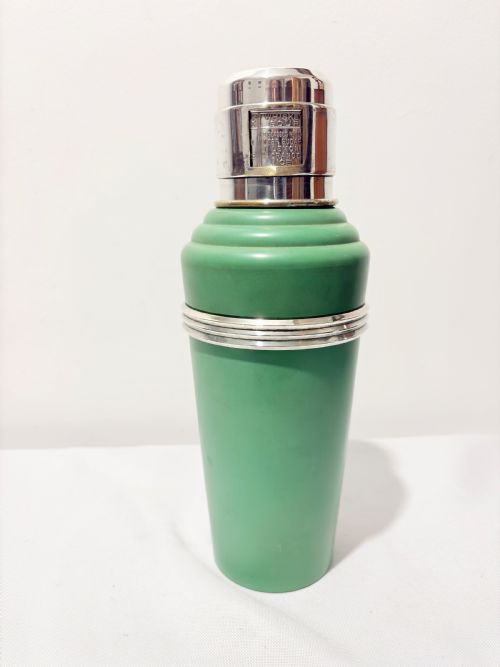
Manufacturing relies on silver plate, electroplated nickel silver, and standard EPNS over base metals like brass, paired frequently with glass, crackle glass, and green Bakelite. Interiors and exteriors often utilise engine turning to create precise geometric surface patterns.
Functional elements integrate cork stoppers for secure sealing during shaking. Metal bodies combine spun and soldered components to construct complex forms such as rolling mixer recipe drums and dial mechanisms.
Plated Cocktail Shaker Retail Price Guide 2026
Typical asking prices for plated cocktail shaker among the pieces listed under this phrase on Sellingantiques today, from the lower quarter to the upper quarter. They describe what is for sale here now, not the wider market.
Listings span the 1920s to the 1960s, incorporating silver plate, brass, glass, and green Bakelite.
What Varies in Quality
Differentiation across the range rests on the weight of the metal and the crispness of decorative engraving. Makers known for substantial gauge plating and firm mechanical tolerances distinguish themselves clearly from lighter commercial alternatives.
Design complexity drives the upper tier, where integrated mechanisms like functional dials or novelty silhouettes remain intact and operational. Execution of surface finishes, from engine turning to applied coloured plastics, dictates the enduring visual authority of the object.
Hukin Heath·Asprey·James Dixon Sons·Keith Murray·J B Chatterley Sons·William Suckling·Adie Brothers·Carl Deffner·Christofle·C S Green
The Plated Cocktail Shaker Glossary
- EPNS
- Electroplated nickel silver. This forms the base white metal alloy beneath the silver coating on standard mid-century barware.
- Engine turning
- A mechanical engraving technique producing intricate geometric patterns across metal surfaces. It creates a textured grip and catches the light.
- Bakelite
- An early synthetic phenol formaldehyde resin. It appears on handles and knobs in shades like green to contrast with the silver metal.
- Crackle glass
- Glass deliberately fractured during thermal processing then reheated to fuse the outer layer. It offers a tactile contrast to smooth plated metal collars.
Plated Cocktail Shaker: Frequently Asked Questions
How do recipe shakers work?
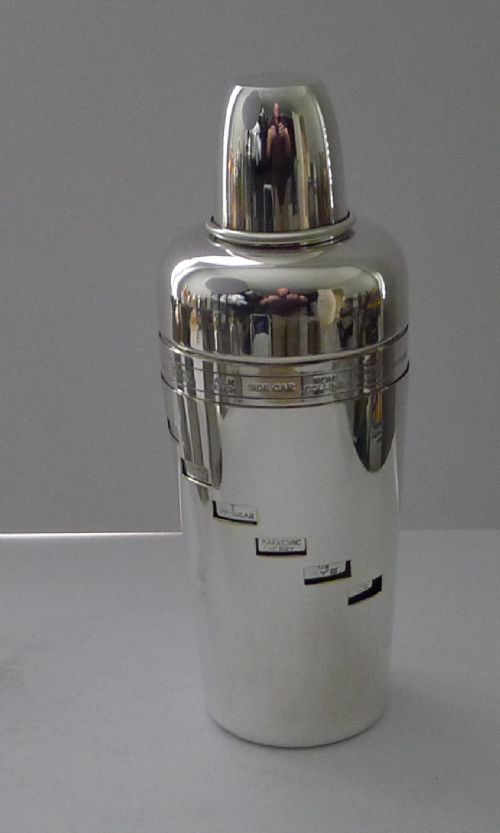
Recipe shakers feature outer sleeves or rotating dials stamped with cocktail proportions and ingredient lists. Turning the metal cylinder aligns the windows with specific drink formulations.
Original instructions usually require hand washing to preserve the engraved or printed recipes on the plated surface.
What are novelty cocktail shakers?
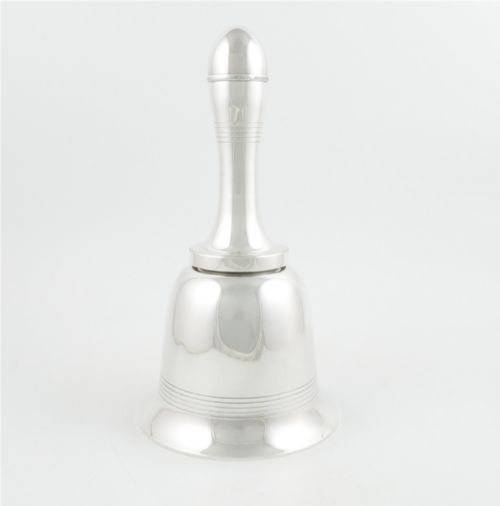
Novelty shakers adopt recognisable architectural or domestic shapes rather than standard cylinders. Examples mimic milk churns, bells, or bullets while concealing functional barware interiors.
These pieces were produced widely by major silversmiths during the interwar period as statement items for home entertaining.
How do I care for plated barware?
Silver plate requires gentle cleaning with non-abrasive cloths to maintain the finish without wearing through to the base metal. Cork stoppers should be kept dry to prevent degradation.
Storage in stable humidity prevents tarnishing and protects applied elements like Bakelite handles or glass bodies.
How do I identify Art Deco pieces?
Art Deco shakers rely on symmetrical geometric lines, stepped motifs, and streamlined industrial profiles. Engine turned surfaces and contrasting materials like crackle glass define the aesthetic.
Maker marks stamped to the base often confirm production dates within the 1920s and 1930s window.