


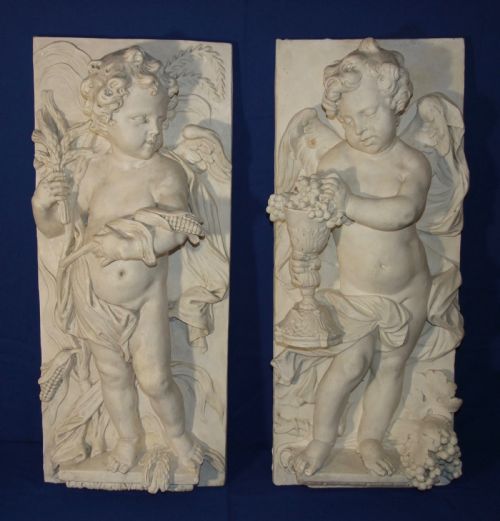


Plaster Relief Casts
These plaster relief casts are classical medallions, intaglios and wall plaques designed to bring antiquity and Renaissance sculpture into the home.
Plaster Relief Casts
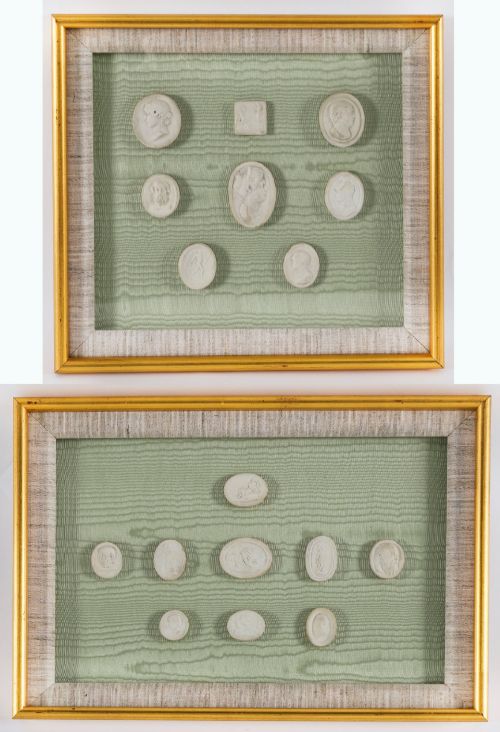
When you search for plaster relief casts, you find framed wall art, decorative objects and wall plaques originating mostly from the nineteenth century, alongside late eighteenth-century examples. These pieces span classical intaglios, Grand Tour souvenirs and figural sculptures taken from Renaissance or Hellenistic subjects.
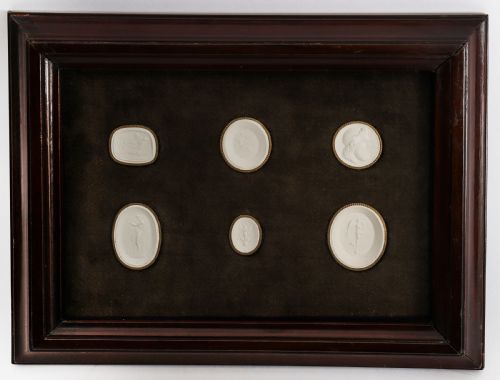
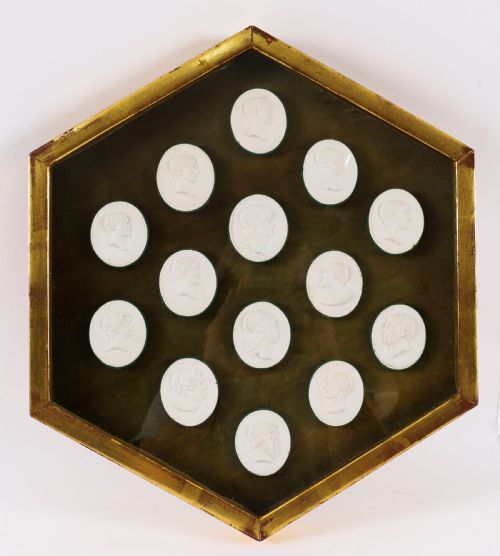
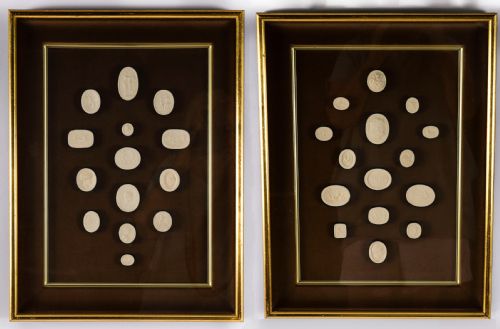
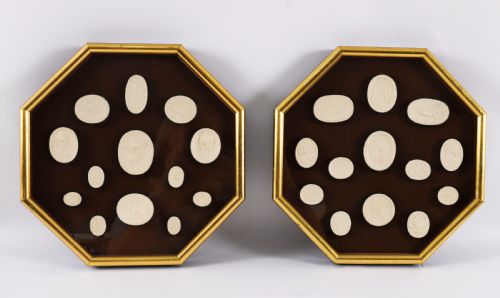
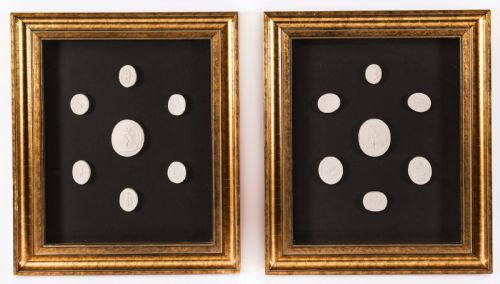
The version you are most likely to meet on this page is the framed Grand Tour intaglio, often arranged in pairs, sets or larger collections within shadow boxes. They emulate ancient carved gems and marble reliefs, framed for display on domestic walls.
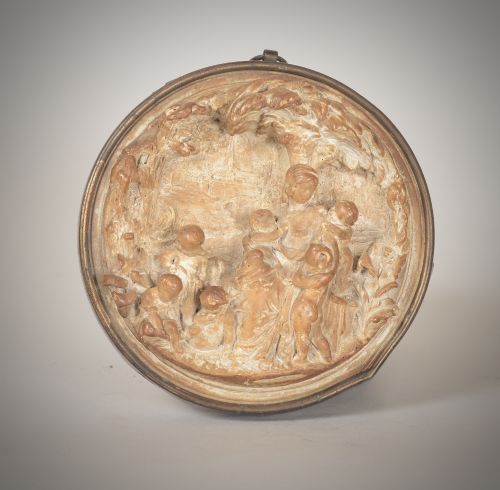
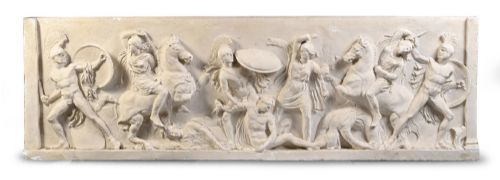
Beyond intaglios, the selection includes larger wall friezes, single devotional plaques such as a young saint, and architectural moulds like those from Osborne House. They represent the European practice of reproducing masterworks in crisp plaster for study and decoration.
How they were made
These works rely on plaster, sometimes enhanced with marble dust, poured or pressed into moulds taken from carved gems, ancient sculptures or Renaissance reliefs. The resulting casts capture fine details of classical profiles, mythological scenes and figural compositions.
Makers housed these delicate reliefs in wood, giltwood or fabric-backed frames, frequently set against velvet or cloth grounds inside glass-fronted boxes to protect the soft plaster surface. Gold leaf highlights occasionally accent the frames or background details.
Materials recorded across the inventory include plaster, marble dust, glass, wood, giltwood, fabric, velvet and gold leaf.
What varies in quality
Quality rests in the crispness of the cast and the depth of the relief, where sharper details reveal a closer adherence to the original antique or Renaissance source. Master modellers and skilled cast-makers achieved cleaner edges and subtler expressions than mass-produced workshop copies.
The presentation heavily influences the character of the piece, distinguishing simple wall plaques from elaborate giltwood frames and carefully arranged multi-piece collections housed behind glass with velvet backings.
Giovanni Liberotti·Pietro Bracci
The Plaster Relief Casts Glossary
- Intaglio
- An engraved gem or cast where the design is incised below the surface, mimicking ancient carved stones collected on the Grand Tour.
- Grand Tour
- An educational journey through Europe undertaken by wealthy young men in the eighteenth and nineteenth centuries, who collected plaster casts and intaglios as souvenirs.
- Giltwood
- Wood carved and covered with a thin layer of gold leaf or gilt, commonly used for the frames enclosing these plaques.
- Relief sculpture
- Sculpture in which figures project from a flat background, ranging from shallow low relief to deep carving.
- Frieze
- A long, narrow band of sculpture decorating a wall or architectural feature, seen here in plaster cast wall friezes.
Plaster Relief Casts: Frequently Asked Questions
What are plaster relief casts?
Plaster relief casts are sculptural reproductions of classical, Renaissance and Hellenistic art moulded in plaster and gypsum. They capture ancient gems, architectural friezes and figural reliefs.
Collectors and travellers gathered these pieces from the eighteenth century onward as portable studies of great masterpieces. Today they function primarily as framed wall art and decorative wall plaques.
How were Grand Tour casts used?
Travellers on the Grand Tour purchased sets of plaster intaglios and medallions as tangible records of the classical antiquities they viewed abroad. Back home, they mounted these collections in custom wooden boxes and frames for display in libraries and studies.
The casts served as conversational pieces and educational tools for studying mythology, history and classical sculpture without owning the original marbles.
How do I hang framed casts?
Because these pieces often feature delicate plaster surfaces protected by glass and wooden frames, they require secure wall fixings suited to their weight. Shadow box frames and giltwood mountings should hang away from direct sunlight and damp environments to protect the plaster and fabric backings.
Grouping pairs or sets together maintains the historical arrangement intended by nineteenth-century makers and collectors.
How do I date these pieces?
Dating relies on stylistic clues, framing techniques and documentation associated with specific makers active during the eighteenth and nineteenth centuries. Neoclassical and Renaissance Revival motifs help narrow the period of production.
Signatures or labels on the reverse of frames or backing boards occasionally name specific modellers, workshops or historical sites like Osborne House.