

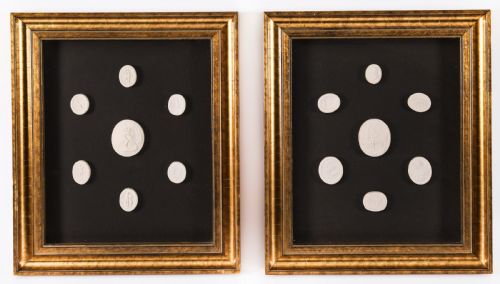


Plaster Medallion Frame
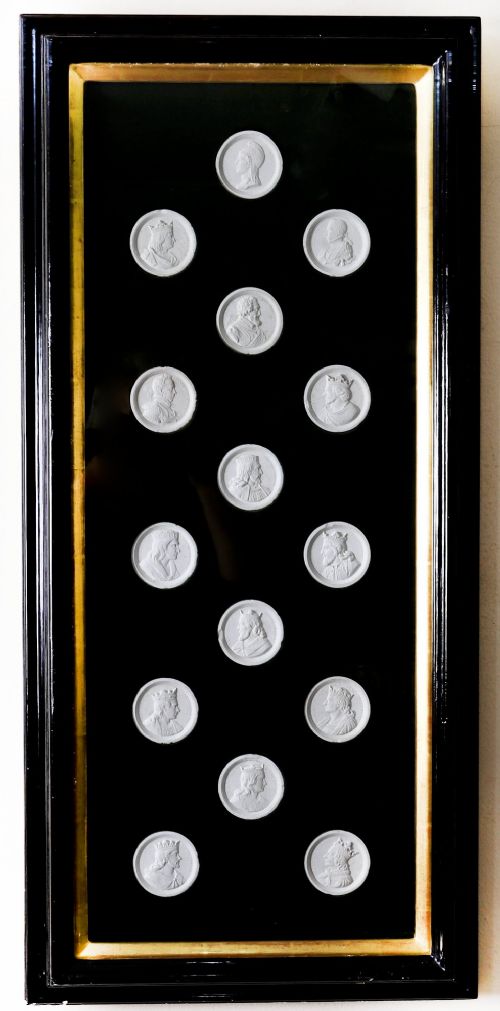
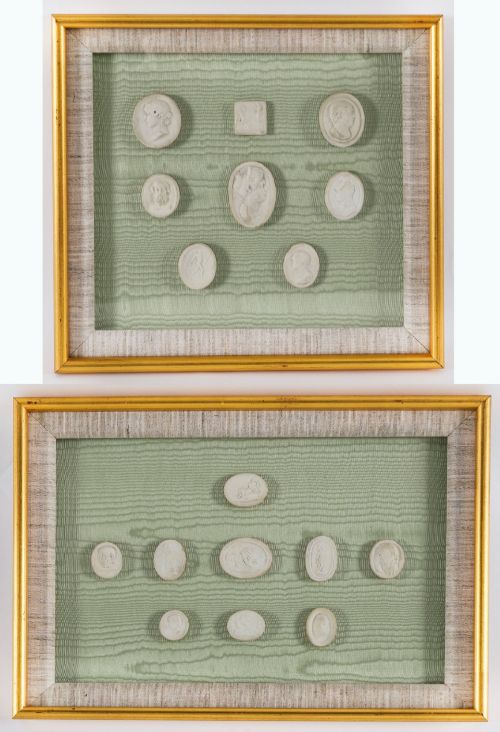
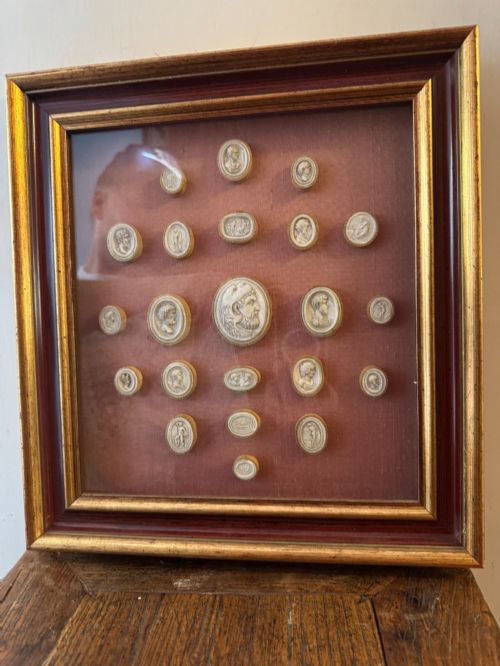
These plaster medallion frame pieces are classical relief collections preserved behind glass, offering the ideal scholarly display for any study wall.
Plaster Medallion Frame
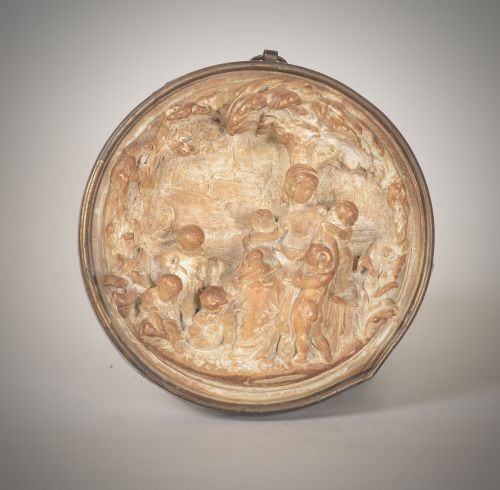
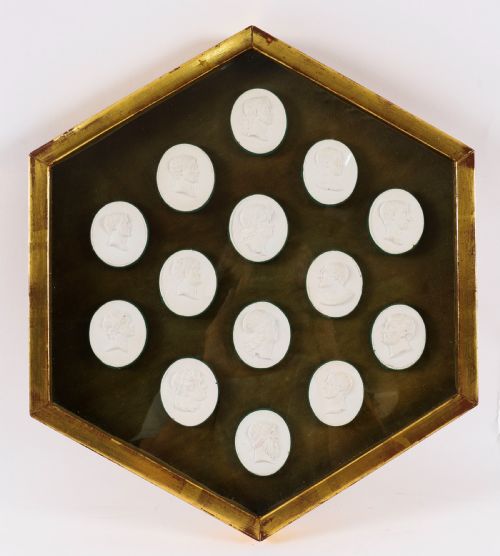
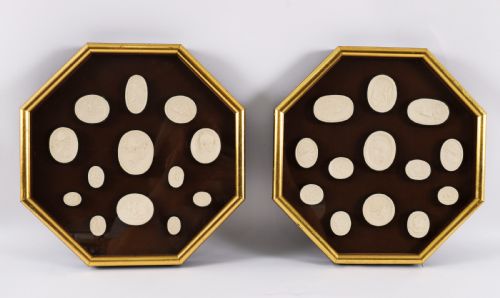
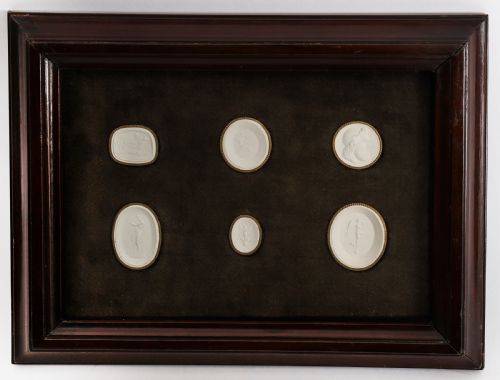
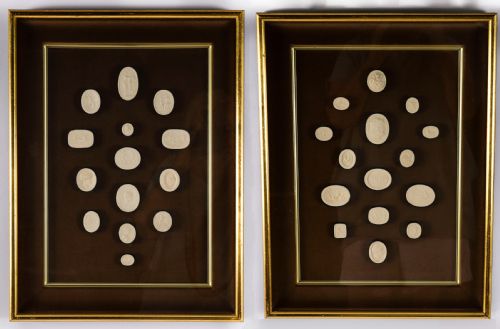
A plaster medallion frame houses collections of classical intaglios, cameos, and relief panels gathered during travels abroad. These pieces originate primarily from the nineteenth century, including Edwardian arrangements and Grand Tour collections.
The objects present historical and mythological subjects modeled in gypsum and plaster, often mounted against velvet or fabric backgrounds within wood, gilt wood, and giltwood frames. Octagonal and box-framed formats appear frequently across the selection.
Materials and Construction
Makers cast the medallions using fine plaster and gypsum, capturing intricate details from ancient carved gems and architectural reliefs. These delicate casts required careful handling and precise setting into prepared backgrounds.
Mounting typically involves stretched velvet or fabric within wooden surrounds, often finished with gold leaf or gilt wood highlights. Glazing protects the vulnerable plaster surfaces from dust and handling while allowing clear viewing of the relief work.
Plaster Medallion Frame Retail Price Guide 2026
Typical asking prices for plaster medallion frame among the pieces listed under this phrase on Sellingantiques today, from the lower quarter to the upper quarter. They describe what is for sale here now, not the wider market.
Assessing Quality and Execution
The sharpness of the plaster casting distinguishes superior pieces, where crisp edges define the classical figures clearly. Finer examples display meticulous organisation and harmonious grouping within the frame.
Frame craftsmanship contributes significantly to the overall character, with genuine period giltwood surrounds offering greater visual depth than simpler wooden mouldings. The quality of the backing fabric and the retention of original glass further elevate the piece.
Giovanni Liberotti
The Plaster Medallion Frame Glossary
- Intaglio
- A gem or medallion carved in incuse, where the design is depressed beneath the surface. These served as the primary subjects for the plaster casts mounted in the frames.
- Cameo
- A method of carving an object such as a gem or piece of stone featuring a raised relief image. The plaster casts often replicate these elevated classical designs.
- Grand Tour
- A traditional trip of Europe undertaken by upper-class European young men of sufficient means. The plaster medallion frame assemblies typically originated as souvenirs from these travels.
- Giltwood
- Wood that has been covered with a thin layer of gold leaf or gold paint. This finish enhances the classical aesthetic of the surrounding frames.
- Gypsum
- A soft sulfate mineral used extensively for making plaster and fine casts. It provides the smooth, bright surface necessary for detailed relief work.
Plaster Medallion Frame: Frequently Asked Questions
What are plaster medallion frames?
These pieces consist of historical plaster and gypsum casts mounted inside glazed frames as wall art. They preserve miniature classical scenes for display.
Originating largely from nineteenth-century travel traditions, they bring scholarly collections of antique intaglios directly into domestic interiors.
How were grand tour frames used?
Travellers collected these plaster casts across Italy as portable representations of ancient sculpture and engraved gems. Arranging them in frames allowed collectors to study and exhibit their acquisitions at home.
Such displays served as conversation pieces in libraries and drawing rooms, demonstrating classical learning and refined taste.
How should I hang these frames?
Due to the fragile nature of plaster casts and historical glass, select a stable wall away from direct sunlight and moisture. Secure fixings suited to the weight of the wood and giltwood surrounds are essential.
Grouping them at eye level in studies or hallways highlights the fine detail of the miniature reliefs.
How do I identify nineteenth-century pieces?
Examine the materials, frame construction, and mounting fabrics for indicators of nineteenth-century manufacture. Older timber frames, hand-cut glass, and historic backing fabrics provide reliable chronological clues.
The style of the plaster casts themselves, particularly those associated with Grand Tour collections, aligns closely with period manufacturing techniques.