

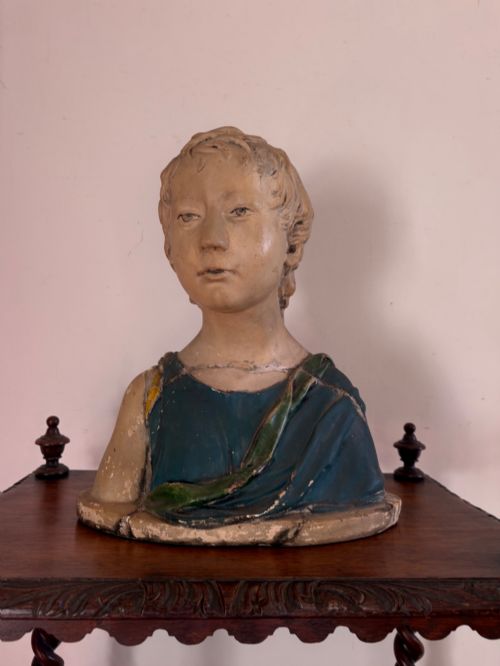
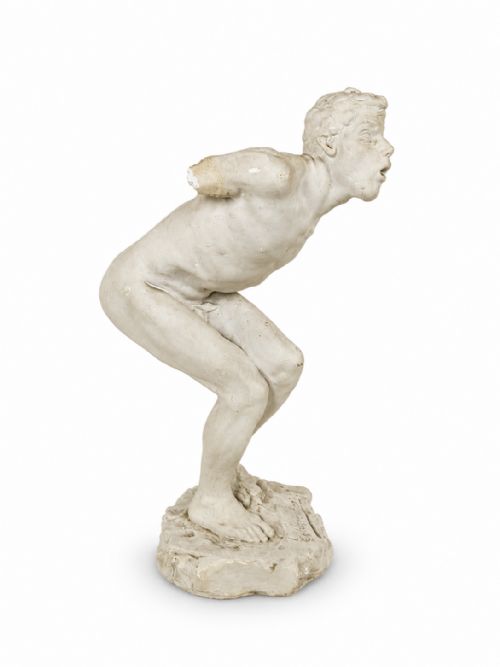
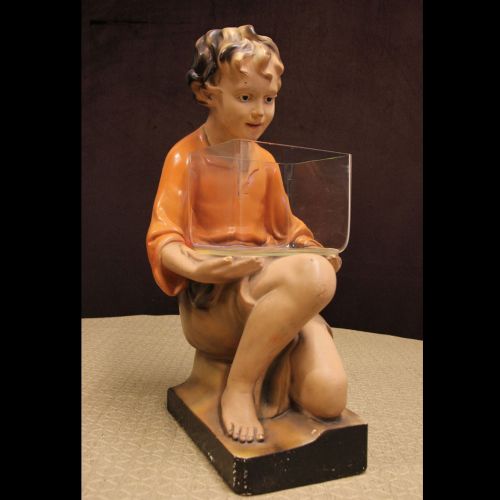

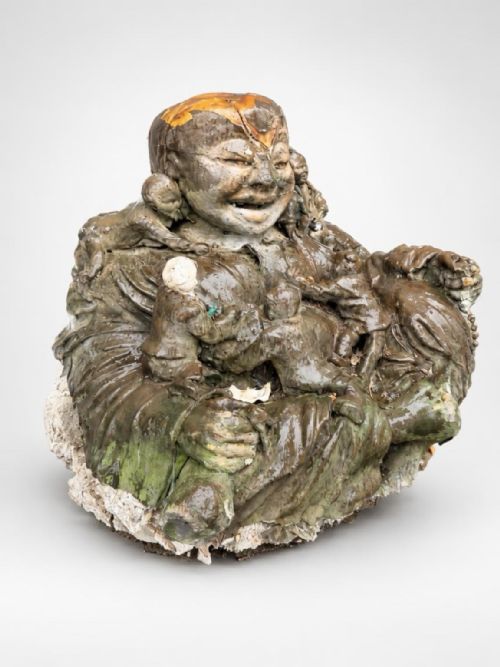




Plaster Figure Statue
A plaster figure statue brings classical presence and striking portraiture to a room, offering sculptural depth without the weight of solid stone.
Plaster Figure Statue
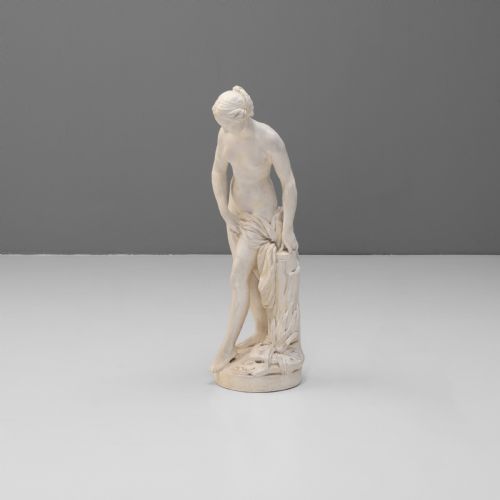
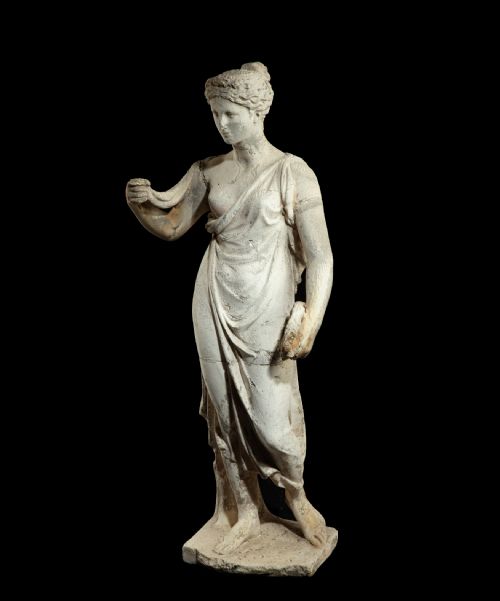
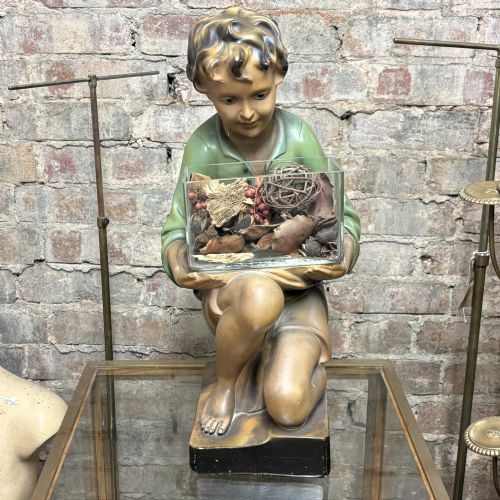
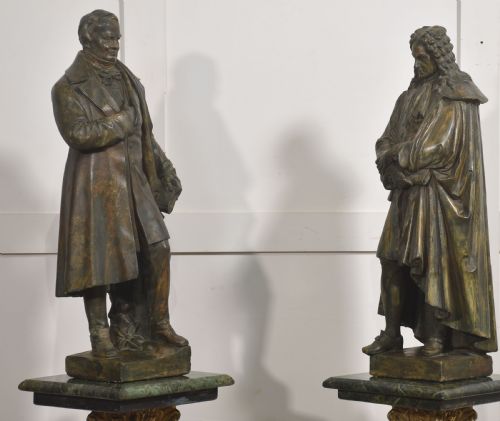
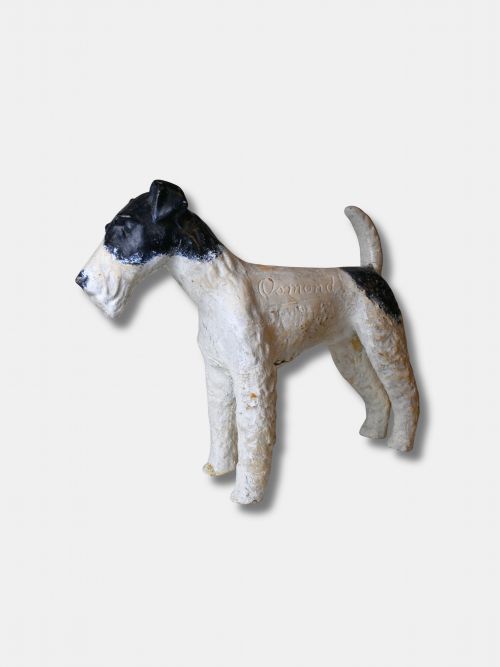
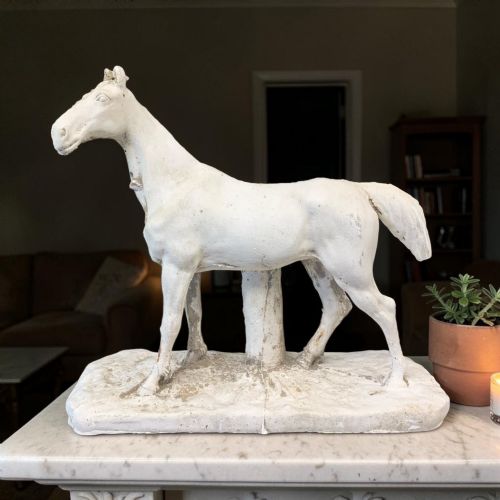
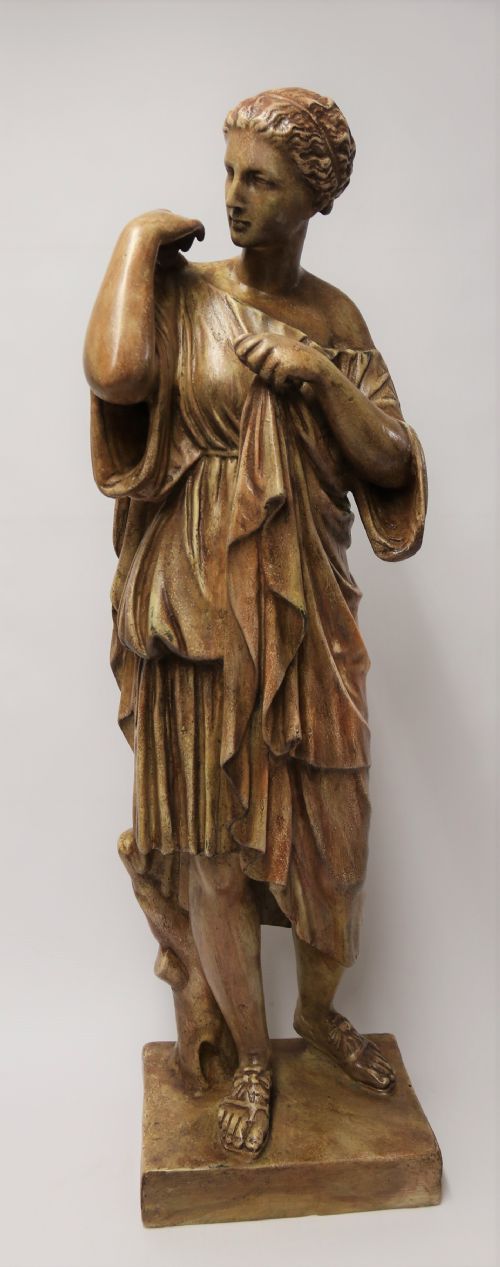
When you search for a plaster figure statue, you are looking at moulded and hand-finished sculptures that range from austere library busts to vibrant advertising mannequins. The pieces on this page span the nineteenth century through the art deco era, taking the form of classical deities, historical figures, animals, and decorative personages. Collectors encounter everything from grand tour reductions of antique antiquities to large ecclesiastical saints and commercial window displays.
The aesthetic vocabulary draws heavily from neoclassical, Victorian academic realism, and orientalist traditions. You will find distinct regional expressions, including French lingerie mannequins, English dog doorstops, and Italian-inspired studies of human form. These objects serve as tactile records of interior display, shifting from scholarly domestic decor to commercial utility over the decades.
Materials and Construction Methods
The core medium is plaster, often reinforced with composition or chalk, poured into moulds taken from original sculptures. Workshops frequently applied surface treatments such as paint, gold leaf, patination, and bronze-effect finishes to mimic heavier metals like bronze or carved marble. Wood, brass, and terracotta occasionally appear as structural supports or complementary elements on bases and pedestals.
Makers achieved varied textures through careful hand-finishing after the cast set. Surface coatings were layered and rubbed back to create the illusion of aged stone, patinated metal, or warm human skin. This combination of structural casting and meticulous surface painting defines the physical reality of these statues.
Plaster Figure Statue Retail Price Guide 2026
Typical asking prices for plaster figure statue among the pieces listed under this phrase on Sellingantiques today, from the lower quarter to the upper quarter. They describe what is for sale here now, not the wider market.
Listings feature nineteenth-century academic works alongside 1920s advertising figures, demonstrating the broad domestic and commercial utility of plaster.
Distinctions in Quality and Execution
The integrity of the polychrome or patinated surface separates superior examples from ordinary productions. Master workshops applied multiple tones of paint or metallic washes to suggest depth and weight, whereas lesser statues rely on flat, uniform coats of colour that obscure the underlying detail.
Dopmeier·Humphrey Hopper·Joseph Constant·Antonio Rossellino·Rouillard Angers·Octave Galliard-Sansonetti·B. Rezl·Antoine-Felix Bouré
The Plaster Figure Statue Glossary
- Plaster cast
- A positive three-dimensional copy made by pouring liquid plaster into a mould. This process allows multiple reproductions of an original sculpted work.
- Patination
- The artificial ageing or coloration applied to the surface of a sculpture. It simulates the natural weathering found on bronze, stone, or aged wood.
- Neoclassical
- A style inspired by the art of ancient Greece and Rome that emphasises severe lines, heroic figures, and classical proportion. It dominates much of nineteenth-century sculptural output.
- Animalier
- A nineteenth-century artistic genre focusing on the realistic depiction of animals. These sculptures capture creatures in motion or repose with anatomical precision.
- Grand tour
- A cultural tradition of travelling through Europe for education and pleasure, bringing home small-scale plaster or bronze copies of classical antiquities.
Plaster Figure Statue: Frequently Asked Questions
How were plaster statues used originally?
These figures served multiple roles in both domestic and public spaces throughout the nineteenth and early twentieth centuries. Wealthy homes displayed classical busts and mythological figures in libraries and hallways to signal scholarly taste.
At the same time, durable composition and plaster versions found practical duty as shop advertising displays, doorstops, and architectural ornaments.
How do I care for an antique plaster statue?
Plaster is a relatively soft and porous material that requires gentle handling and dry conditions. Dusting should be performed with a soft, dry brush rather than any liquid cleaner, which can damage painted or patinated surfaces.
Keeping the sculpture away from damp environments ensures the core material and surface finishes remain stable over time.
Are these figures solid plaster throughout?
Many larger statues and busts are hollow-cast to reduce weight and manage material costs during production. Makers often reinforced the interior with wire frames, wood struts, or burlap mesh embedded within the plaster.
Solid casting was typically reserved for smaller statuettes, plaques, and specialised decorative items.
How can I tell the period of a plaster figure?
Dating relies on a combination of stylistic clues, the nature of the surface pigments, and any maker signatures or stamps. Neoclassical and Victorian pieces often lean towards classical mythology and historical portraits, while 1920s and 1930s examples embrace art deco geometries and commercial advertising forms.
The ageing of the paint layers and the wear patterns on the base also offer clear indications of age.