




Plaster Cast Cameos
These plaster cast cameos and intaglios capture classical sculpture in miniature, offering the refined taste of the Grand Tour for your walls.
Plaster Cast Cameos
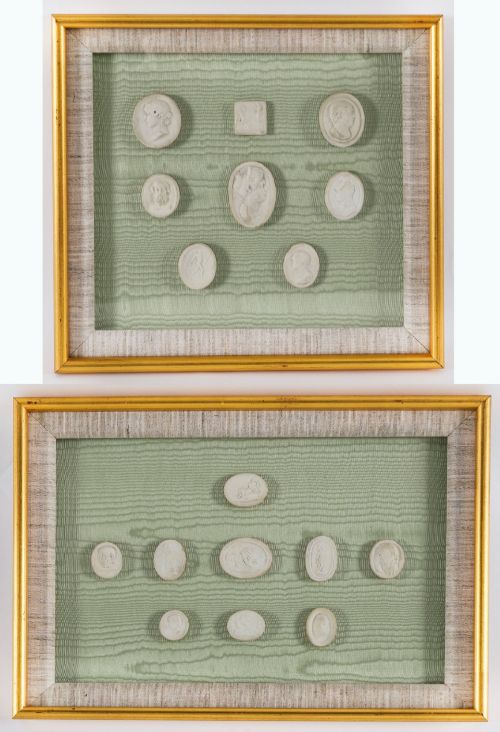
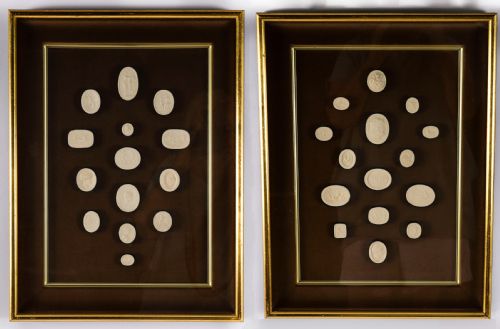
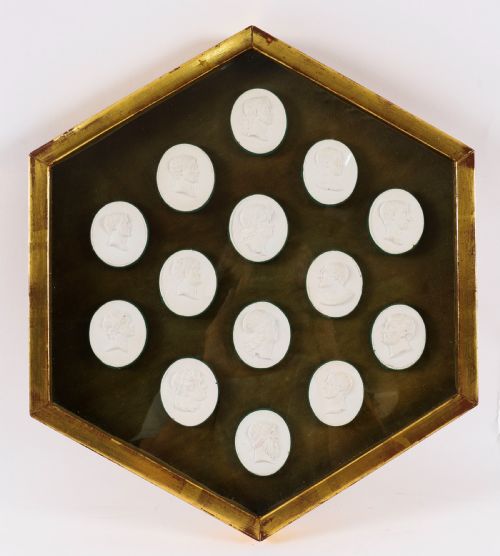
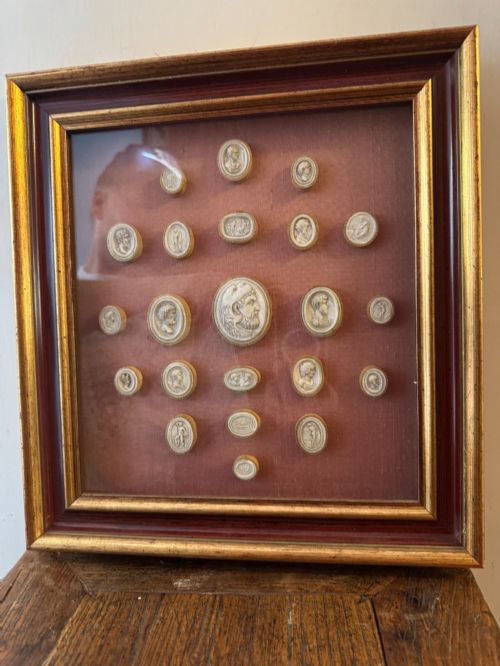
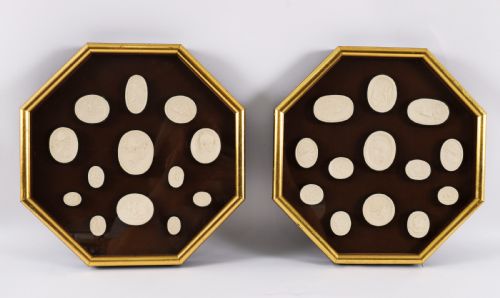
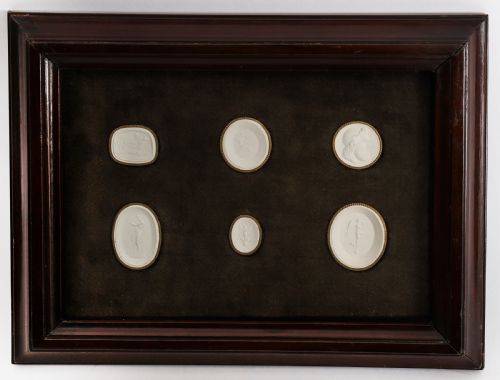
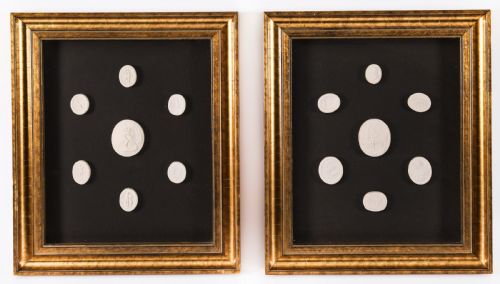
When you search for plaster cast cameos, you encounter framed collections of classical intaglios and medallions originating from the nineteenth century and the Edwardian era. These pieces record ancient reliefs, statues, and gems in crisp white plaster, often arranged in sets within giltwood or fabric-lined frames.
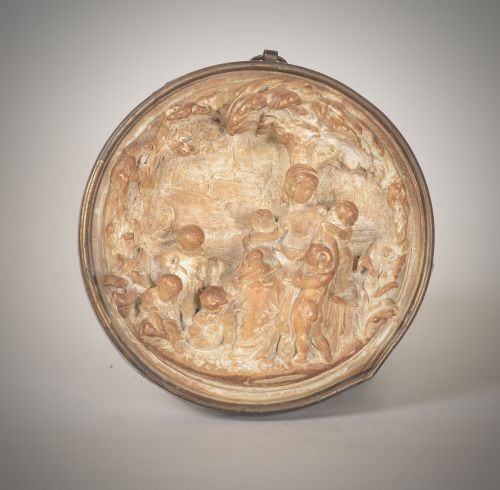
The objects on this page largely consist of Grand Tour souvenirs brought back by travellers from Italy. You will find single wall plaques, pairs of octagonal framed intaglios, and large comprehensive collections holding dozens of individual casts.
How they were made
The makers formed these casts using fine plaster or gypsum poured into moulds taken directly from antique gems and sculptures. This technique produced sharp, detailed relief work that mimics the carved stone originals.
Framing materials include wood, giltwood, and gold leaf, often backed with velvet or fabric to contrast with the white plaster. Many of these sets utilise maker labels or stamps set within box frames to organise the sequence of classical subjects.
Plaster Cast Cameos Retail Price Guide 2026
Typical asking prices for plaster cast cameos among the pieces listed under this phrase on Sellingantiques today, from the lower quarter to the upper quarter. They describe what is for sale here now, not the wider market.
What varies in quality
Quality depends upon the crispness of the individual plaster casts and the depth of relief achieved in the mould. Superior examples retain sharp edges and clear classical iconography without softening of the fine details.
The presentation within the frame also dictates the character of the piece, from simple wooden mouldings to elaborate giltwood frames lined with coloured velvet. Complete, well-arranged collections with original maker documentation sit at the higher end of the range.
Giovanni Liberotti
The Plaster Cast Cameos Glossary
- Intaglio
- A design carved into a material so that it sinks below the surface, or the plaster cast taken from such a mould. These pieces reverse the technique of a cameo by creating a sunken relief.
- Grand Tour
- A traditional trip through Europe, chiefly Italy, undertaken by upper-class European young men of the 18th and 19th centuries to study the arts. Travellers collected plaster casts and intaglios as portable proof of their cultural pursuits.
- Gypsum
- A soft sulphate mineral used to create plaster of Paris. It provides the smooth, fine-grained medium necessary for capturing minute details on small-scale casts.
- Giltwood
- Wood carved and covered with a thin layer of gold leaf or gilt. This material frames many nineteenth-century wall art collections to provide a rich border.
Plaster Cast Cameos: Frequently Asked Questions
What are plaster cast cameos?
Plaster cast cameos are miniature nineteenth-century and Edwardian reliefs moulded from ancient gems and sculptures.
Travellers collected them on the Grand Tour and mounted them in framed wall art for display.
How do I hang them?
These framed intaglios mount securely on walls using standard picture hooks suited to the weight of the wood and glass.
Keep them away from direct sunlight and damp conditions to protect the delicate plaster and fabric backings.
How do I date these pieces?
Dating relies on the style of the framing, the materials used, and the construction methods of the nineteenth century and Edwardian period.
Maker labels on the reverse or inside the box frames often provide specific workshop origins.
Why are some framed in sets?
Grand Tour collectors gathered multiple casts together to document a broad survey of classical mythology and sculpture.
Arranging them in velvet-lined box frames kept the delicate plaster pieces protected while creating a decorative wall display.