




Pink Porcelain Platters
Pink porcelain platters bring warmth and rich polychrome tones to the table, spanning Chinese export wares, European manufactories and Japanese studios.
Pink Porcelain Platters
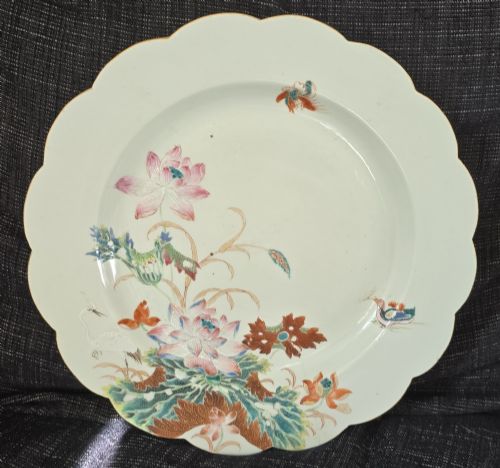
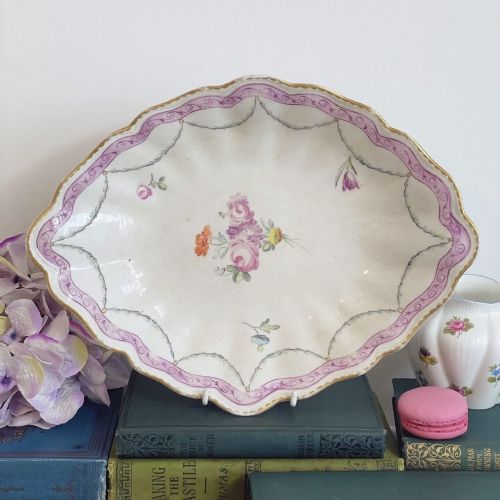
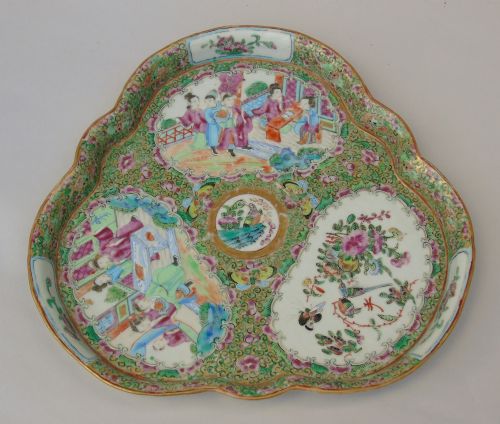
Pink porcelain platters encompass serving dishes, chargers and large trays created across the eighteenth and nineteenth centuries. These pieces function as both serving vessels and decorative centerpieces, displaying hand-painted floral bouquets, armorial crests and intricate oriental motifs.
You are most likely to encounter nineteenth-century English and Chinese export examples on this page, alongside earlier Georgian and eighteenth-century items. Forms range from oval dessert dishes and trefoil trays to substantial circular chargers.
The aesthetic bridges several distinct movements, incorporating Neo-Rococo curves, Neoclassical symmetry and traditional Qing Dynasty or Meiji palettes. Each piece reflects the specific decorative tastes of its origin, whether made in European kilns or imported from the East.
Materials and methods
Makers utilised fine porcelain bodies, occasionally developing specialised compositions such as felspar porcelain to achieve durability and a smooth surface. This dense white base provided the ideal canvas for vibrant enamel painting.
Decoration relied on hand-painted enamels, frequently enhanced with gold leaf and gilt detailing to highlight rims and borders. Artisans applied pigments by hand, resulting in nuanced polychrome flowers and intricate scenes.
Early porcelain makers occasionally solved kiln accidents by painting delicate pink flowers directly over stubborn firing marks.
Assessing quality
The standard of a pink porcelain platter rests upon the precision of the hand-painted brushwork and the complexity of the design. Fine pieces display crisp detail in floral bouquets and armorial motifs without blurring or pooling of the enamel.
Quality also appears in the refinement of the porcelain body and the careful application of gold leaf or gilt accents. Superior examples maintain structural crispness in moulded edges and relief details.
Herend·Kutani·Derby·Spode·Vienna·Barr, Flight and Barr·Chamberlains
The Pink Porcelain Platters Glossary
- Charger
- A large decorative plate or platter used traditionally for service or display. These substantial pieces often feature elaborate painted scenes across a wide surface.
- Famille rose
- A palette of Chinese porcelain decoration distinguished by opaque pink enamel introduced during the Qing Dynasty. This colouring defines many eighteenth-century export wares.
- Gilt
- Application of gold or gold-colored material to the surface of porcelain. It often highlights the rims and handles of serving dishes.
- Polychrome
- Decoration employing multiple distinct colours in the painted design. On these platters, it frequently describes naturalistic floral arrangements.
- Trefoil
- A three-lobed decorative shape resembling a clover leaf. This form appears in specialised serving trays and dishes.
Pink Porcelain Platters: Frequently Asked Questions
Can I use these platters for serving food?
Many of these pieces were created as serving dishes and decorative plates, but historic glazes and enamels require careful handling. Modern dishwashers and microwaves should be avoided entirely.
For practical dining, reserve them for dry foods or cold items. Hand washing ensures the antique painted decoration remains intact.
How do I identify eighteenth-century pieces?
Examine the weight, glaze characteristics and hand-painted brushwork of the dish. Eighteenth-century porcelains often display specific foot-rim construction and hand-mixed enamel pigments.
Maker marks, where present, help confirm the period of origin. Comparing the style to documented examples from manufactories provides further clarity.
What is Chinese export porcelain?
Chinese export porcelain refers to wares made in China specifically for European and Western markets. These items combined traditional Chinese manufacturing with shapes and motifs requested by foreign buyers.
Many feature armorial crests or adapted European designs. They represent a significant portion of eighteenth-century trade ceramics.