



Pink Mantel Clock
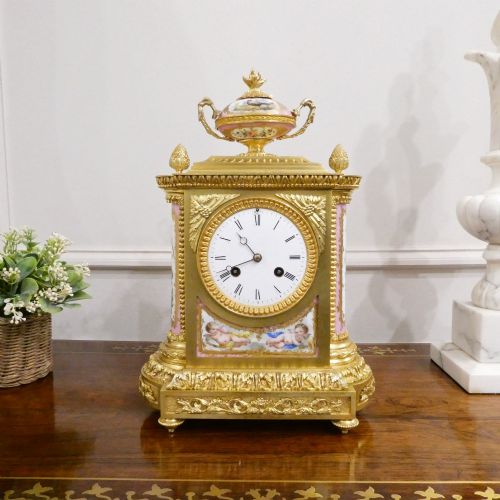
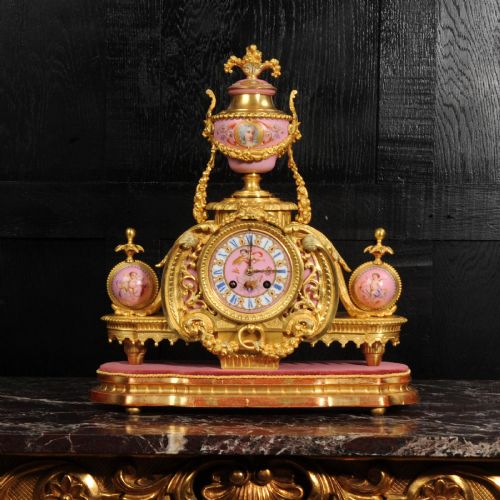
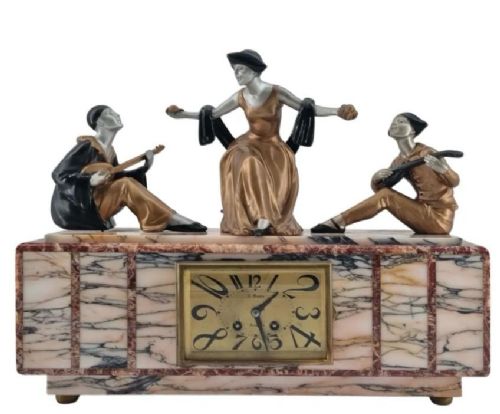
These pink mantel clock examples bring porcelain, marble and ormolu together in striking nineteenth-century and art deco designs for the mantelpiece.
Pink Mantel Clock
A pink mantel clock is typically a nineteenth-century French timepiece housed in porcelain, marble, or enamel, often accompanied by matching garnitures. When searching for a pink mantel clock, buyers encounter ornate portico designs, crystal regulators, and lyre-shaped cases produced during the Victorian and Art Deco eras.
The materials range from soft pink Sevres porcelain panels to rouge and pink marble paired with gilt bronze, brass, or ormolu mounts. Many originate from French workshops spanning the 1800s through the 1920s, showing styles from Louis XVI revival to clean geometric art deco lines.
Most pieces function as decorative centrepieces designed for the drawing room or salon, frequently featuring visible dials and intricate metalwork. The selection balances classical architectural marble cases with colourful porcelain bodies and sculptural figural elements.
How they were made
Clockmakers and bronze founders utilised cast gilt bronze, ormolu, and brass to build intricate structural frames around natural marble and glass. Porcelain panels were hand-painted and glazed in pink tones, then fitted into the metal casing alongside enamel dials.
The internal movements relied on precision brass gear trains housed within heavy stone or metal bodies, often requiring crystal glass panels to protect the pendulum. Workshops combined stonemasonry, metal casting, and ceramic firing to produce complete clock sets and garnitures.
Pink Mantel Clock Retail Price Guide 2026
Typical asking prices for pink mantel clock among the pieces listed under this phrase on Sellingantiques today, from the lower quarter to the upper quarter. They describe what is for sale here now, not the wider market.
Pierrot and Columbine occasionally share a mantelpiece, turning the hourly strike into a quiet theatrical performance.
What varies in quality
The distinction between tiers rests on the crispness of the bronze or ormolu chasing and the finesse of the painted porcelain panels. Finer examples display deeply sculpted mounts, unblemished enamel dials, and harmonious stone matching across the clock body and side garnitures.
Lesser pieces feature simpler cast metal decorations, standard marble bases without figural or portico architectural detail, and less detailed ceramic work. The presence of fully integrated garniture sets and recognised maker signatures elevates the overall standard.
Jean-Baptiste Delettrez·Achille Brocot·Sega·Japy Freres·P.H Mourey
The Pink Mantel Clock Glossary
- Ormolu
- Gilt bronze mounted on decorative objects, created by applying a mercury-gilding process to cast bronze. This technique produced a rich golden finish popular on nineteenth-century French clock cases.
- Garniture
- A set of matching decorative objects placed on either side of the clock on a mantelpiece, typically consisting of urns or vases made from the same marble and porcelain materials.
- Crystal regulator
- A clock housed within a glass-sided brass or gilt metal case that displays the swinging pendulum and movement. These pieces became popular during the later nineteenth century.
- Sevres
- Porcelain produced by the French national factory, known for delicate pink ground colours and hand-painted decorative panels. Antique clocks often incorporated these distinctive ceramic plaques into their facades.
Pink Mantel Clock: Frequently Asked Questions
What is a clock garniture?
A clock garniture is a matched set consisting of a central clock flanked by two decorative vases or urns designed to sit together on a mantelpiece. These matching pieces repeat the marble, porcelain, and ormolu motifs of the main timepiece.
Such sets were manufactured in France during the nineteenth and early twentieth centuries to create a balanced, unified display on formal salon fireplaces.
Where were these clocks made?
The majority of these pieces originated in France, produced by specialised clockmakers, bronze founders, and porcelain manufactories during the Victorian and Art Deco periods. Workshops in Paris and surrounding regions exported them widely.
They combine French stylistic revivals, such as Louis XVI and Rococo forms, with durable marble and cast metal construction.
How do I care for a marble and ormolu clock?
Keep the clock away from direct sunlight and damp environments to protect the painted porcelain panels and the polished finish of the marble. Dust the metal mounts and glass panels gently with a dry, soft cloth.
Avoid using liquid cleaners on the gilded ormolu and enamel dials, as harsh chemicals can strip the historic finishes.