



Pink Lustreware Ceramic
Pink lustreware ceramic pieces bring metallic oxide glazes and striking transfers to jugs, bowls, and teacups across Georgian and Victorian interiors.
Pink Lustreware Ceramic
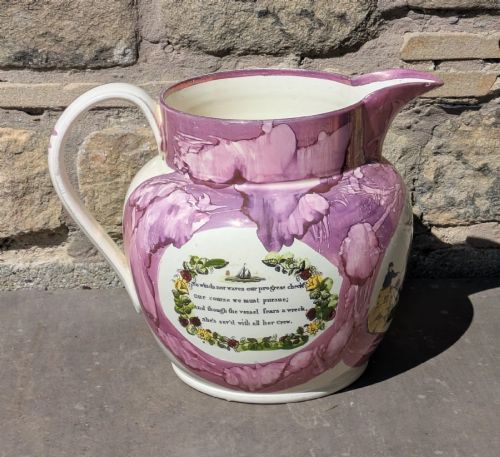
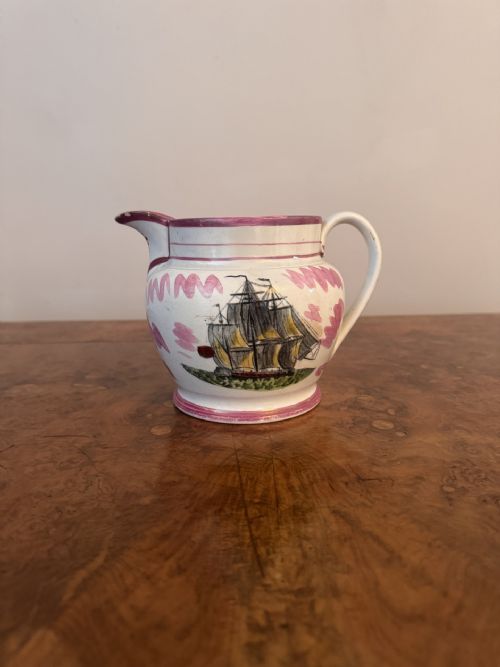
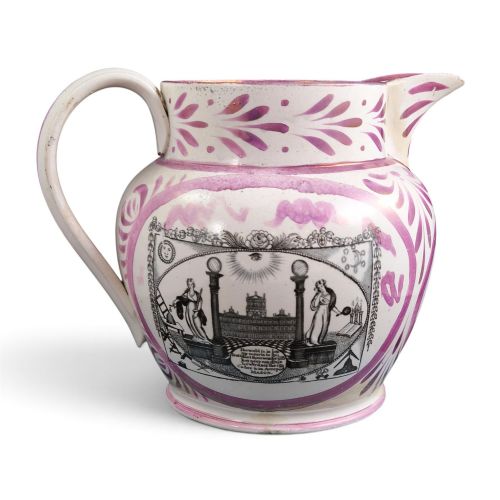
Pink lustreware ceramic encompasses pieces primarily found in jugs, pitchers, and decorative bowls spanning Georgian, Victorian, and later periods. The most frequent examples on this page are Sunderland jugs carrying maritime themes, poetic panels, and transfer decorations.
Makers and workshops produced these items across the nineteenth century, utilising pearlware and earthenware bodies. The forms range from large tall ship jugs to tea cups and saucers with distinct splash lustre effects.
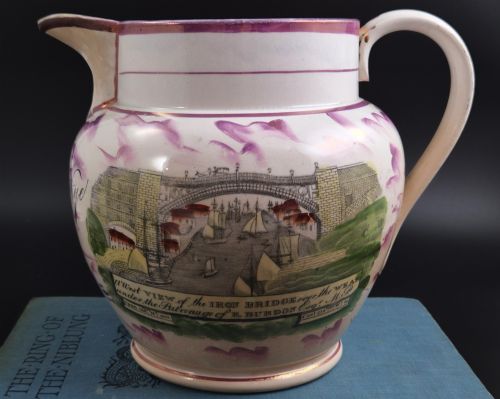
Buyers often encounter vessels bearing named dates, local landmarks like the Iron Bridge over the Wear, and commemorative prints. These utilitarian objects served both functional roles and commemorative purposes in households.
Assessing quality
Quality rests on the crispness of the transfer print and the richness of the metallic glaze rather than simple age. Pieces featuring detailed maritime scenes or named local subjects display greater artistic ambition than plain utilitarian vessels.
The sophistication of the form and the complexity of the lustre application distinguish standard production wares from exceptional signed works. Collectors look for well-preserved glaze coverage and clear, sharp transfer details without blurring.
Pink Lustreware Ceramic Retail Price Guide 2026
Typical asking prices for pink lustreware ceramic among the pieces listed under this phrase on Sellingantiques today, from the lower quarter to the upper quarter. They describe what is for sale here now, not the wider market.
Listings span from Georgian pearlware jugs of eighteen hundred to Edwardian dragon bowls and Art Deco pieces.
Daisy Makeig-Jones Wedgwood·Wedgwood lustre dragon
The Pink Lustreware Ceramic Glossary
- Splash lustre
- A technique where droplets or splatters of metallic solution are applied to the ceramic surface before firing. This creates a mottled, marbled pink effect across the body.
- Transfer printing
- A process of pulling an engraved copperplate image onto tissue paper and pressing it onto the ceramic biscuit or glaze. It allowed makers to replicate detailed maritime scenes and poetry consistently.
- Metallic glaze
- A thin surface coating containing metallic particles that fired to a reflective, metallic sheen. It provides the signature pink and copper brilliance characteristic of these wares.
- Earthenware
- A porous pottery body fired at lower temperatures than stoneware or porcelain. It serves as the primary structural material for the jugs and bowls found here.
Pink Lustreware Ceramic: Frequently Asked Questions
What is pink lustreware ceramic?
Pink lustreware ceramic refers to pottery decorated with a metallic glaze that produces a pink, iridescent sheen. These pieces often feature transfer-printed maritime scenes, poems, or commemorative subjects.
Potters produced them primarily during the Georgian and Victorian eras on earthenware and pearlware bodies.
How were these jugs used?
These vessels served as functional containers for liquids as well as commemorative display pieces in homes. Many marked important occasions, local landmarks, or maritime trades.
Sailors and households kept large jugs to display patriotic themes, poems, or armorial designs on mantelpieces and dressers.
How do I date a piece?
Dating relies on stylistic clues, the type of ceramic body used, and any specific dates or names recorded on the transfer prints. Pearlware bodies and specific transfer subjects often point to the early nineteenth century.
Later Victorian and Edwardian examples show shifts toward different decorative forms and finer porcelain bodies.
How do I care for lustreware?
Lustre glazes require gentle handling because the metallic surface can wear away with abrasive cleaning. Wash them carefully by hand in warm water without harsh detergents.
Display the pieces away from direct, strong sunlight to preserve the delicate glaze and transfer colours over time.